Tell us about the job
Takes about a minute. No obligation.
A boiler running through a full heating season puts steady work on the burner, the heat exchanger, and the ignition system, and worn components from that cycling are what a contractor expects to find when one of them fails. Homes in Pulaski County, AR run heat about five months a year, from November through March. By March, the ignition system alone has fired hundreds of times, and a contractor diagnosing a no-heat call in mid-winter checks those high-cycle components before looking at anything else. Seals and gaskets on the heat exchanger harden under repeated heating and cooling. A fault that has been building through the season often surfaces on the coldest day, when the system is running its longest cycles.
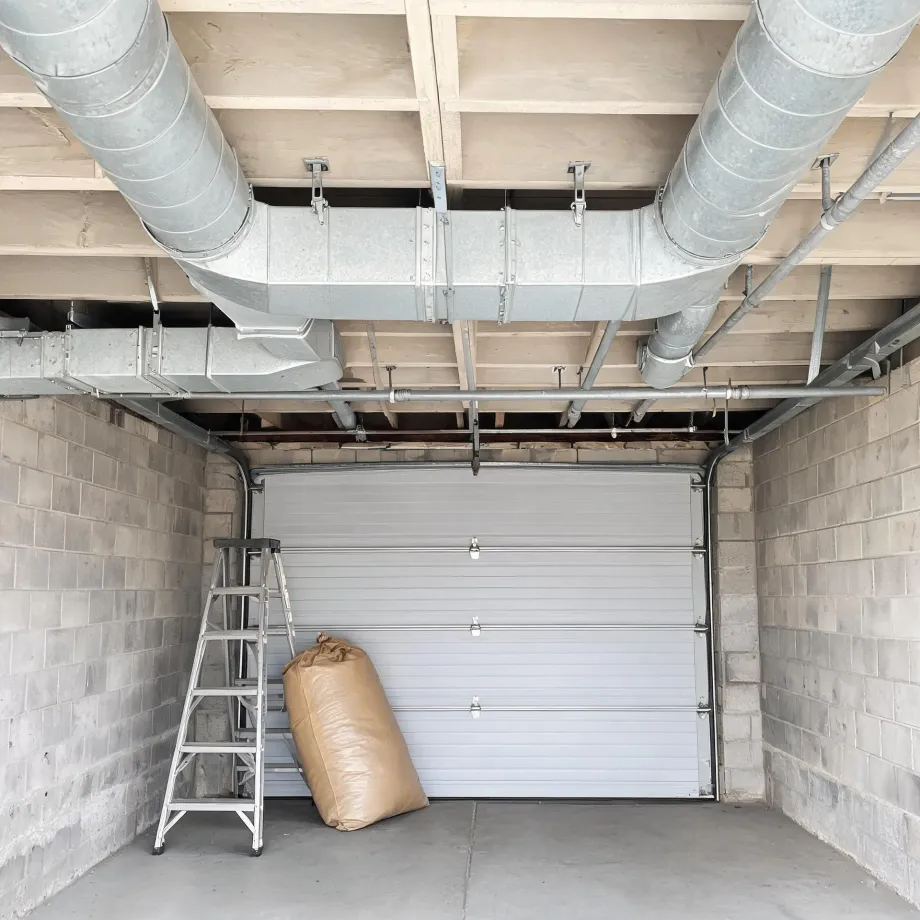
Pipe runs, zone valves, and expansion vessels in houses this old have lived through more than one boiler. By the time a contractor opens a failed unit, those components have their own history of scale buildup, sediment, and pressure cycling that a boiler swap did not reset. Half the homes in Pulaski County, Arkansas were built in 1981 or earlier (2020-2024 ACS 5-year). That history changes what a repair quote covers: a contractor who scopes only the boiler and nothing upstream can price the box correctly and still miss the reason it failed.
The Parts of a Boiler a Contractor Checks First
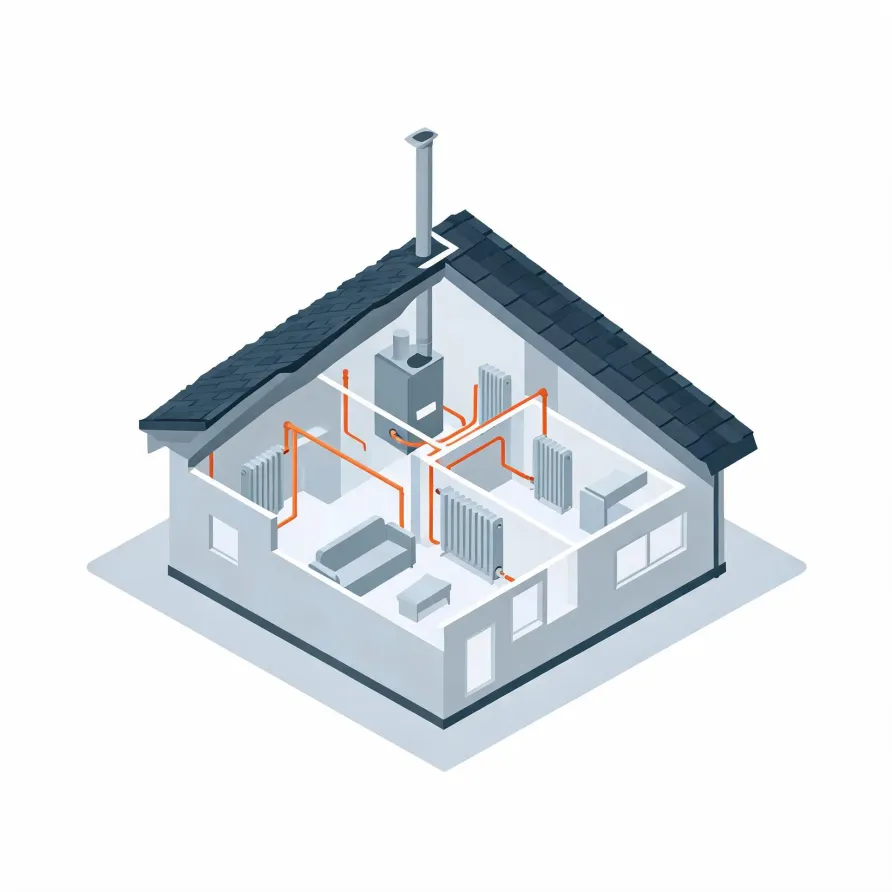
The boiler itself sits in a mechanical room, basement, or utility closet and is the piece a contractor goes to first. Inside it, the heat exchanger and burner assembly are where most faults show up. A failed heat exchanger, a dirty or misfiring burner, or a faulty ignition component will each stop the system in its own way.
From the boiler, a pump pushes heated water through a loop of pipes to radiators or radiant panels throughout the house, then returns it to be reheated. The expansion tank, pressure relief valve, and circulator pump sit close to the boiler and each one gets checked when a repair call comes in, since any of them can be the source of low pressure, no heat, or strange sounds.
The drawing shows the general layout of a boiler system, and a licensed contractor determines which components apply to your specific setup.
Find a contractor in Pulaski CountyPulaski County, by the numbers
311 severe weather events were recorded in Pulaski County, Arkansas between 2015 and 2024.
NOAA National Centers for Environmental Information, Storm Events Database, bulk CSV export, events 2015-01-01 through 2024-12-31.Half the homes in Pulaski County, Arkansas were built in 1981 or earlier (2020-2024 ACS 5-year).
U.S. Census Bureau, 2020-2024 American Community Survey 5-Year EstimatesPulaski County, Arkansas holds 193,408 housing units (2020-2024 ACS 5-year).
U.S. Census Bureau, 2020-2024 American Community Survey 5-Year EstimatesOwners occupy 57.0% of the occupied homes in Pulaski County, Arkansas (2020-2024 ACS 5-year).
U.S. Census Bureau, 2020-2024 American Community Survey 5-Year EstimatesCodes & Standards Covering Boiler and HVAC Repair in Pulaski County, Arkansas2 sourced rules and standards
Licensing and Legal Requirements in Pulaski County, Arkansas
An Arkansas HVACR licence is good across the state: no city or county may require its own licence to do HVACR work, though local permits and inspections still apply.
Arkansas requires an HVACR licence or registration: it is unlawful to do HVACR work without the appropriate one unless the chapter exempts you.
Weather Stress on HVAC Equipment in Pulaski County
Boilers work against whatever the climate throws at a building, and in Pulaski County that means equipment absorbs pressure from local weather patterns that homeowners elsewhere do not face. How hard a system has to work, and how often it fails, tracks closely with conditions on the ground.
311 severe weather events, 2015–2024. Source: NOAA National Centers for Environmental Information, Storm Events Database.