Tell us about the job
Takes about a minute. No obligation.
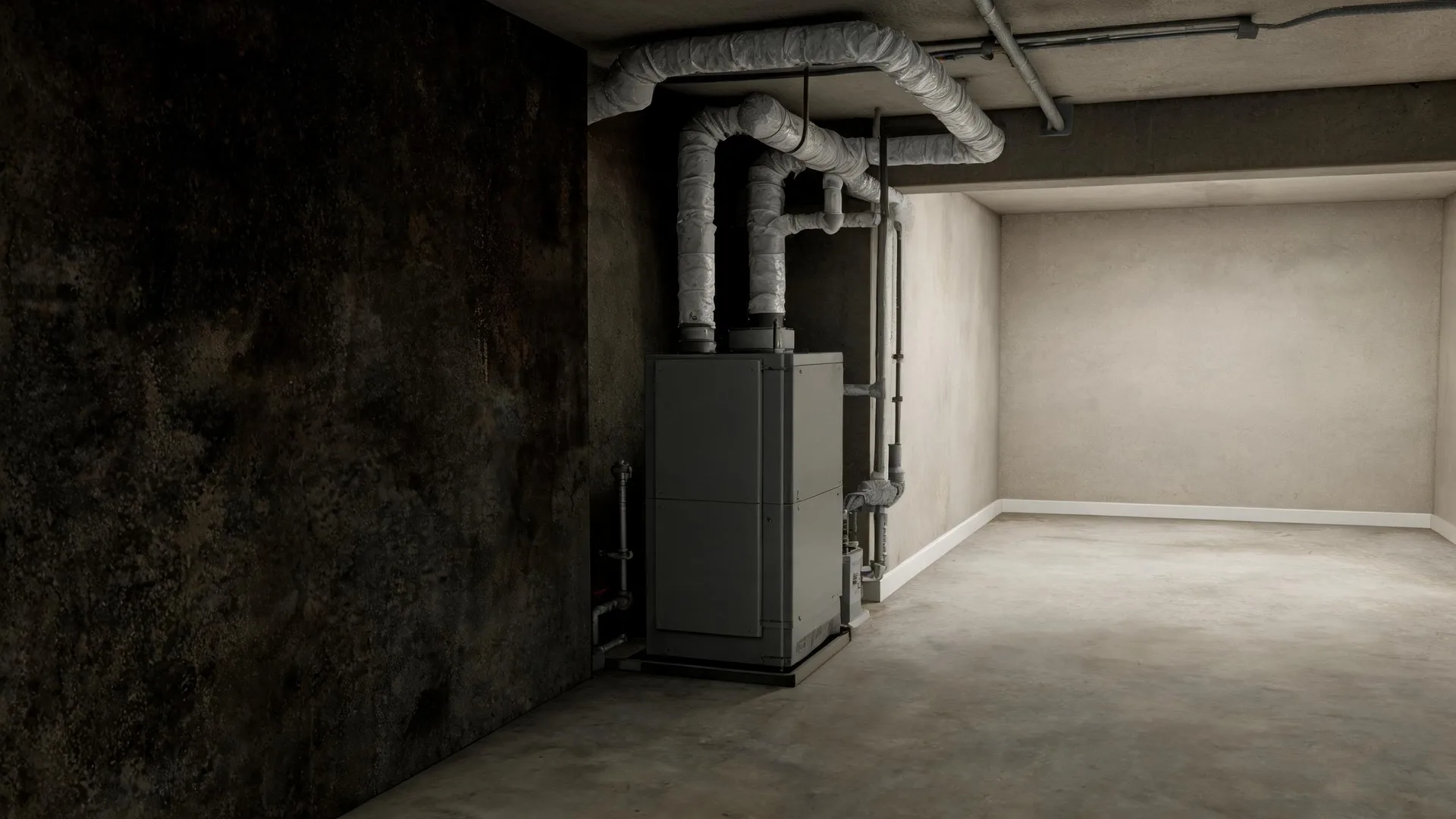
A boiler that has been cycling through a full heating season arrives at a repair call with accumulated wear on its burner, heat exchanger, and ignition components. Homes in Grant County, AR run heat about five months a year, from November through March. A contractor diagnosing a fault here checks those cycling parts first, because that is where the load concentrates over a season of that length. Seals degrade, igniters crack, and heat exchanger stress builds incrementally with each cycle. A marginal part rarely lasts to the spring shutoff.
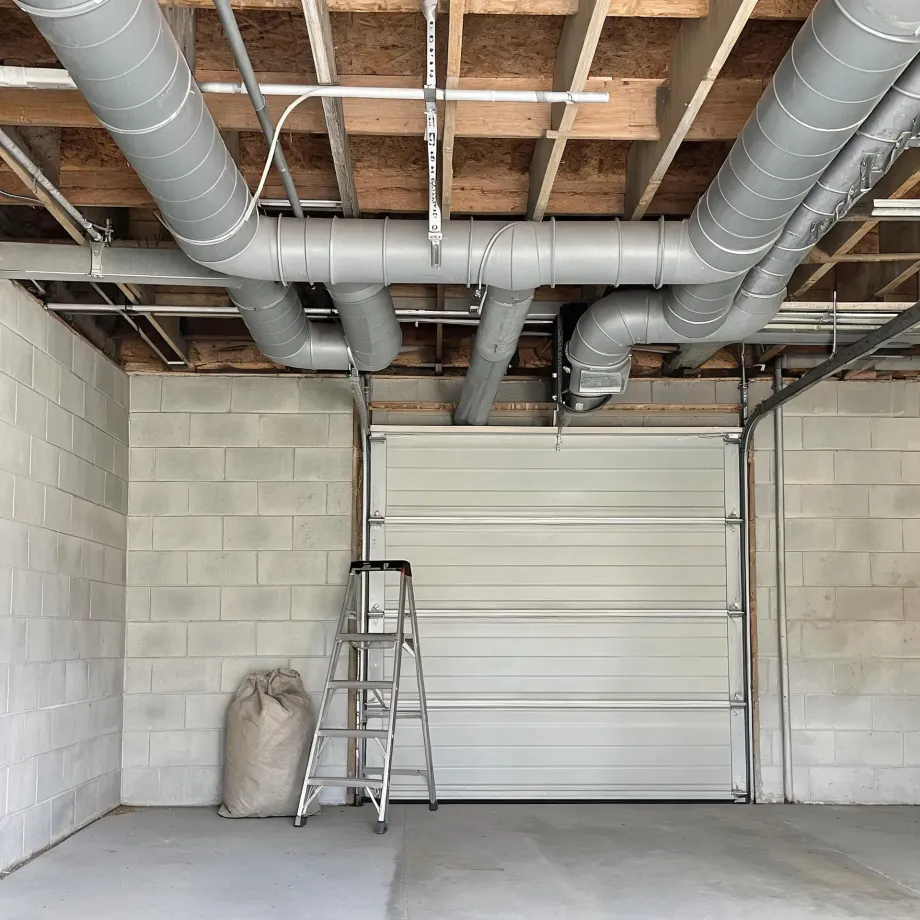
Half the homes in Grant County, Arkansas were built in 1991 or earlier (2020-2024 ACS 5-year). A boiler sitting in a house from that era of construction may have exchanged hands, been relit, and had its controls patched more than once, but the core sections and zone valves underneath are often original. When a contractor opens the unit and finds a crack in a cast-iron section or a failed circulator, the question is not the repair itself but whether the replacement part still exists. Older boiler lines that served this stock have been discontinued, and a technician working a job here has to locate a matching part or price a full replacement before the scope of the work is settled.
The Parts of a Boiler a Contractor Checks First
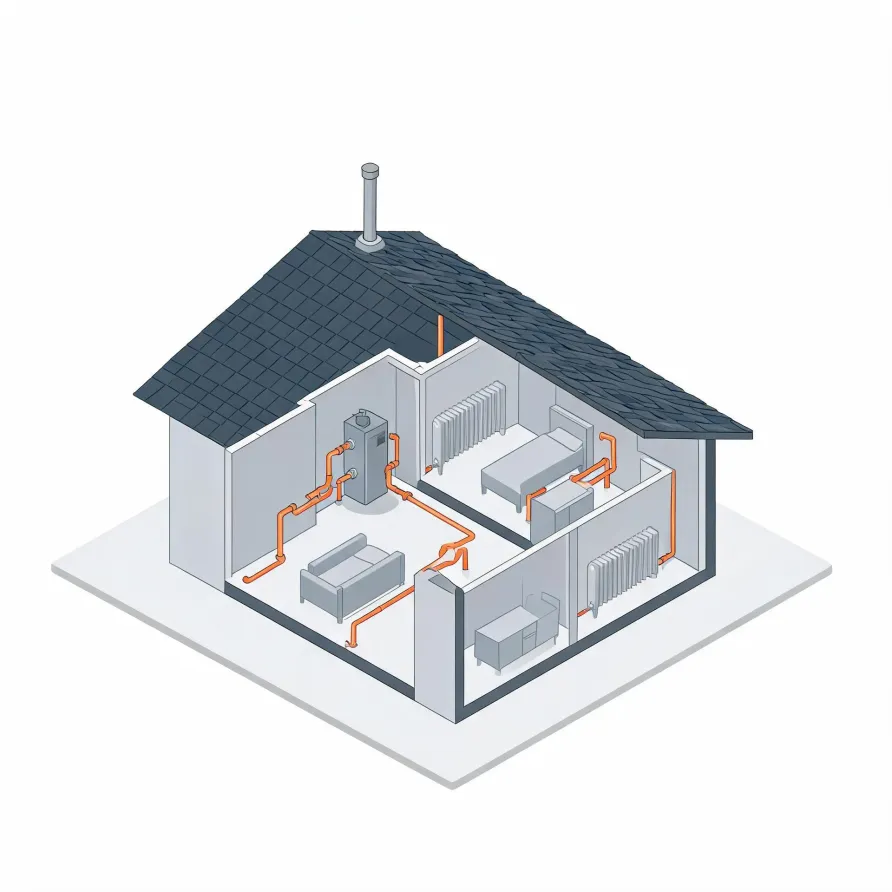
The boiler itself sits in the basement or mechanical room and is the piece a contractor looks at first. Inside it, the heat exchanger is where combustion heat passes into the water, and a crack or buildup there shows up as uneven heat or a complete loss of hot water to the house. The burner assembly, also inside the unit, draws fuel and ignites it, and a dirty or failing burner is a common reason a boiler short-cycles or refuses to fire.
Circulator pumps move heated water out through the pipes and back again, and a seized or weak pump is often what leaves one zone cold while the rest of the house stays warm. The expansion tank, usually hanging near the boiler, absorbs pressure changes in the system, and a waterlogged tank drives pressure swings that trip the relief valve. That relief valve itself, mounted on the boiler body, is a safety device a contractor checks for weeping or corrosion whenever the system is opened.
The drawing shows the general layout of a boiler system, and a licensed contractor determines which components apply to your particular installation.
Find a contractor in Grant CountyGrant County, Arkansas, by the numbers
67 severe weather events were recorded in Grant County, Arkansas between 2015 and 2024.
NOAA National Centers for Environmental Information, Storm Events Database, bulk CSV export, events 2015-01-01 through 2024-12-31.Half the homes in Grant County, Arkansas were built in 1991 or earlier (2020-2024 ACS 5-year).
U.S. Census Bureau, 2020-2024 American Community Survey 5-Year EstimatesGrant County, Arkansas holds 7,957 housing units (2020-2024 ACS 5-year).
U.S. Census Bureau, 2020-2024 American Community Survey 5-Year EstimatesOwners occupy 80.7% of the occupied homes in Grant County, Arkansas (2020-2024 ACS 5-year).
U.S. Census Bureau, 2020-2024 American Community Survey 5-Year EstimatesCodes & Standards Governing Boiler and HVAC Repair in Grant County, Arkansas2 sourced rules and standards
What Grant County, Arkansas Requires for HVAC Repair Work
An Arkansas HVACR licence is good across the state: no city or county may require its own licence to do HVACR work, though local permits and inspections still apply.
Arkansas requires an HVACR licence or registration: it is unlawful to do HVACR work without the appropriate one unless the chapter exempts you.
Severe Weather Events in Grant County
Weather puts a measurable load on heating equipment, and that load varies by location. Boiler repair needs in Grant County are shaped by what the local climate actually does to the system over time.
67 severe weather events, 2015–2024. Source: NOAA National Centers for Environmental Information, Storm Events Database.