Tell us about the job
Takes about a minute. No obligation.
A boiler installed in Pulaski County earns its keep every winter. Homes in Pulaski County, AR run heat about five months a year, from November through March. The burner and heat exchanger cycle on and off through those months, and components sized or seated incorrectly under that repeated load start showing it in the form of cracked sections, ignition failures, and pressure irregularities. A contractor quoting a new boiler here has to account for that annual demand when selecting output capacity and specifying the expansion vessel, not as a rough guess but as a calculated number tied to the house's actual heat loss.
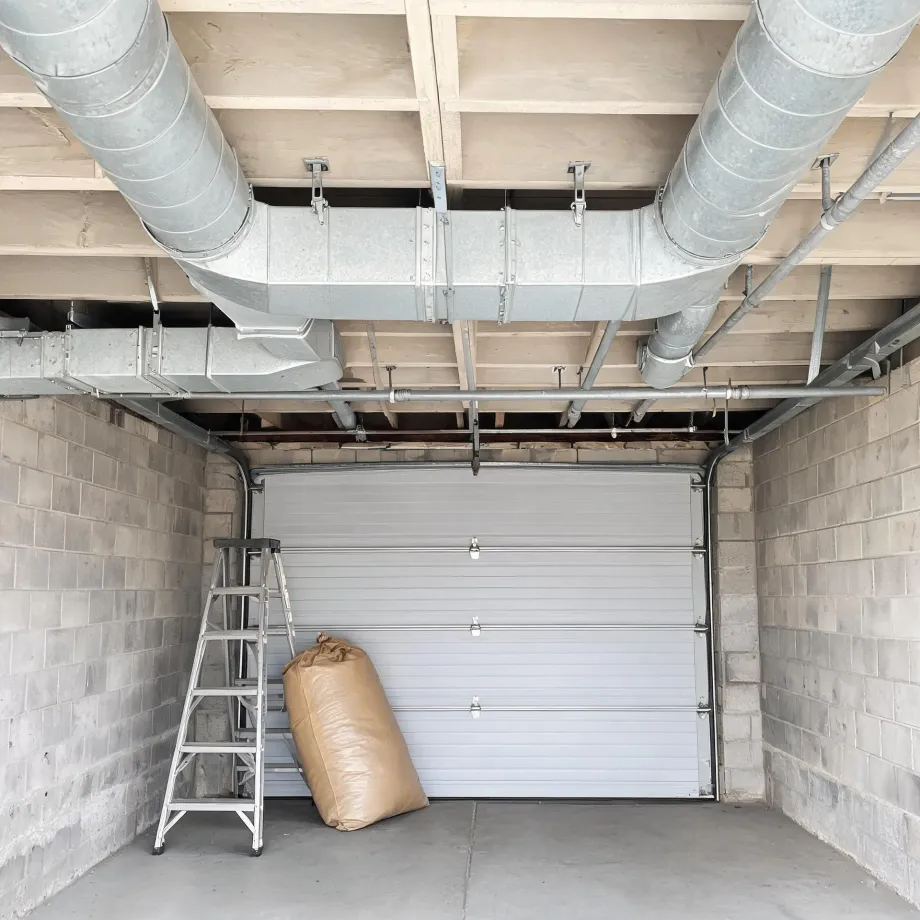
Ductwork routed for an older generation of heating is what a contractor has to account for before a boiler installation in Pulaski County can be priced honestly. Half the homes in Pulaski County, Arkansas were built in 1981 or earlier (2020-2024 ACS 5-year). Housing of that vintage was ducted and wired for whatever was running at the time, and the gap between that original configuration and what a new boiler needs is where the real work lives. A contractor will check whether existing runs reach the right zones and whether the electrical service the house was built with can carry the new load before the equipment itself enters the conversation.
What a Boiler Installation Covers
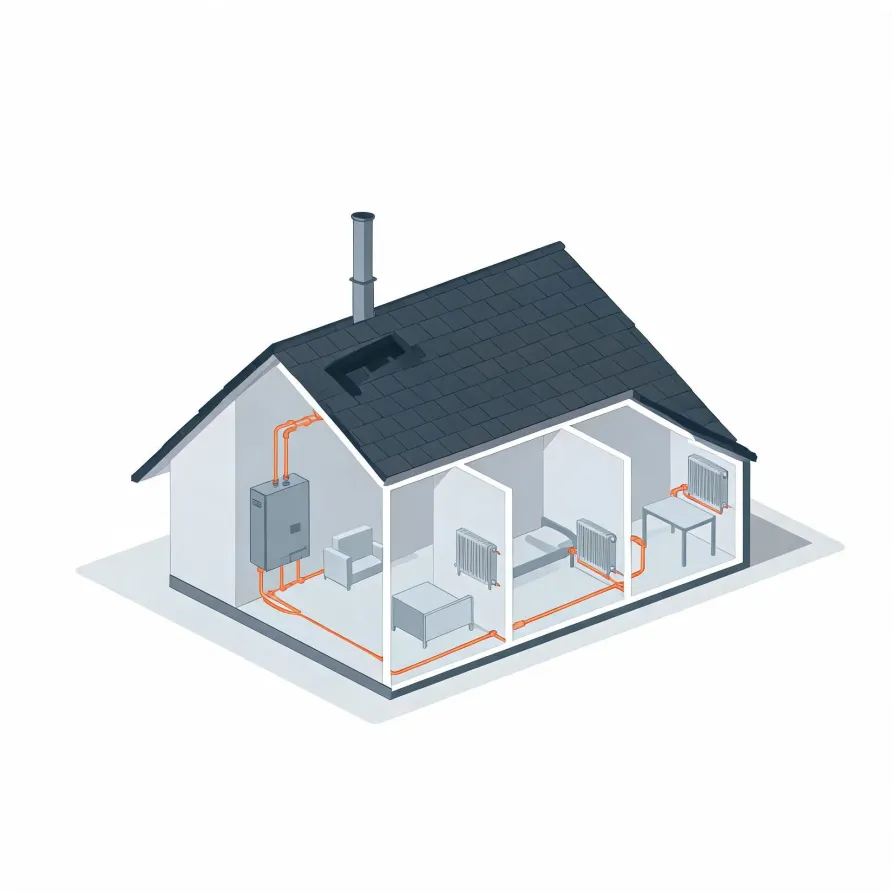
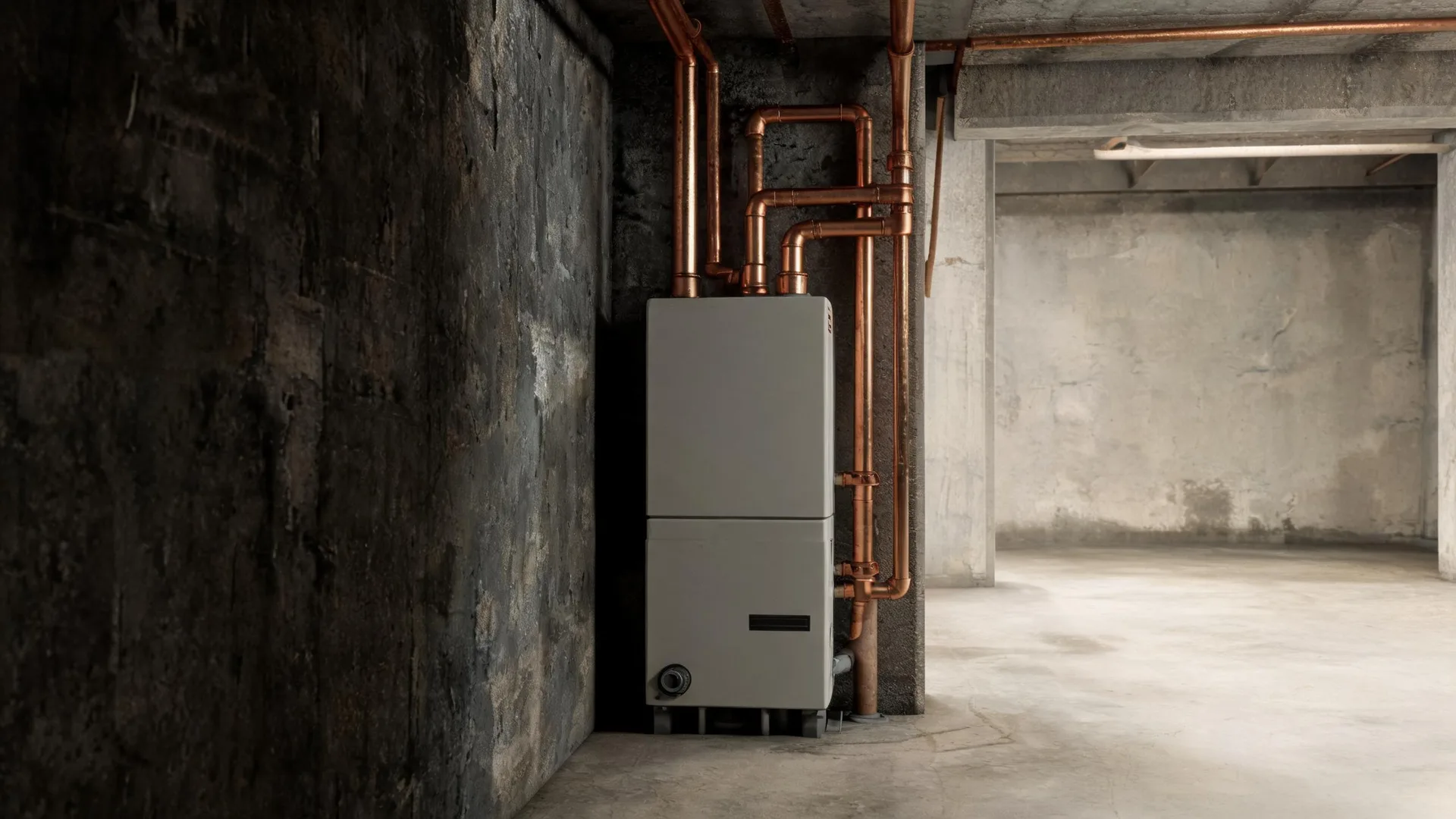
The boiler itself sits in a mechanical room, basement, or utility closet and is the heart of the system. A contractor mounts it to the floor or wall, connects it to the fuel supply, and ties it into the home's existing piping. The expansion tank, which absorbs pressure changes as water heats and cools, is mounted close by.
Radiators or baseboard units occupy the living spaces, each connected to the supply and return piping that runs through the walls and floors. A circulator pump moves heated water through that loop, and a thermostat goes on the wall to give the homeowner control over the whole system.
The drawing shows a typical boiler layout, and a licensed contractor determines exactly which components apply to your house and how the installation takes shape there.
Find a contractor in Pulaski CountyPulaski County, by the numbers
311 severe weather events were recorded in Pulaski County, Arkansas between 2015 and 2024.
NOAA National Centers for Environmental Information, Storm Events Database, bulk CSV export, events 2015-01-01 through 2024-12-31.Half the homes in Pulaski County, Arkansas were built in 1981 or earlier (2020-2024 ACS 5-year).
U.S. Census Bureau, 2020-2024 American Community Survey 5-Year EstimatesPulaski County, Arkansas holds 193,408 housing units (2020-2024 ACS 5-year).
U.S. Census Bureau, 2020-2024 American Community Survey 5-Year EstimatesOwners occupy 57.0% of the occupied homes in Pulaski County, Arkansas (2020-2024 ACS 5-year).
U.S. Census Bureau, 2020-2024 American Community Survey 5-Year EstimatesBoiler Installation Rules on the Books for Pulaski County, Arkansas2 codes, standards & regs
Licensing and Legal Requirements in Pulaski County, Arkansas
An Arkansas HVACR licence is good across the state: no city or county may require its own licence to do HVACR work, though local permits and inspections still apply.
Arkansas requires an HVACR licence or registration: it is unlawful to do HVACR work without the appropriate one unless the chapter exempts you.
Severe Weather Events in Pulaski County
Boilers carry a heavier load in counties where the weather runs hard, and Pulaski County's climate shapes how much work any heating system will do over its life. That workload is a local fact, and it is part of what a contractor here sizes and installs against.
311 severe weather events, 2015–2024. Source: NOAA National Centers for Environmental Information, Storm Events Database.