Tell us about the job
Takes about a minute. No obligation.
Sizing a boiler for this house means sizing it for what the burner actually has to do. Homes in Hot Spring County, AR run heat about five months a year, from November through March. The heat exchanger, the ignition system, and the circulator pump all cycle repeatedly across those months, and the parts that fail earliest are almost always the ones a contractor undersized or left poorly commissioned at the start. A contractor establishing the correct output before the install prevents the short-cycling that cracks heat exchangers and wears ignition components down ahead of schedule.
Ductwork is not the variable on a boiler job the way it is on forced-air work, but electrical service is. Half the homes in Hot Spring County, Arkansas were built in 1979 or earlier (2020-2024 ACS 5-year). Houses built in that era were wired for the loads of the time, and a modern boiler system draws more than those panels were sized to carry. A contractor quoting the work has to open the breaker box and read what is actually there before the boiler choice is settled, because undersized service turns a straightforward installation into an electrical upgrade first.
The Parts of a Boiler System an Installation Covers
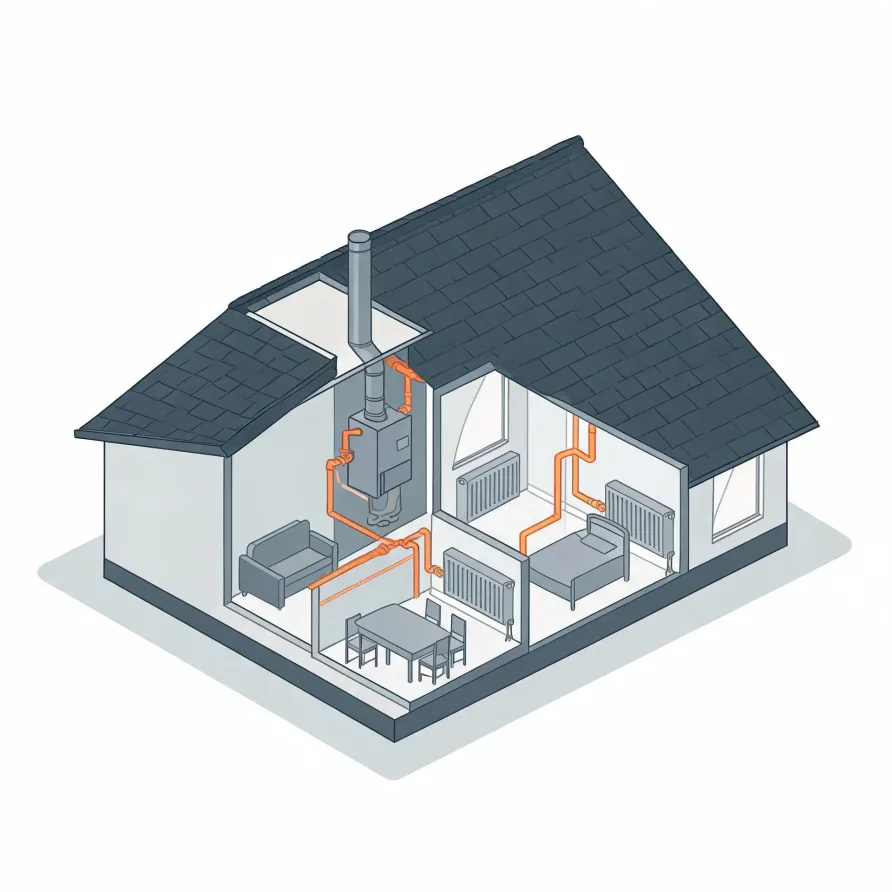
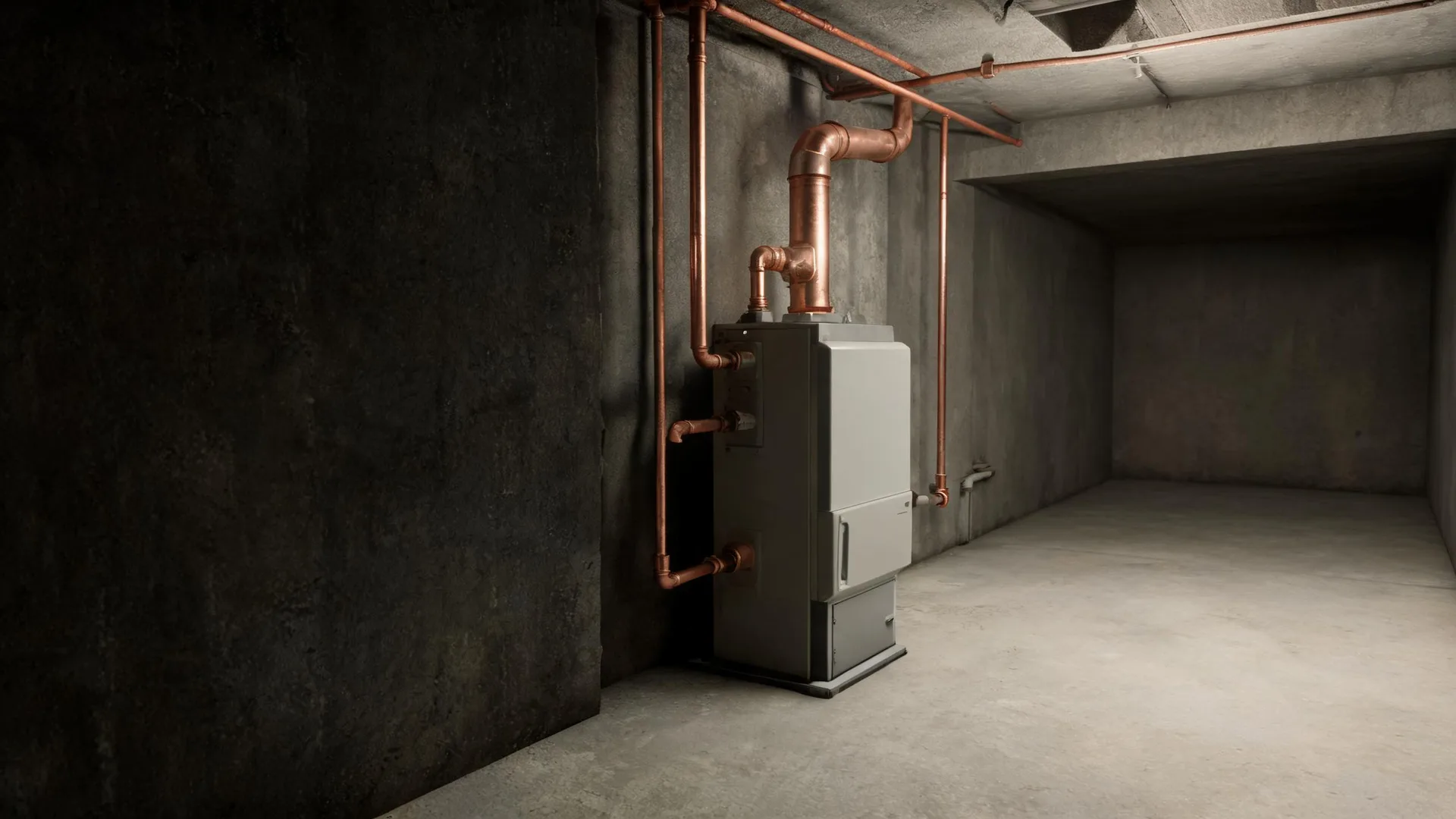
The boiler itself sits in the basement or a mechanical room and is the unit a contractor installs first. Attached to it are the heat exchanger and burner assembly, which live inside the cabinet. The expansion tank mounts nearby, usually on the supply piping, and absorbs pressure changes as water heats.
From the boiler, supply and return pipes run through the house to the heat emitters, which are either radiators standing against walls or radiant tubing set into floors. A circulator pump, mounted on the piping close to the boiler, moves hot water through that loop. The thermostat goes on a main living-area wall and controls the whole system.
The drawing shows a typical layout, and a licensed contractor determines what applies to your specific house.
Find a contractor in Hot Spring CountyHot Spring County, Arkansas, by the numbers
83 severe weather events were recorded in Hot Spring County, Arkansas between 2015 and 2024.
NOAA National Centers for Environmental Information, Storm Events Database, bulk CSV export, events 2015-01-01 through 2024-12-31.Half the homes in Hot Spring County, Arkansas were built in 1979 or earlier (2020-2024 ACS 5-year).
U.S. Census Bureau, 2020-2024 American Community Survey 5-Year EstimatesHot Spring County, Arkansas holds 14,302 housing units (2020-2024 ACS 5-year).
U.S. Census Bureau, 2020-2024 American Community Survey 5-Year EstimatesOwners occupy 76.5% of the occupied homes in Hot Spring County, Arkansas (2020-2024 ACS 5-year).
U.S. Census Bureau, 2020-2024 American Community Survey 5-Year EstimatesBoiler Installation Rules for Hot Spring County, Arkansas2 sourced standards and codes
Licensing and Legal Requirements in Hot Spring County, Arkansas
An Arkansas HVACR licence is good across the state: no city or county may require its own licence to do HVACR work, though local permits and inspections still apply.
Arkansas requires an HVACR licence or registration: it is unlawful to do HVACR work without the appropriate one unless the chapter exempts you.
Severe Weather Events in Hot Spring County
Weather shapes how hard a boiler has to work and how often it gets pushed to its limits. Hot Spring County conditions are a local variable, and the right equipment choice and installation account for them.
83 severe weather events, 2015–2024. Source: NOAA National Centers for Environmental Information, Storm Events Database.