Tell us about the job
Takes about a minute. No obligation.
Sizing a boiler correctly for this house is the decision that determines how hard the heat exchanger, burner, and ignition system work every winter. Homes in Montgomery County, AR run heat about seven months a year, from October through April. A boiler that is undersized for the actual load cycles more often than it should, and those extra cycles accumulate on the burner and ignition components across every heating season it runs. A contractor quoting a replacement or a new install has to establish the true heat load of the house before any equipment is selected. Get that calculation wrong and the boiler the homeowner paid for wears faster than the one it replaced.
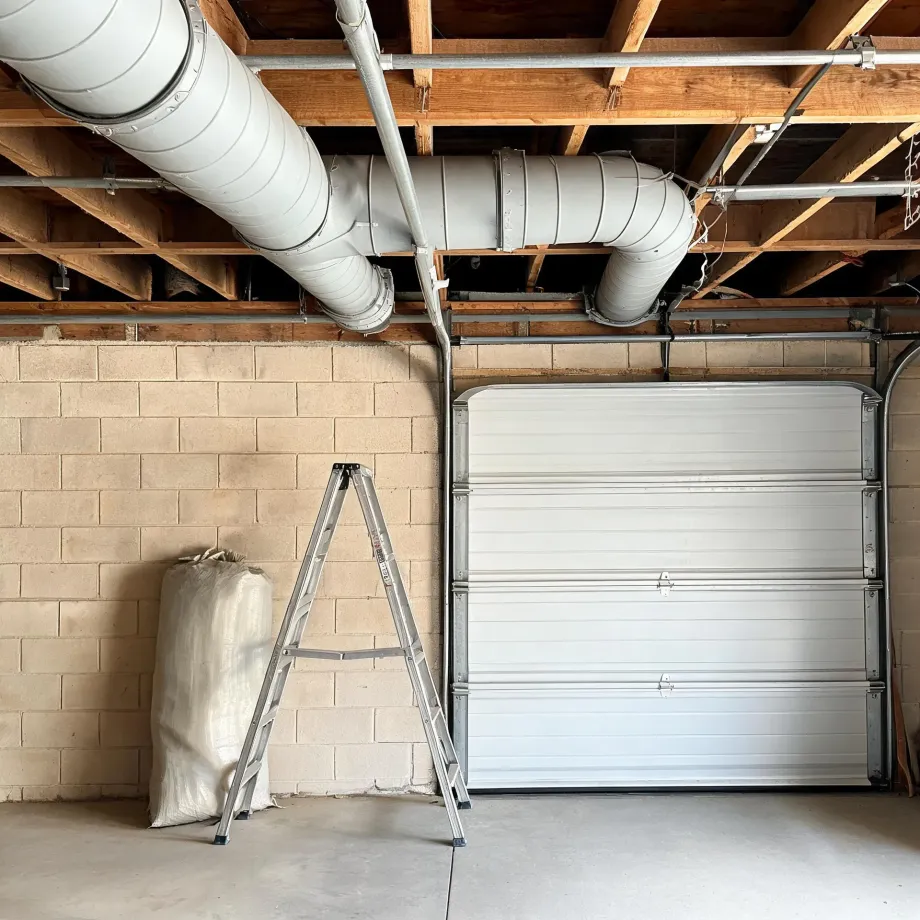
Ductwork sized and routed for an earlier heating system does not automatically suit what a boiler contractor puts in its place. The branching, the lengths, the zones, and how heat was originally meant to move through the house all shape what a new installation can deliver. Half the homes in Montgomery County, Arkansas were built in 1989 or earlier (2020-2024 ACS 5-year). That history is what a contractor has to map before the equipment order is placed, because piping and distribution choices for the new system follow from what is already behind the walls, not from the spec sheet alone.
What a Boiler Installation Puts in Your Home
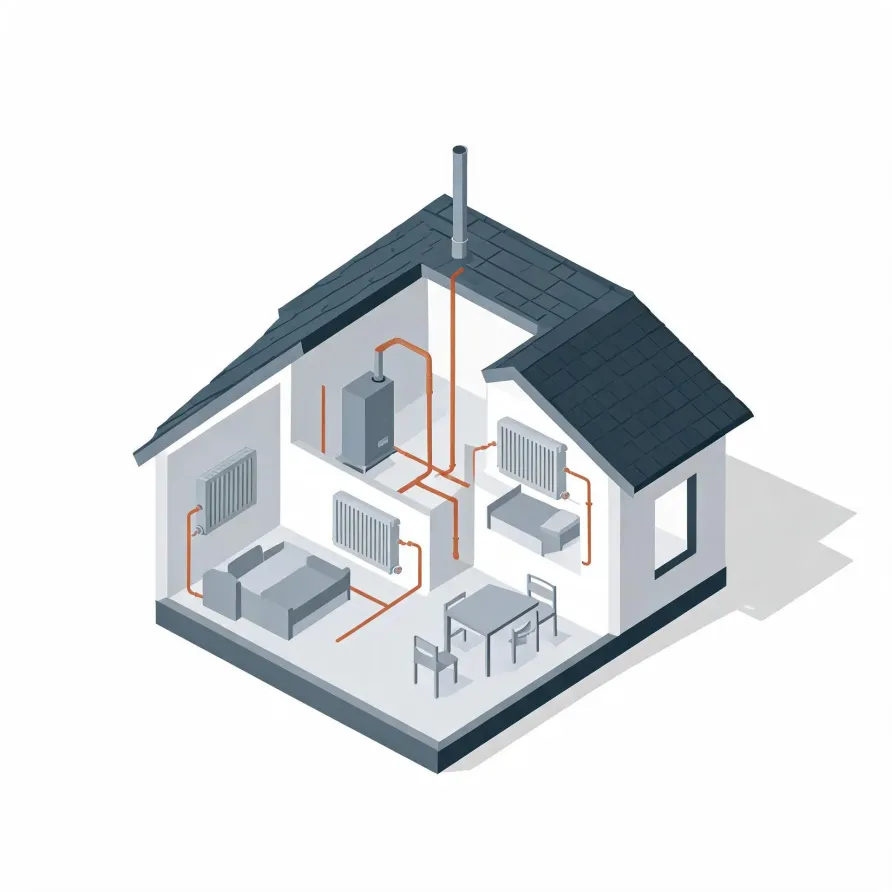
The boiler itself sits in a mechanical room, basement, or utility closet. It is the unit that heats water and sends it through the system. Alongside it, the expansion tank absorbs pressure changes as water heats and cools, and the circulator pump moves the heated water out to the rest of the house.
From the boiler, supply pipes run to the heat emitters, which are either radiators or radiant floor loops depending on what the house is set up for. A thermostat mounted on a wall ties the whole system together, signaling the boiler when to fire and when to rest.
The drawing shows a representative layout, and a licensed contractor determines exactly which components and configurations apply to this house.
Find a contractor in Montgomery CountyMontgomery County, Arkansas, by the numbers
96 severe weather events were recorded in Montgomery County, Arkansas between 2015 and 2024.
NOAA National Centers for Environmental Information, Storm Events Database, bulk CSV export, events 2015-01-01 through 2024-12-31.Half the homes in Montgomery County, Arkansas were built in 1989 or earlier (2020-2024 ACS 5-year).
U.S. Census Bureau, 2020-2024 American Community Survey 5-Year EstimatesMontgomery County, Arkansas holds 5,485 housing units (2020-2024 ACS 5-year).
U.S. Census Bureau, 2020-2024 American Community Survey 5-Year EstimatesOwners occupy 80.6% of the occupied homes in Montgomery County, Arkansas (2020-2024 ACS 5-year).
U.S. Census Bureau, 2020-2024 American Community Survey 5-Year EstimatesBoiler Installation Rules on Record for Montgomery County, Arkansas2 codes, standards, and statutes
Licensing and Legal Requirements in Montgomery County, Arkansas
An Arkansas HVACR licence is good across the state: no city or county may require its own licence to do HVACR work, though local permits and inspections still apply.
Arkansas requires an HVACR licence or registration: it is unlawful to do HVACR work without the appropriate one unless the chapter exempts you.
Severe Weather Events in Montgomery County
Weather extremes put real hours on heating and cooling equipment, shortening the gap between installation and the next failure point. A boiler serving Montgomery County works against whatever the climate here demands, so the local weather record is part of sizing and selecting the right system.
96 severe weather events, 2015–2024. Source: NOAA National Centers for Environmental Information, Storm Events Database.