Tell us about the job
Takes about a minute. No obligation.
Sizing a boiler for a Saline County house is an installation decision, not a catalog decision. Homes in Saline County, AR run heat about five months a year, from November through March. A burner that cycles through that entire stretch of cold weather accumulates real hours on its ignition system and heat exchanger, and a unit that was undersized at installation runs harder across every one of those cycles. The contractor has to calculate the actual heat loss of the house before the equipment is specified, because the installed capacity sets how the burner loads from the first season forward.
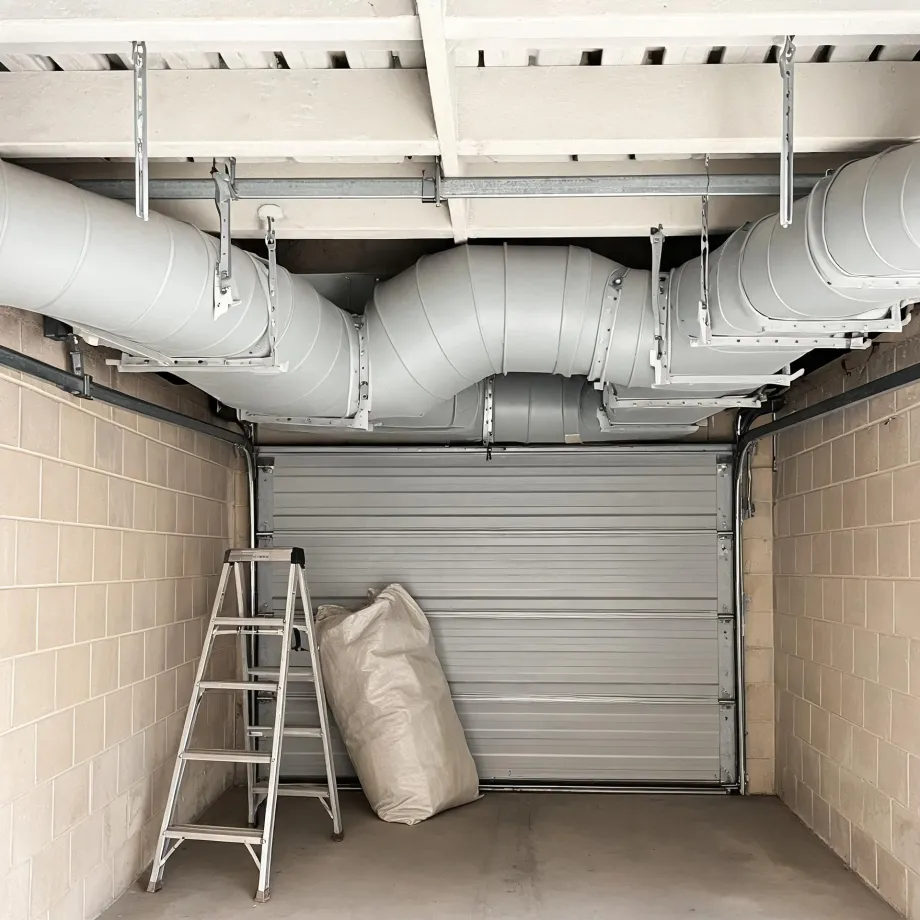
Existing pipe runs and heat distribution layouts in Saline County houses shape a boiler installation before a contractor touches the new unit. Half the homes in Saline County, Arkansas were built in 1997 or earlier (2020-2024 ACS 5-year). Stock that age was built around whatever heating system was original to it, and the rough-in work reflects those choices. A contractor sizing and placing a new boiler has to trace what is already in the walls, confirm the distribution system will carry the new output, and decide what stays and what gets rerun. The boiler itself is straightforward to specify. The pipe is where the job either lines up or does not.
What a Boiler Installation Covers
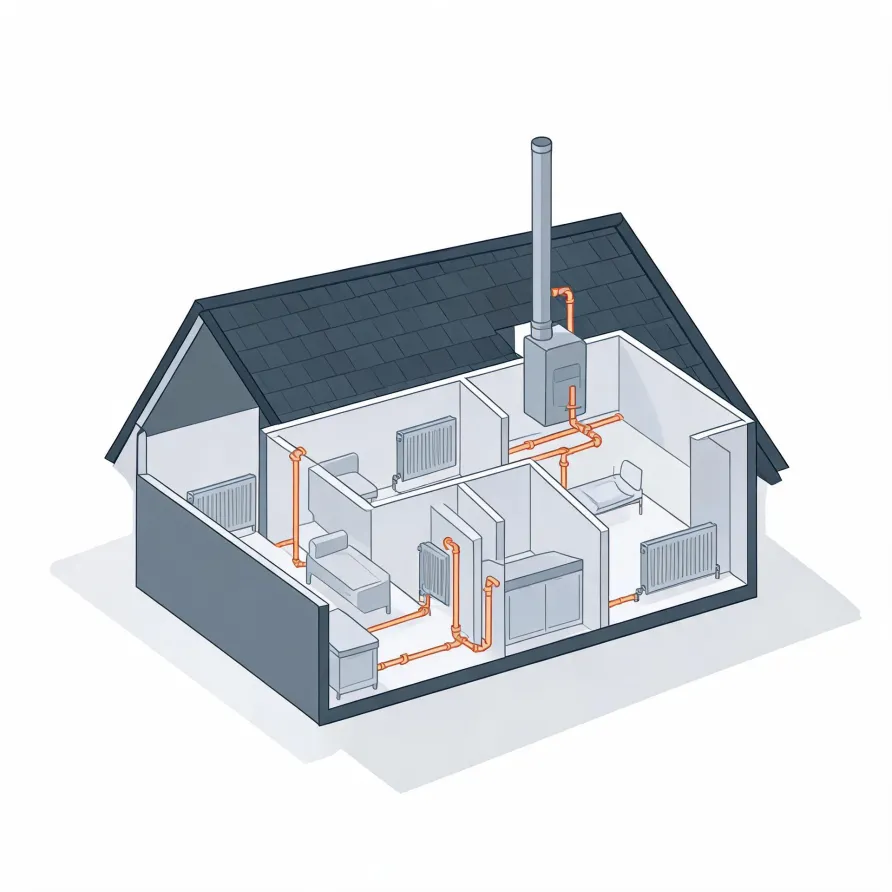
The boiler itself sits in a mechanical room, basement, or utility closet and is the heart of the system. A contractor mounts it to the floor or wall, connects it to the fuel supply, and ties it into the home's piping so it can heat water and send it where it needs to go.
The radiators, baseboard units, or radiant floor loops receive that heated water and give off warmth in each room. Alongside those, an expansion tank and circulator pump keep pressure stable and water moving through the pipes, and a flue or exhaust vent carries combustion gases out of the house.
The drawing shows a typical boiler layout, and a licensed contractor determines exactly what applies to this house.
Find a contractor in Saline CountySaline County, Arkansas, by the numbers
155 severe weather events were recorded in Saline County, Arkansas between 2015 and 2024.
NOAA National Centers for Environmental Information, Storm Events Database, bulk CSV export, events 2015-01-01 through 2024-12-31.Half the homes in Saline County, Arkansas were built in 1997 or earlier (2020-2024 ACS 5-year).
U.S. Census Bureau, 2020-2024 American Community Survey 5-Year EstimatesSaline County, Arkansas holds 52,934 housing units (2020-2024 ACS 5-year).
U.S. Census Bureau, 2020-2024 American Community Survey 5-Year EstimatesOwners occupy 78.2% of the occupied homes in Saline County, Arkansas (2020-2024 ACS 5-year).
U.S. Census Bureau, 2020-2024 American Community Survey 5-Year EstimatesCodes & Standards Governing Boiler Work in Saline County, Arkansas2 sourced rules and standards
Licensing and Legal Requirements in Saline County, Arkansas
An Arkansas HVACR licence is good across the state: no city or county may require its own licence to do HVACR work, though local permits and inspections still apply.
Arkansas requires an HVACR licence or registration: it is unlawful to do HVACR work without the appropriate one unless the chapter exempts you.
Severe Weather Events in Saline County
Boiler systems carry the load when outdoor conditions push hard against a home. How often that happens in Saline County shapes what a system needs to handle and how well it has to be sized and installed.
155 severe weather events, 2015–2024. Source: NOAA National Centers for Environmental Information, Storm Events Database.