Tell us about the job
Takes about a minute. No obligation.
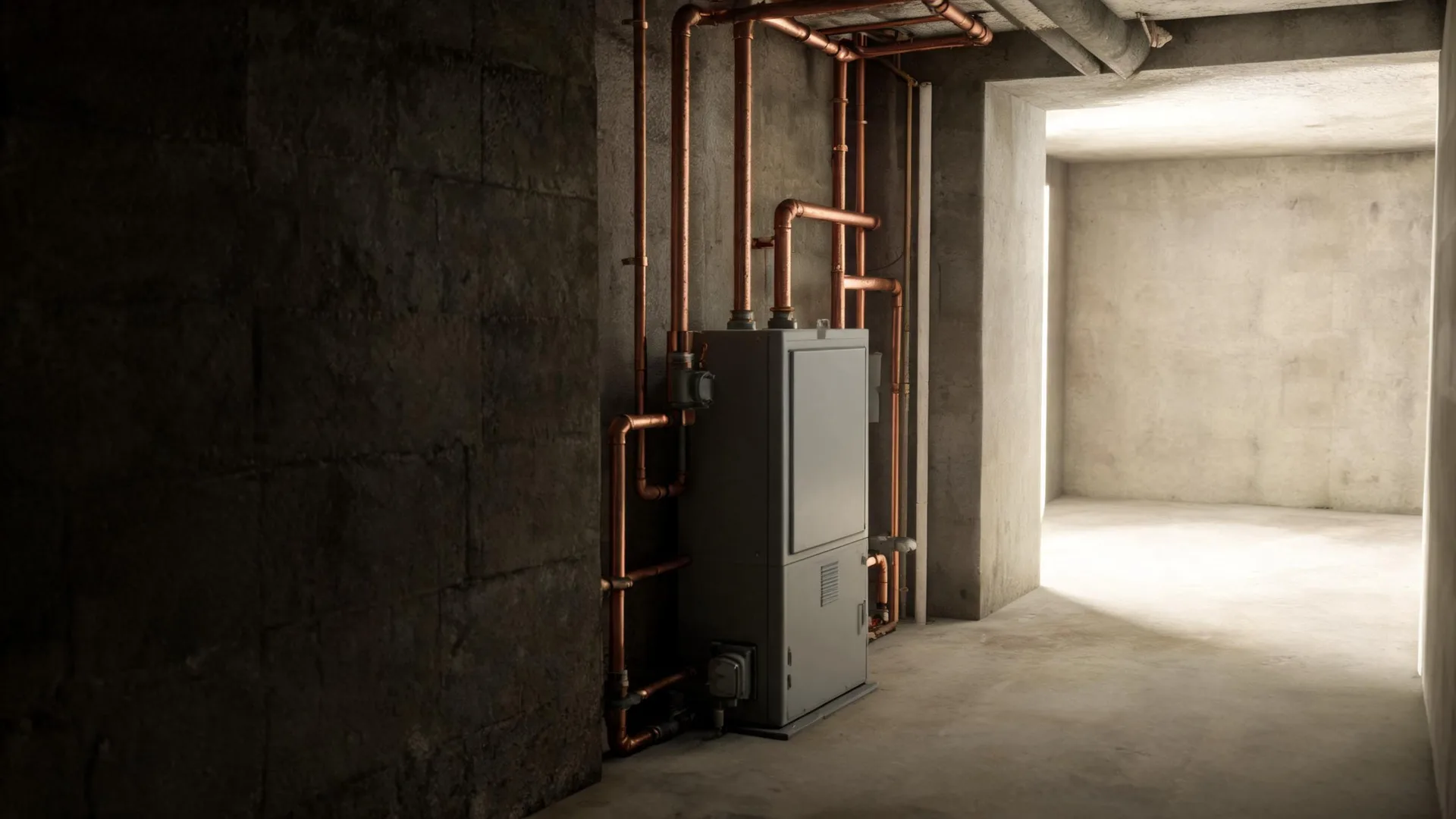
Homes in Polk County, AR run heat about seven months a year, from October through April. A boiler in this county spends months cycling on and off through cold nights, and the burner assembly and ignition components absorb that load directly. When a contractor opens a unit for a repair call, worn igniter electrodes or a heat exchanger showing fatigue are findings that belong to a machine that has been asked to run hard. A system that was undersized at installation or left without a check between seasons often reveals that gap at the burner first.
Half the homes in Polk County, Arkansas were built in 1986 or earlier (2020-2024 ACS 5-year). A boiler running in a house from that era of the county's stock is likely running on a parts list that has narrowed considerably since the unit was installed. When a contractor opens the system, what decides the repair is whether the components it takes are still in production or have to be sourced from supply chains that have thinned out. That answer changes the bill and sometimes the scope.
The Parts of a Boiler a Contractor Checks First
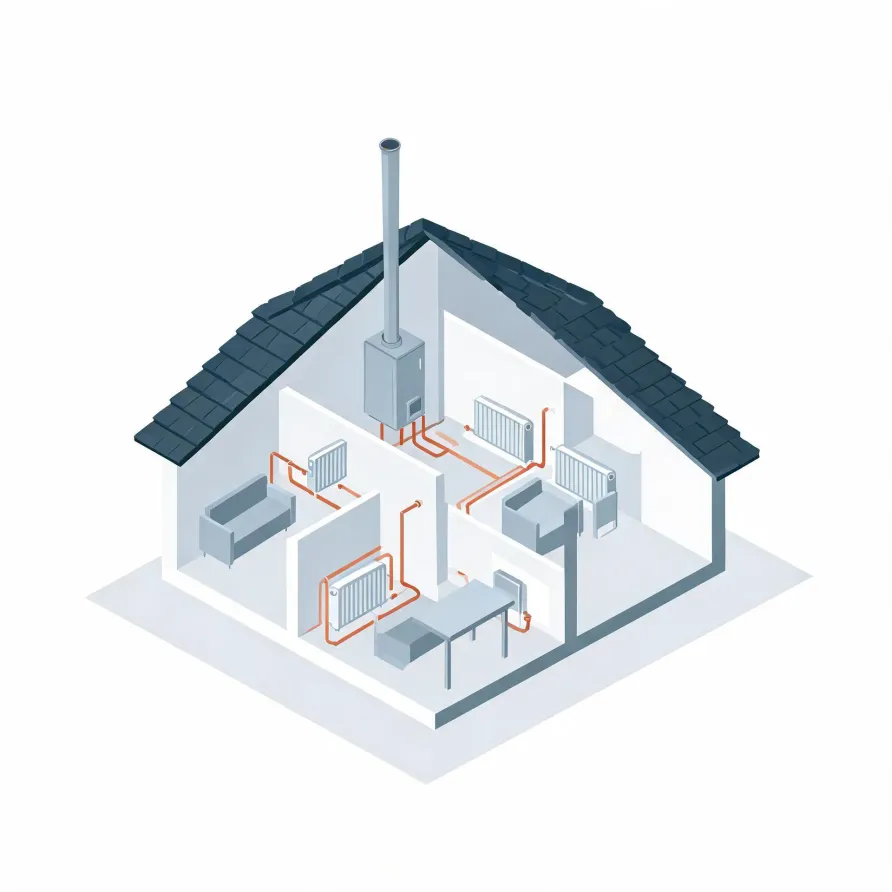
The boiler itself is the core of the system, a sealed vessel that sits in the basement or mechanical room and heats water by burning fuel or drawing on an electric element. When pressure readings are off, the unit short-cycles, or heat stops reaching certain rooms, the boiler is the first place a contractor looks.
The circulator pump moves heated water out through the supply pipes and pulls cooled water back through the return line. The expansion tank, usually mounted nearby, absorbs pressure changes as the water heats and contracts. The zone valves and thermostatic controls direct flow to different parts of the house, and a fault in any one of them can mimic a boiler problem.
The drawing shows a general layout of these components, and a licensed contractor determines which parts apply and what condition they are in for your specific system.
Find a contractor in Polk CountyPolk County, Arkansas, by the numbers
70 severe weather events were recorded in Polk County, Arkansas between 2015 and 2024.
NOAA National Centers for Environmental Information, Storm Events Database, bulk CSV export, events 2015-01-01 through 2024-12-31.Half the homes in Polk County, Arkansas were built in 1986 or earlier (2020-2024 ACS 5-year).
U.S. Census Bureau, 2020-2024 American Community Survey 5-Year EstimatesPolk County, Arkansas holds 9,643 housing units (2020-2024 ACS 5-year).
U.S. Census Bureau, 2020-2024 American Community Survey 5-Year EstimatesOwners occupy 78.9% of the occupied homes in Polk County, Arkansas (2020-2024 ACS 5-year).
U.S. Census Bureau, 2020-2024 American Community Survey 5-Year EstimatesCodes & Standards Governing Boiler and HVAC Repair in Polk County, Arkansas2 sourced rules and standards
Licensing and Legal Requirements in Polk County, Arkansas
An Arkansas HVACR licence is good across the state: no city or county may require its own licence to do HVACR work, though local permits and inspections still apply.
Arkansas requires an HVACR licence or registration: it is unlawful to do HVACR work without the appropriate one unless the chapter exempts you.
Severe Weather Events in Polk County
Extreme weather puts stress on boiler systems: hard freezes, power fluctuations, and pressure swings all accelerate wear and push equipment toward failure. How often that stress lands on Polk County homes shapes how much repair work boilers here actually face.
70 severe weather events, 2015–2024. Source: NOAA National Centers for Environmental Information, Storm Events Database.