Tell us about the job
Takes about a minute. No obligation.
Sizing a boiler for this house is not a generic calculation. The burner and heat exchanger cycle through a long, continuous season, and every degree of mismatch between the system's output and the house's actual load shows up as extra starts, longer runs, or both. Homes in Yell County, AR run heat about six months a year, from November through April. A contractor quoting a replacement here has to work from a proper load calculation, not from what the old unit was, because a boiler that was undersized from the start has been working harder than it should through every one of those months. The ignition system and heat exchanger carry that history in their condition.
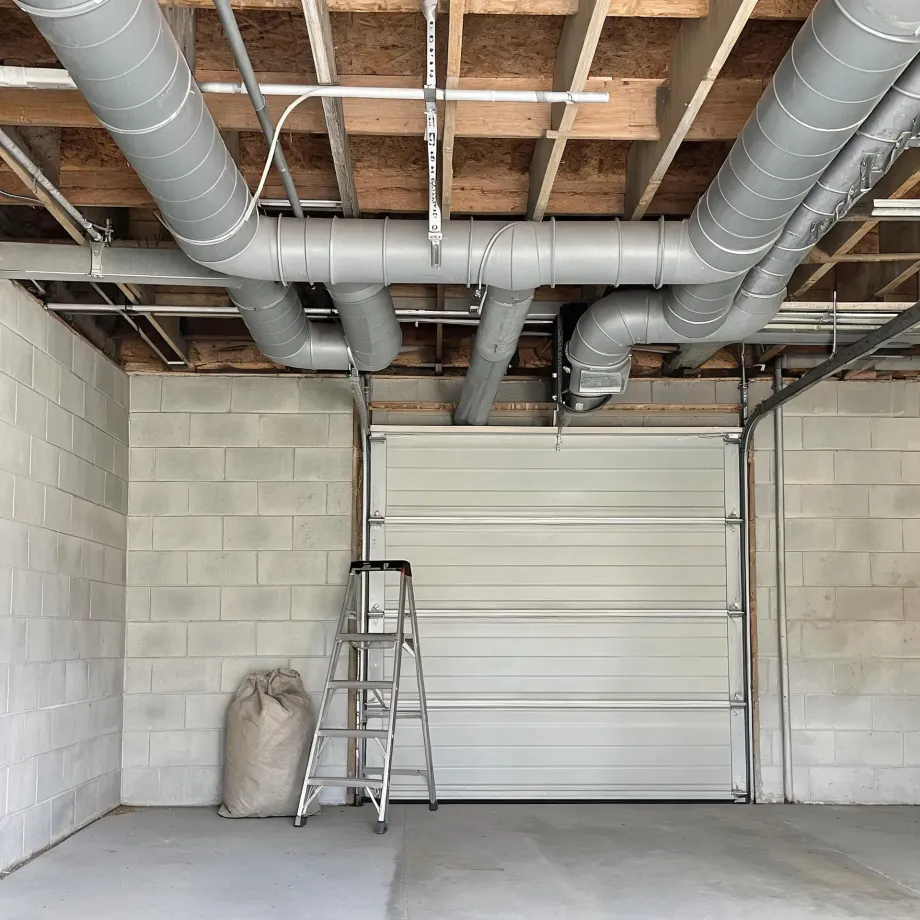
Ductwork sized and routed for a previous generation of heating does not automatically carry what a modern boiler installation requires. Half the homes in Yell County, Arkansas were built in 1984 or earlier (2020-2024 ACS 5-year). A contractor setting up a new boiler has to confirm that the existing distribution system moves air or water the way the new unit expects, and where it does not, that gap becomes the job. The electrical service gets the same look, since a panel original to the house may be running at its limit before the new equipment ever draws from it.
What a Boiler Installation Covers
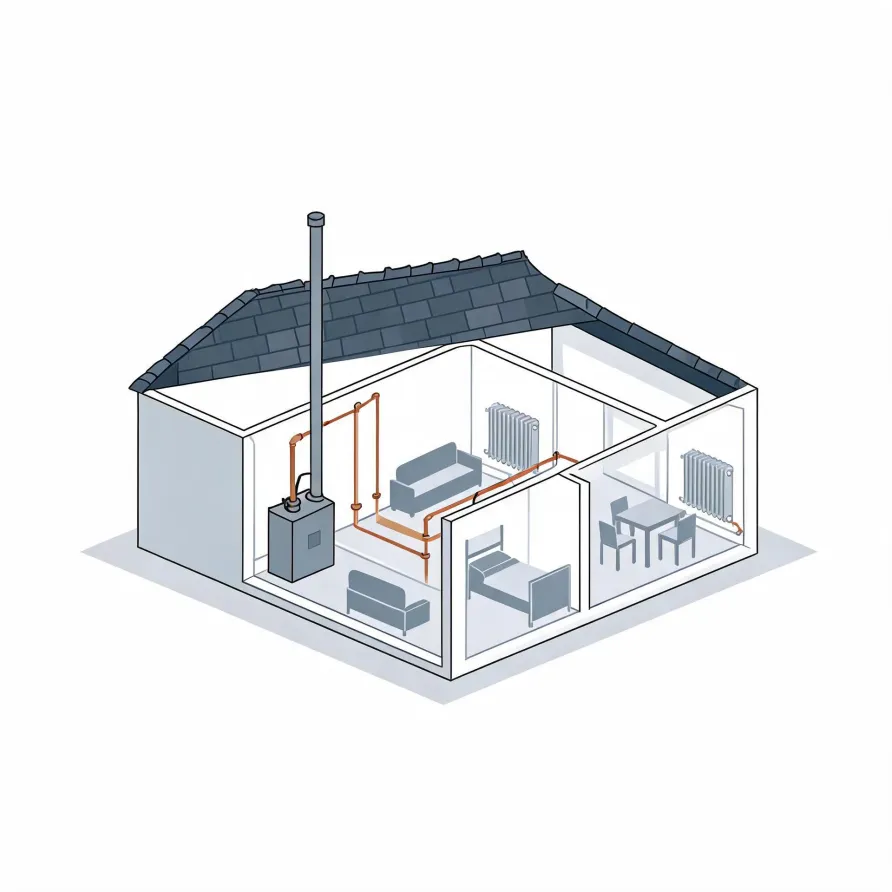
The boiler itself is the heart of the system. It sits in a mechanical room, basement, or utility closet and heats water that travels out to the rest of the house. A contractor also installs the expansion tank, which hangs near the boiler and absorbs pressure changes as the water heats and cools.
Radiators or radiant floor loops are the delivery end, placed in each room or run beneath the floor to release heat where it is needed. The circulator pump, mounted close to the boiler, keeps water moving through those loops. The system also includes shut-off valves, a pressure relief valve, and the controls that tell the whole system when to fire.
The drawing shows a general layout of these components, and a licensed contractor determines exactly what applies to your home.
Find a contractor in Yell CountyYell County, by the numbers
66 severe weather events were recorded in Yell County, Arkansas between 2015 and 2024.
NOAA National Centers for Environmental Information, Storm Events Database, bulk CSV export, events 2015-01-01 through 2024-12-31.Half the homes in Yell County, Arkansas were built in 1984 or earlier (2020-2024 ACS 5-year).
U.S. Census Bureau, 2020-2024 American Community Survey 5-Year EstimatesYell County, Arkansas holds 9,312 housing units (2020-2024 ACS 5-year).
U.S. Census Bureau, 2020-2024 American Community Survey 5-Year EstimatesOwners occupy 67.5% of the occupied homes in Yell County, Arkansas (2020-2024 ACS 5-year).
U.S. Census Bureau, 2020-2024 American Community Survey 5-Year EstimatesCodes & Standards Governing Boiler Work in Yell County, Arkansas2 sourced rules and standards
Licensing and Legal Requirements in Yell County, Arkansas
An Arkansas HVACR licence is good across the state: no city or county may require its own licence to do HVACR work, though local permits and inspections still apply.
Arkansas requires an HVACR licence or registration: it is unlawful to do HVACR work without the appropriate one unless the chapter exempts you.
Severe Weather Events in Yell County
Boiler sits in a climate that can push heating equipment hard, and what the weather demands from a boiler over its life is a local fact, not a general one. The record below shows what Yell County has logged, because that history shapes how contractors size and install equipment here.
66 severe weather events, 2015–2024. Source: NOAA National Centers for Environmental Information, Storm Events Database.