Tell us about the job
Takes about a minute. No obligation.
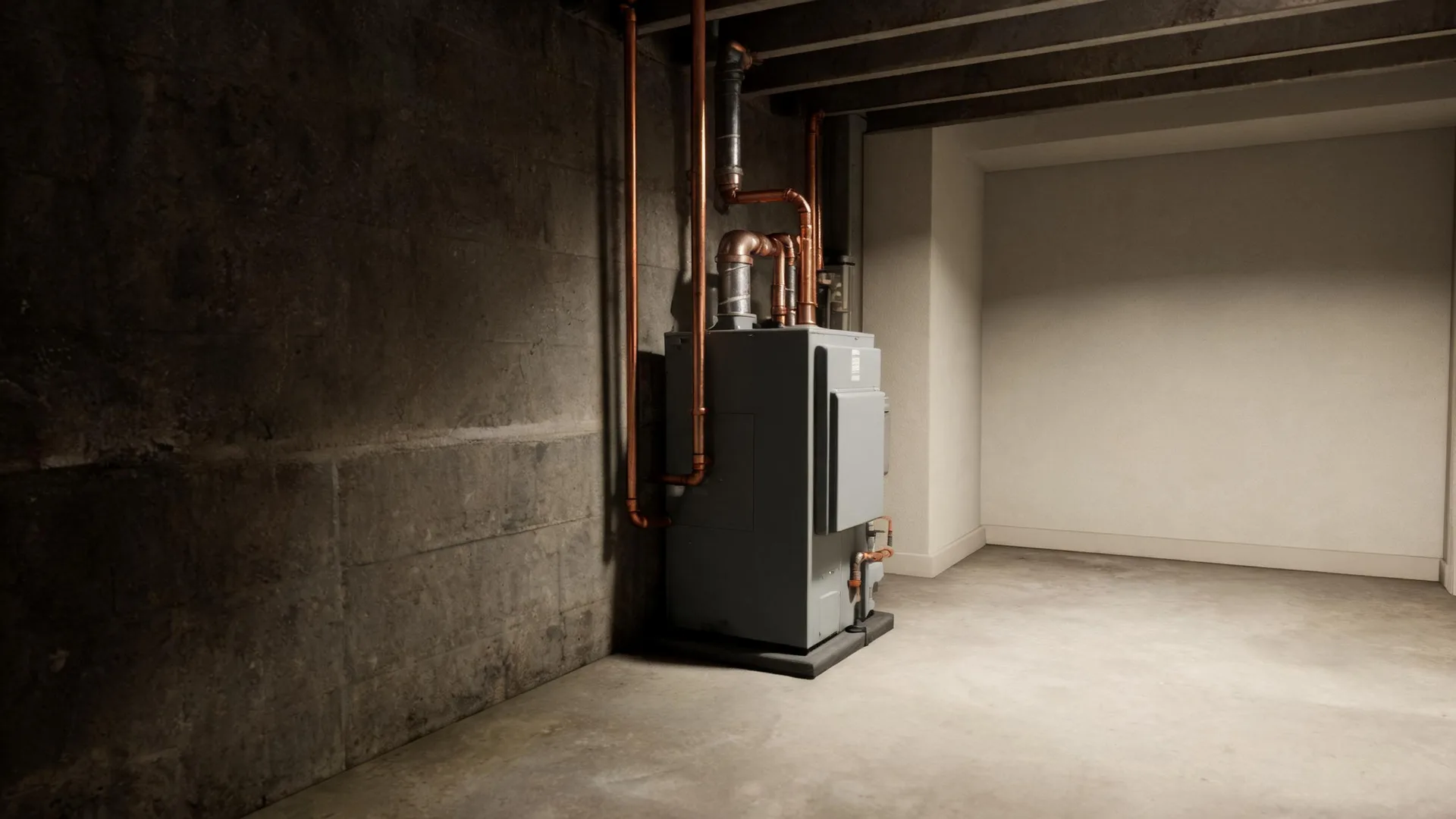
A boiler installed in Little River County works its burner and heat exchanger hard every winter, then sits idle through a long warm stretch before the next heating season starts. Homes in Little River County, AR run heat about five months a year, from November through March. That full stop between seasons does not rest the equipment the way it sounds: a system that was undersized or poorly commissioned at startup will have the fault exposed on the first cold November morning when it begins cycling again. The burner, the ignition system, and the heat exchanger each take that repeated start-up load, and a contractor sizing a new boiler here has to account for the full seasonal demand before committing to a unit.
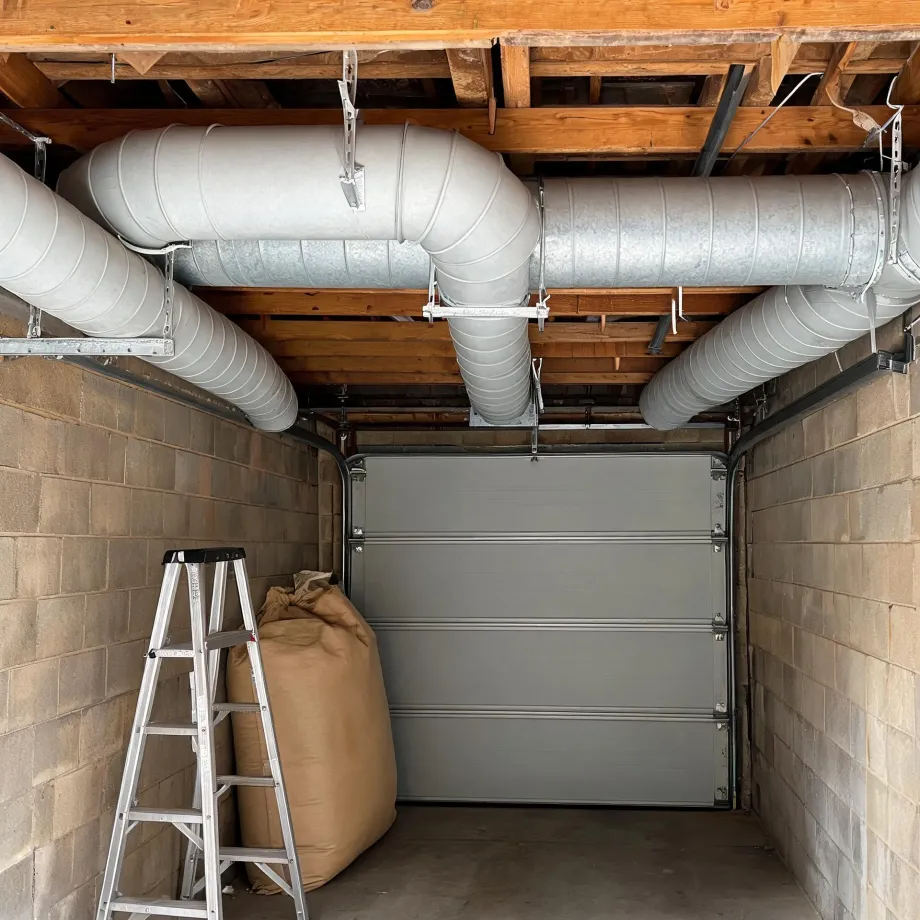
Ductwork sized and routed for equipment that has since been replaced shapes what any new boiler installation actually requires in this county. Half the homes in Little River County, Arkansas were built in 1980 or earlier (2020-2024 ACS 5-year). That vintage of construction means a contractor opening walls or crawlspaces is often finding distribution runs laid out for something the current house no longer runs, and a new boiler has to move heat through whatever that network will allow. Electrical service gets checked for the same reason. What the house already contains sets the scope before a single component is priced.
What a Boiler Installation Covers
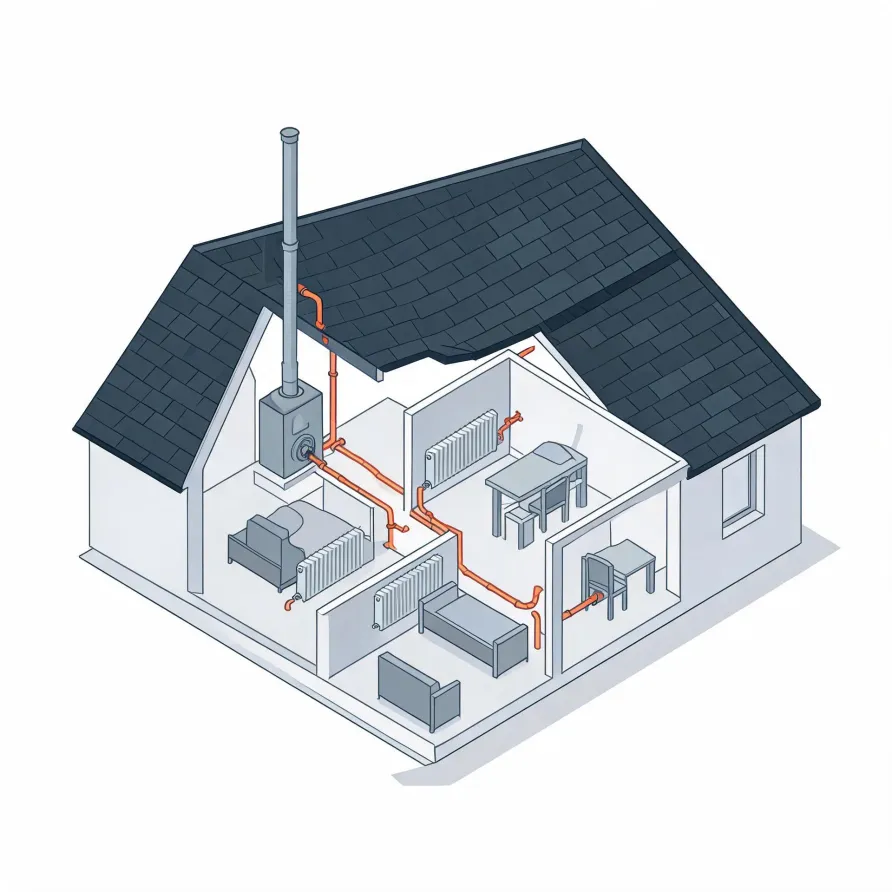
The boiler itself sits in a mechanical room, basement, or utility closet and is the heart of the system. A contractor sets the unit in place, connects it to the fuel supply, and ties it into the home's piping. That piping carries heated water out to the distribution points throughout the house.
Radiators, baseboard units, or radiant floor loops receive that water and give off heat to each room. A contractor also installs or connects the expansion tank, circulator pump, and pressure relief valve, each of which sits close to the boiler and keeps the system running at safe, steady conditions.
The drawing shows a typical boiler layout, and a licensed contractor determines exactly what the installation requires in your home.
Find a contractor in Little River CountyLittle River County, Arkansas, by the numbers
64 severe weather events were recorded in Little River County, Arkansas between 2015 and 2024.
NOAA National Centers for Environmental Information, Storm Events Database, bulk CSV export, events 2015-01-01 through 2024-12-31.Half the homes in Little River County, Arkansas were built in 1980 or earlier (2020-2024 ACS 5-year).
U.S. Census Bureau, 2020-2024 American Community Survey 5-Year EstimatesLittle River County, Arkansas holds 6,059 housing units (2020-2024 ACS 5-year).
U.S. Census Bureau, 2020-2024 American Community Survey 5-Year EstimatesOwners occupy 80.1% of the occupied homes in Little River County, Arkansas (2020-2024 ACS 5-year).
U.S. Census Bureau, 2020-2024 American Community Survey 5-Year EstimatesBoiler Installation Rules for Little River County, Arkansas2 codes, standards & regs
Licensing and Legal Requirements in Little River County, Arkansas
An Arkansas HVACR licence is good across the state: no city or county may require its own licence to do HVACR work, though local permits and inspections still apply.
Arkansas requires an HVACR licence or registration: it is unlawful to do HVACR work without the appropriate one unless the chapter exempts you.
Severe Weather in Little River County
Boiler systems work hardest when outside conditions swing the furthest from comfortable. How often that happens in Little River County shapes what a contractor needs to size and install to keep a home reliably heated.
64 severe weather events, 2015–2024. Source: NOAA National Centers for Environmental Information, Storm Events Database.