





Ozark Boiler

Why your boiler won't turn on in an Arkansas winter

Step 1 of 3: Equipment

Why won't my boiler turn on when it's cold out?

Cold snaps in Arkansas don't last long, but when one hits, you expect the boiler to answer. Instead you get nothing, cold radiators, cold floors, a thermostat calling for heat with no response. Most homes around here heat with electric furnaces or heat pumps, so if yours runs on a boiler, you may not have anyone close by who deals with one often, which makes the sudden quiet feel worse.

Usually a safety switch, a dead igniter, or low water pressure

A boiler that won't fire is almost always stopping itself on purpose. Low water pressure in the system trips a pressure switch that keeps the burner from lighting at all. A failed igniter or flame sensor does the same thing from the other end, since the control board won't let gas flow if it can't confirm a flame. Because a cold snap here might only run a week or two before temperatures climb back up, it's easy to put off calling anyone, but a boiler that's cut itself off needs someone to find out why, not just a reset. A local contractor who works on boilers can check the pressure, the igniter and the switches in one visit and get the heat back on.

A woman in a knitted shawl sits in a living room with a fireplace, shelves, a sofa with cushions, and a lamp by a bright window, looking off to the side.
A woman with long brown wavy hair in a green shirt over a white top stands in a living room with built-in white shelves, a ceiling fan, a potted plant and a sliding glass door.
A woman with shoulder-length gray-streaked hair in a light gray knit sweater stands smiling and looking off to the side in a living room with a sofa, houseplant, framed picture, and sunlit sliding glass door.
A woman with shoulder-length curly gray hair wearing a gray knit sweater stands near a window with a sheer curtain, looking to the side, with a blurred interior room behind her.
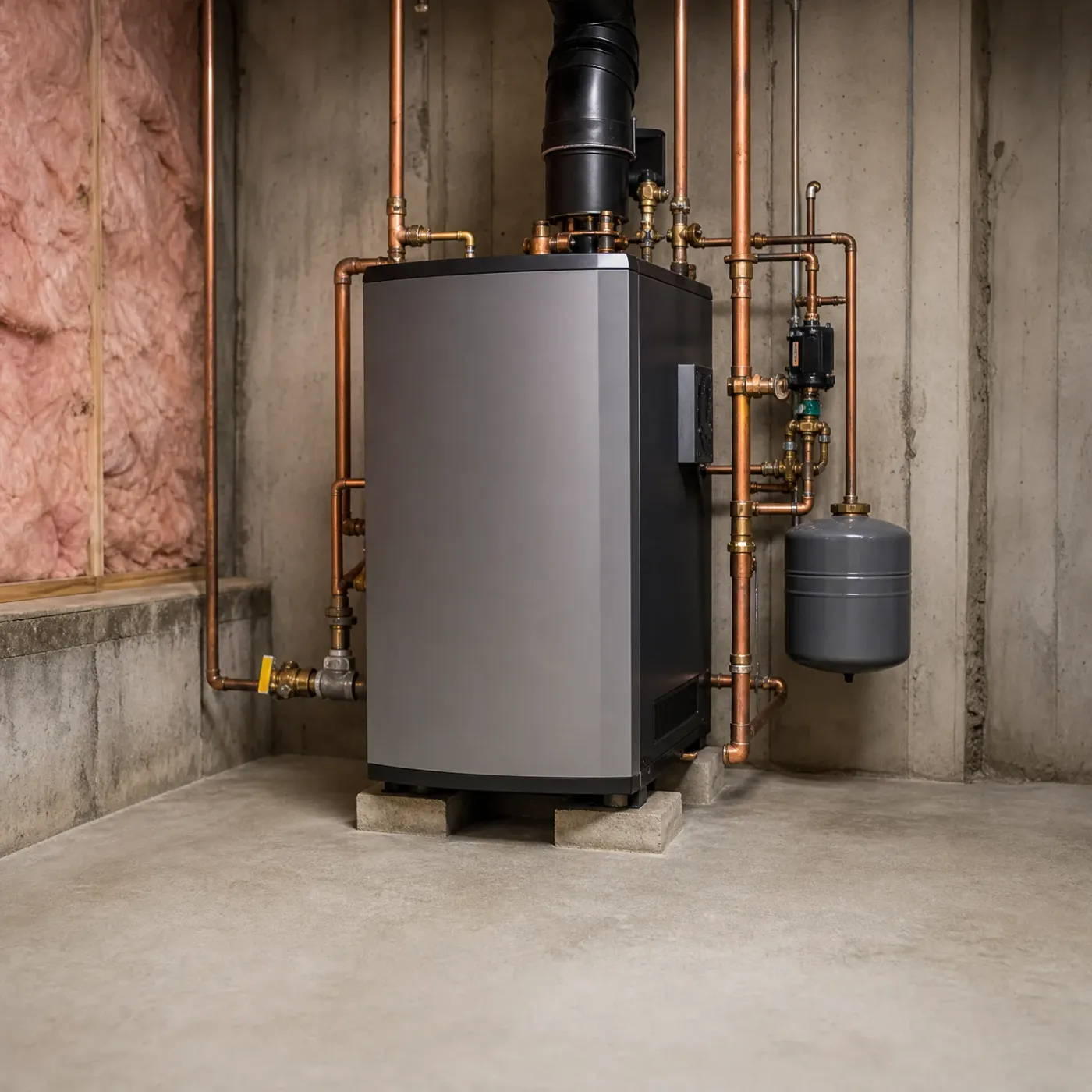
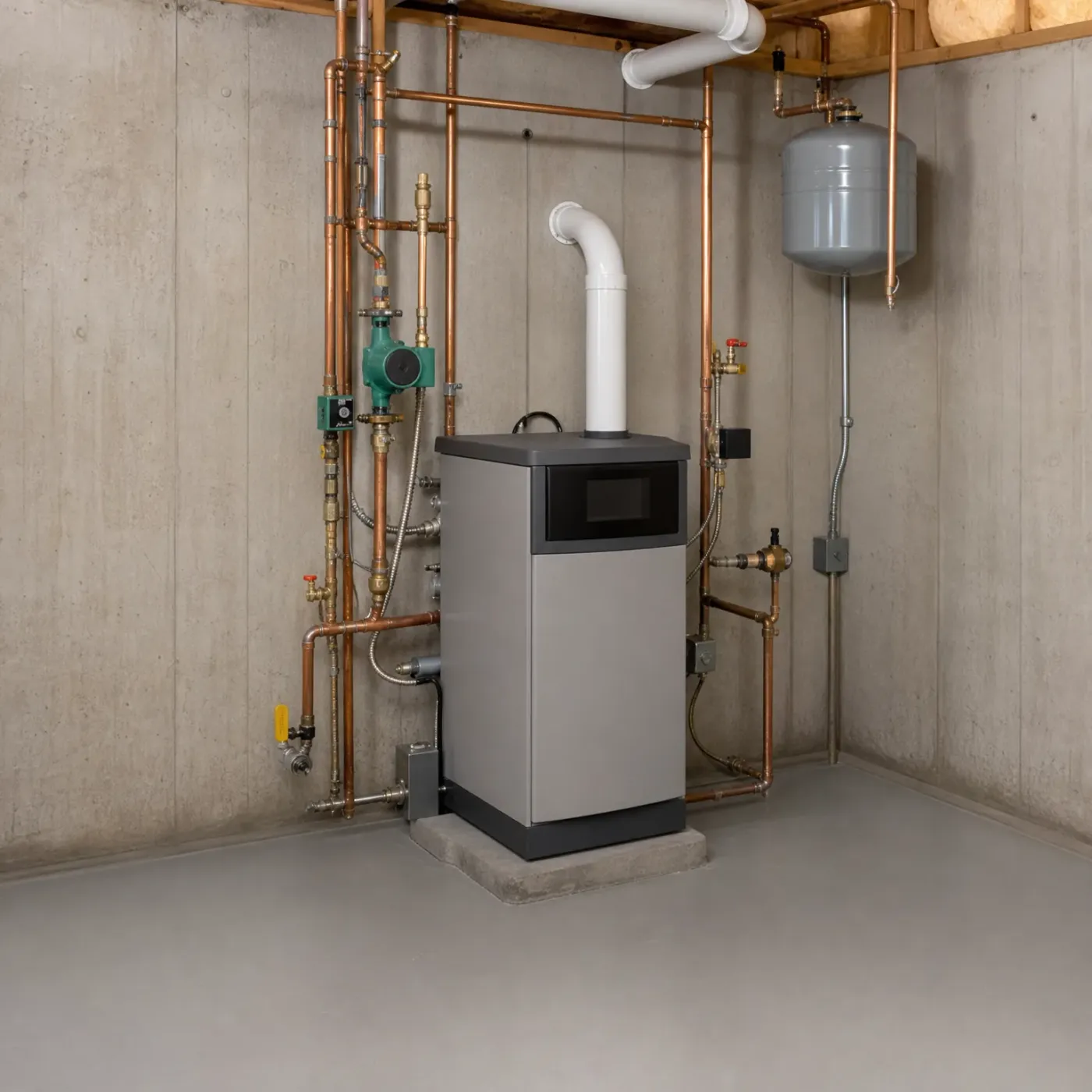
A gray and black boiler unit sits on concrete blocks in a basement corner, connected to copper piping, valves, a black flue duct, and a gray expansion tank, with bare concrete walls and exposed pink insulation at left.
Circulator pump runs, pipes stay warm to the touch, and heat moves through the house the way it should.
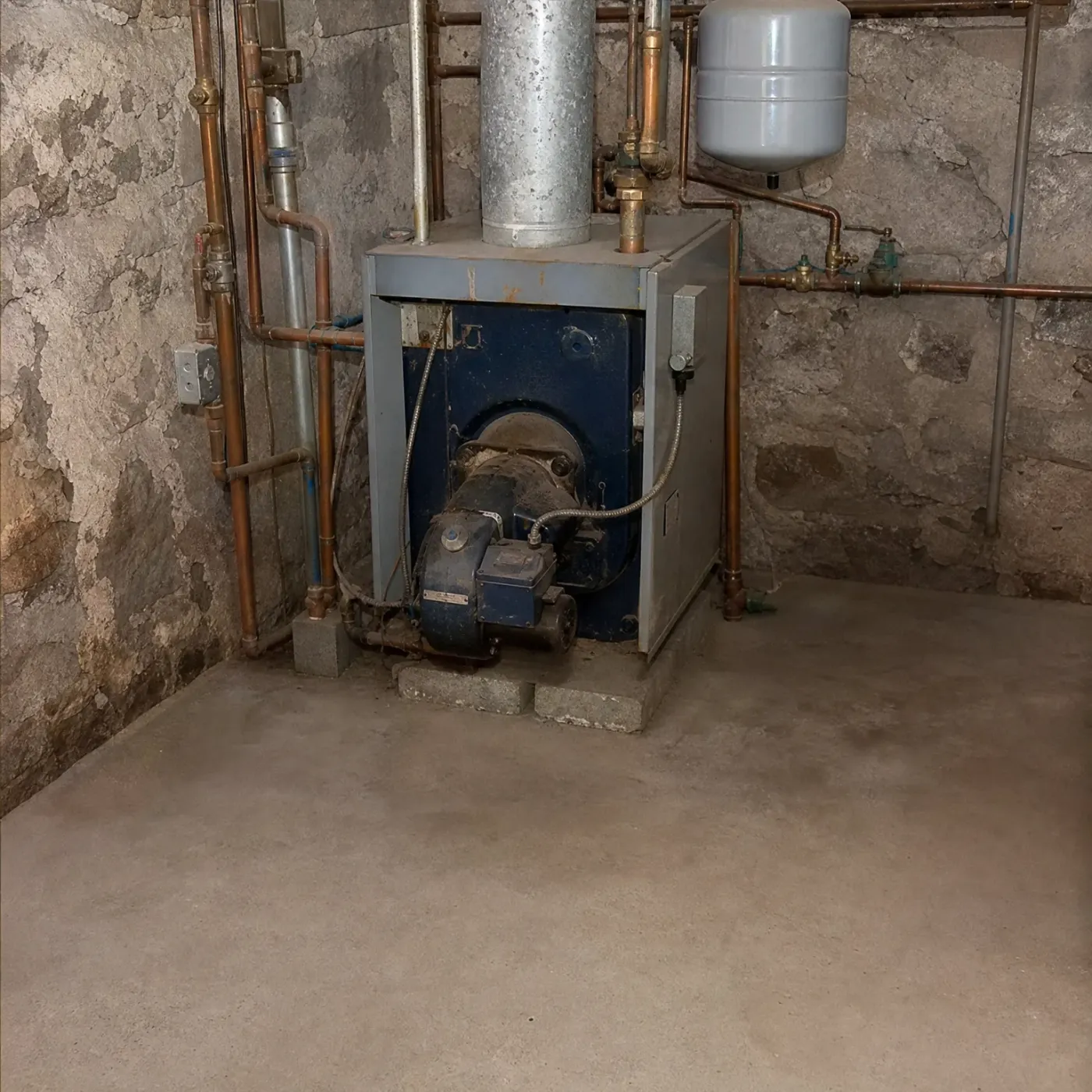
An oil-fired boiler with a blue and gray cabinet and burner sits on concrete blocks in a basement corner with stone walls, connected to copper pipes, a metal flue, and a wall-mounted expansion tank.
No hum from the pump, pipes cold at the union joints, and the burner never lights when the thermostat calls.

Boilers are rare enough in Arkansas that a cold boiler gets noticed fast. Most houses nearby run on electric heat, so when yours goes quiet you don't have a neighbor's experience to compare notes with, just cold radiators and a thermostat doing nothing. The people in the house feel it first in the rooms that depend on it most, the ones that never warm up from a space heater the way a radiator does. A boiler that won't fire isn't a slow leak in comfort, it's the whole system down at once, and in a hard freeze that matters more than it would with a furnace you could limp along on one working zone. Pipes that sit cold for days are worth paying attention to as well. None of this is reason to panic over a short cold snap, but it's reason not to wait it out hoping the boiler sorts itself. A system that won't start on its own usually needs a hand to start again.

A woman with her hair in a bun holds a sleeping young child against her chest, both wrapped in a textured beige knit blanket on a sofa in a dimly lit room with a lamp, framed picture, and bookshelf behind them.
An older woman with gray hair in a bun and glasses, wearing a beige knit sweater, smiles while looking to the side in a warmly lit kitchen, with a loaf of bread on the counter in the foreground and a snowy scene outside the window.
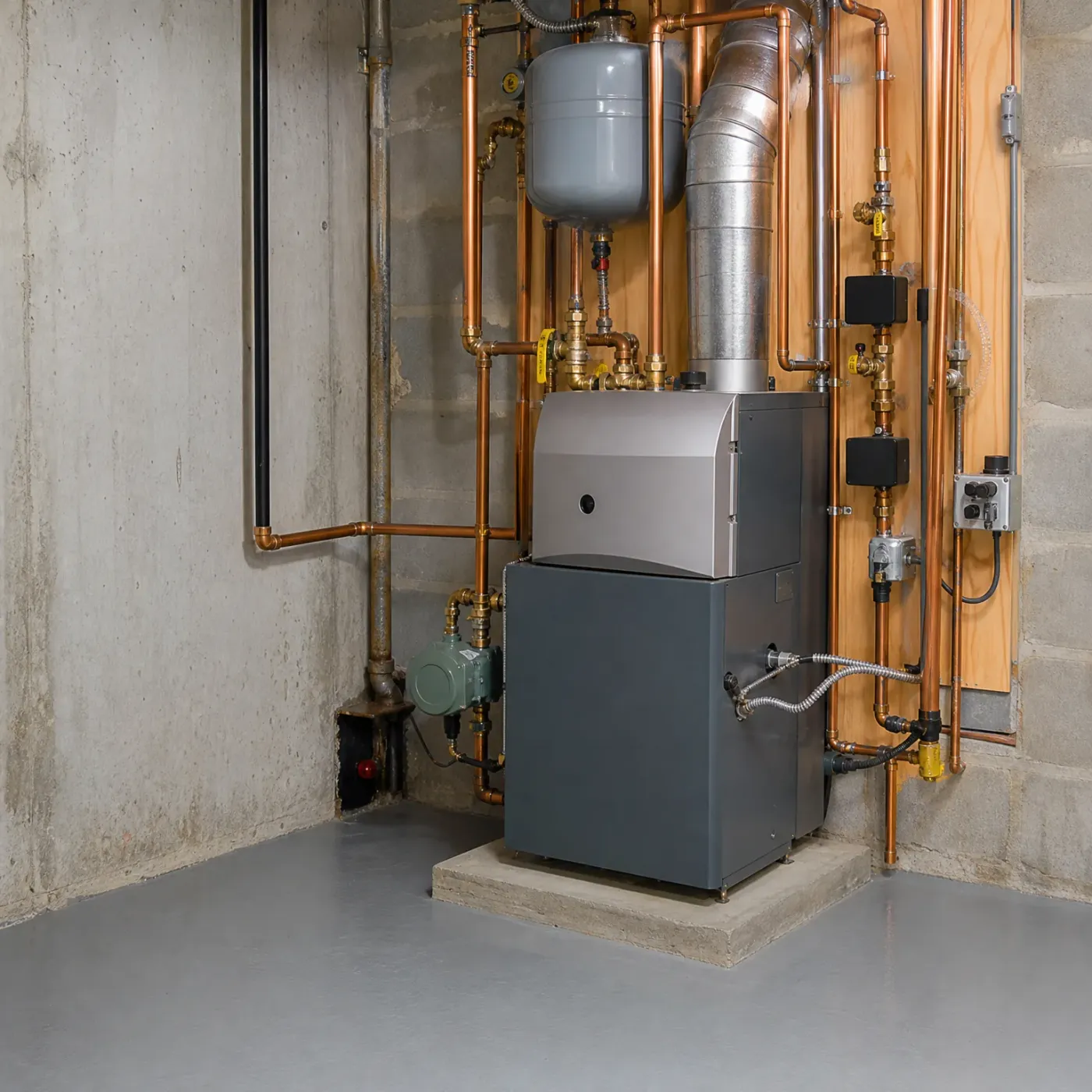
A gray residential boiler on a concrete pad in a basement corner, connected to copper piping, an expansion tank, circulator pumps and insulated flue ducting against concrete and plywood walls.

What a working system looks like

The circulator pump sits quiet until the thermostat calls, then it runs and pushes hot water through the copper piping to every radiator. The expansion tank holds steady pressure as the water heats. Valves stay dry, fittings stay tight, and the exhaust duct carries combustion gas out without a trace of leakage.
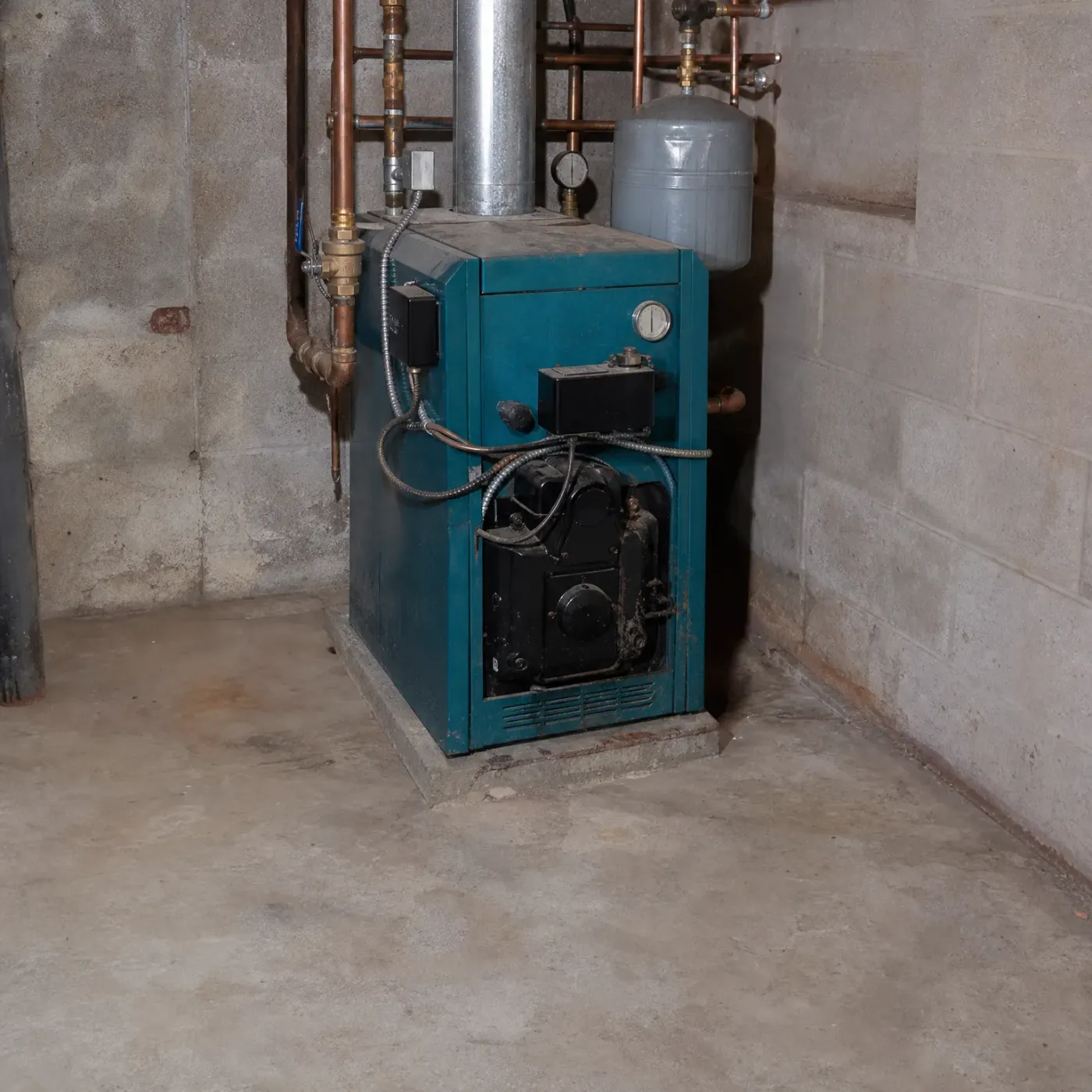
A teal boiler with a pressure gauge and black burner unit sits on a concrete pad in a basement corner, with copper pipes, a flue vent, and a gray expansion tank above against concrete block walls.

What trouble looks like

The gauge reads low or sits at zero and the burner stays dark no matter how many times the thermostat calls. Piping near the unit feels cold even at the joints. An older boiler like this one has had more years for a valve to seize or a seal to give out, and once it stops firing it won't start again on its own.

Winter nights average 32°F statewide

Thirty two degrees is the average overnight low across Arkansas for December, January and February, and most nights land close to that mark rather than far below it. A boiler built for real cold can sit through nights like that without strain, so if yours won't fire, the weather isn't the reason.

NOAA nClimDiv 1991-2020 county normals weighted by homes

A gray floor-standing boiler on a concrete pad in a basement corner, with copper piping, a circulator pump, a white PVC flue, and a gray expansion tank mounted on the wall.

Running right

The pump hums, the copper lines stay warm end to end, and the expansion tank holds its pressure as the water heats. Every joint stays dry. The burner fires the moment the thermostat calls, and it keeps firing until the house reaches temperature.

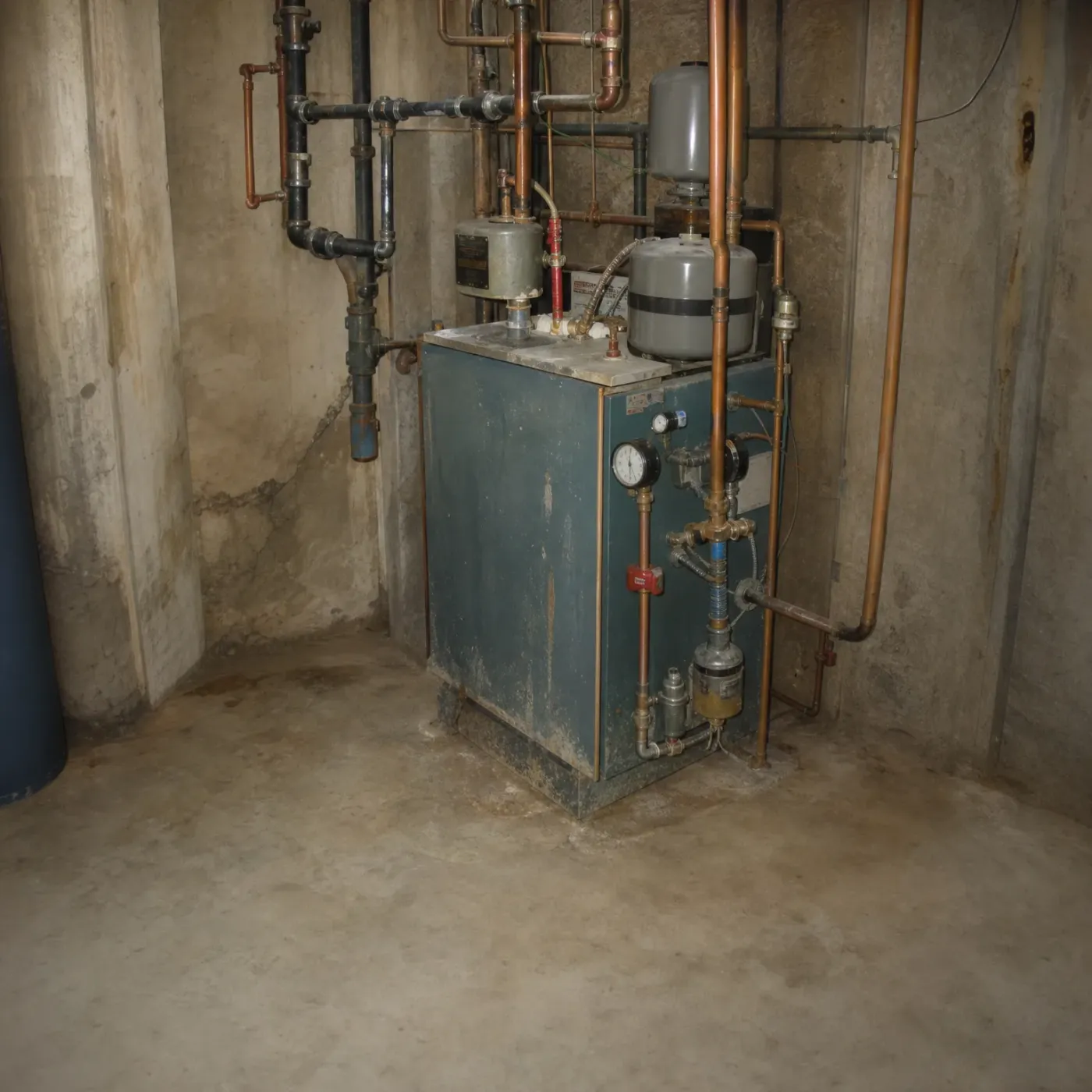
A green metal boiler with pressure gauge stands in a concrete basement corner, surrounded by copper and black iron pipes and two tank-shaped vessels.

Shut down cold

The pressure gauge reads low or sits at zero, and the iron pipes near the unit are cold to the touch. No sound from the burner when the thermostat calls. A valve nearby may be weeping, and that slow leak is often why the pressure dropped in the first place.

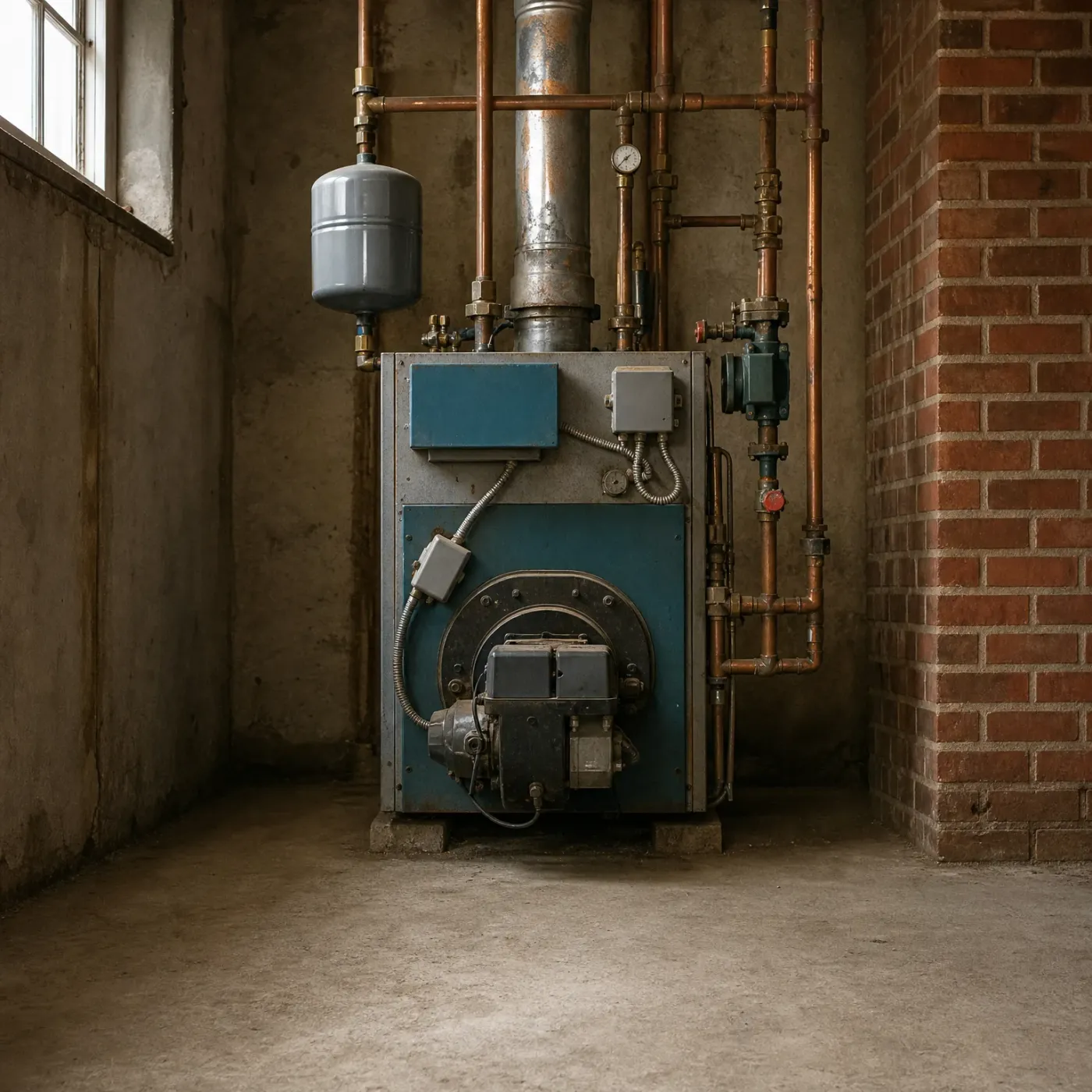
A blue cast-iron boiler with a burner unit, gauges and copper piping stands in a concrete-floored basement room beside a red brick pillar and a window.
Before you get your boiler repair
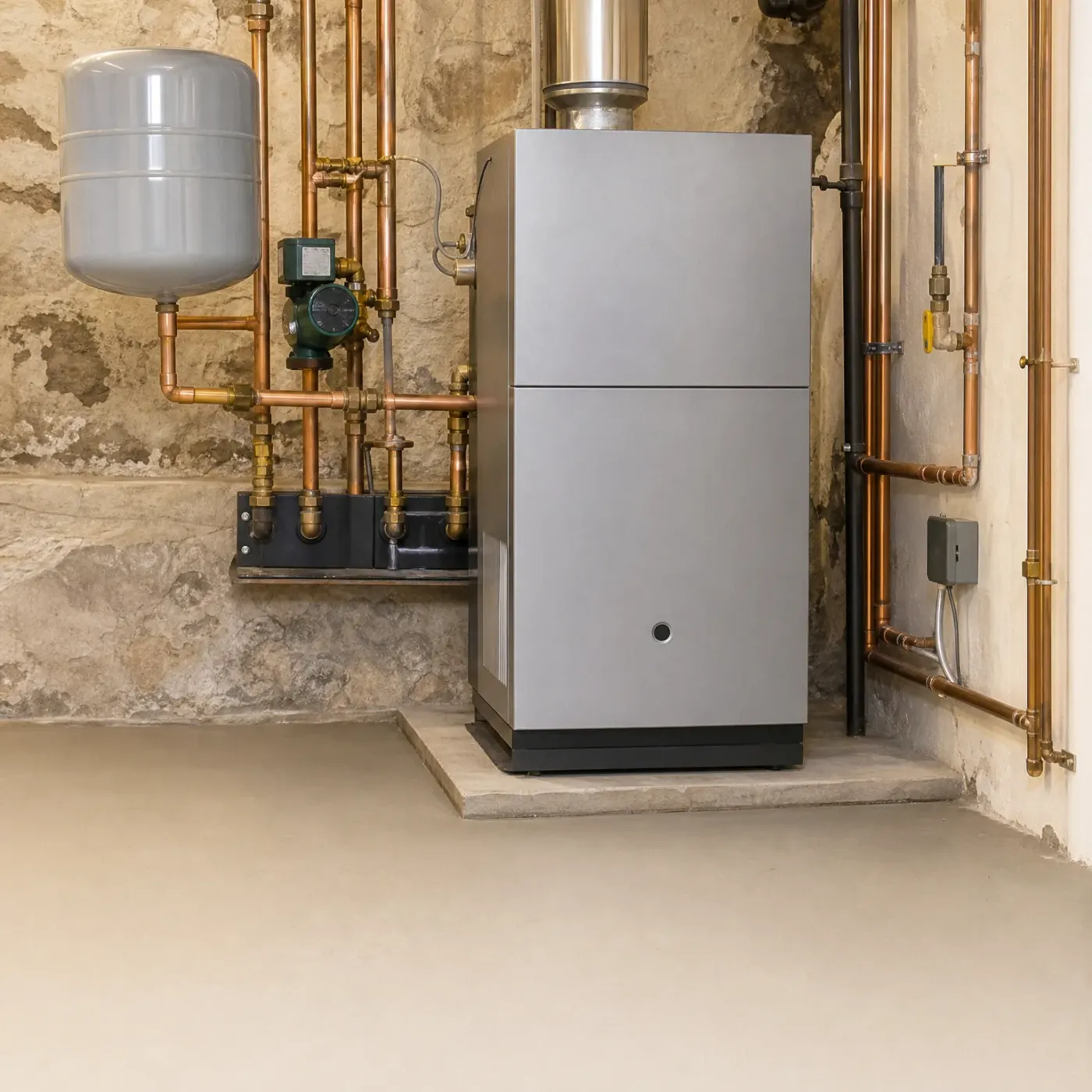
A gray boiler unit with a flue pipe stands on a concrete pad in a basement, surrounded by copper piping, a circulator pump, an expansion tank mounted on a stone wall, and an electrical outlet.
After you get your boiler repair

No phone calls to make

A boiler that won't fire in a cold snap isn't a job to figure out over the phone with whoever picks up first. Someone who works on boilers in Arkansas every winter has seen this exact failure plenty of times, on the same kind of system, and knows where to look before touching a wrench. That's different from a company that mostly installs furnaces and electric heat pumps taking a guess at your pressure switch or your igniter because boilers aren't what they see every day here. Send the request once and it goes to one licensed local contractor, not five, so you're not fielding calls all afternoon from companies competing for the job while your house stays cold. You skip the searching, the calling around, and repeating the same description of cold radiators and a silent burner to every one of them. That gets the right person looking at your system instead of you doing the sorting.

One Part, One Fix, One Call

  • A boiler that won't fire is almost always one failed part, not a reason to replace the whole system.
  • Since boilers are uncommon in Arkansas, a local contractor who services them every winter has an edge over one who mostly works on electric furnaces.
  • One contractor takes the job, so you explain the problem once instead of repeating it to several companies.
  • That contractor is licensed to work on the gas lines and wiring a boiler repair touches.
  • Matching you with someone who already knows this equipment means less guessing once they're at your door.
  • The cold radiators and silent pump point to a specific failure, and a tech who sees this system regularly knows where to check first.

A boiler that won't answer the thermostat on a cold morning is usually telling you one part failed. It isn't a verdict on the whole system, and it isn't a job you can diagnose by guessing from the couch. Cold radiators, a quiet pump, a burner that won't light: these point somewhere specific, and finding that spot is faster for someone who already knows boilers than for someone seeing one for the first time this year.

That's the gap here. Arkansas runs mostly on electric heat, so plenty of contractors spend their winters on furnaces and rarely touch a boiler at all. The one who takes this job works on boilers every season, on this same kind of system, which means less time spent ruling things out and more time spent fixing the actual problem. That same contractor is licensed for the gas line and wiring work a boiler repair touches, so the fix doesn't stop halfway over paperwork.

You explain the problem once. One contractor takes it from there, local, familiar with this equipment, not a rotation of strangers calling back about a job you already described to someone else. The cold radiators and the silent pump are a starting point, not a mystery, and they read as one to a tech who's stood in front of this exact failure before.

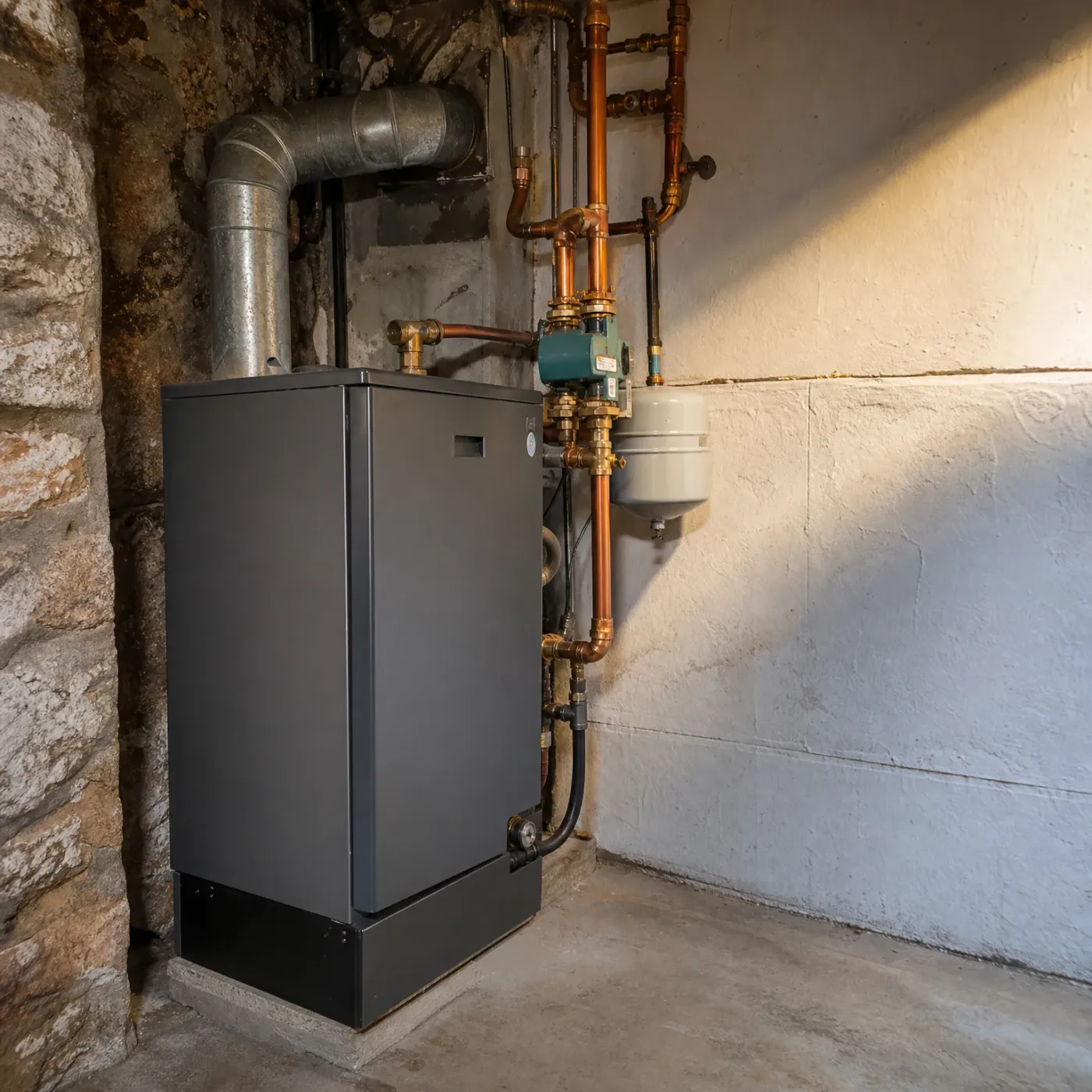
A dark gray boiler unit stands in a basement corner against a stone and painted concrete wall, connected to copper pipes, a circulator pump, an expansion tank, and a galvanized metal flue duct.

One form, no calling around

Answer a few questions

Your request goes to one pro, not a list of companies.

No fee to send it, and nothing to sign.