Why your boiler makes a banging noise in Arkansas

Step 1 of 3: Equipment

That banging is usually trapped water hitting steam or scale buildup inside the boiler. In a steam system, water pools somewhere it shouldn't, usually from a pipe that doesn't slope back toward the boiler the way it should, and when steam hits that pooled water it collapses fast and slams the pipe. In a hot water boiler, the bang is more often mineral scale coating the heat exchanger, so water trapped under that layer flashes to steam and pops loose. Since most homes in Arkansas heat with electricity, this boiler may be doing double duty on the coldest nights, and that extra strain can make an existing scale or slope problem announce itself sooner than it otherwise would. Either way, the noise means something inside is restricting how water or steam moves, and it tends to get louder and more frequent until that restriction is addressed.

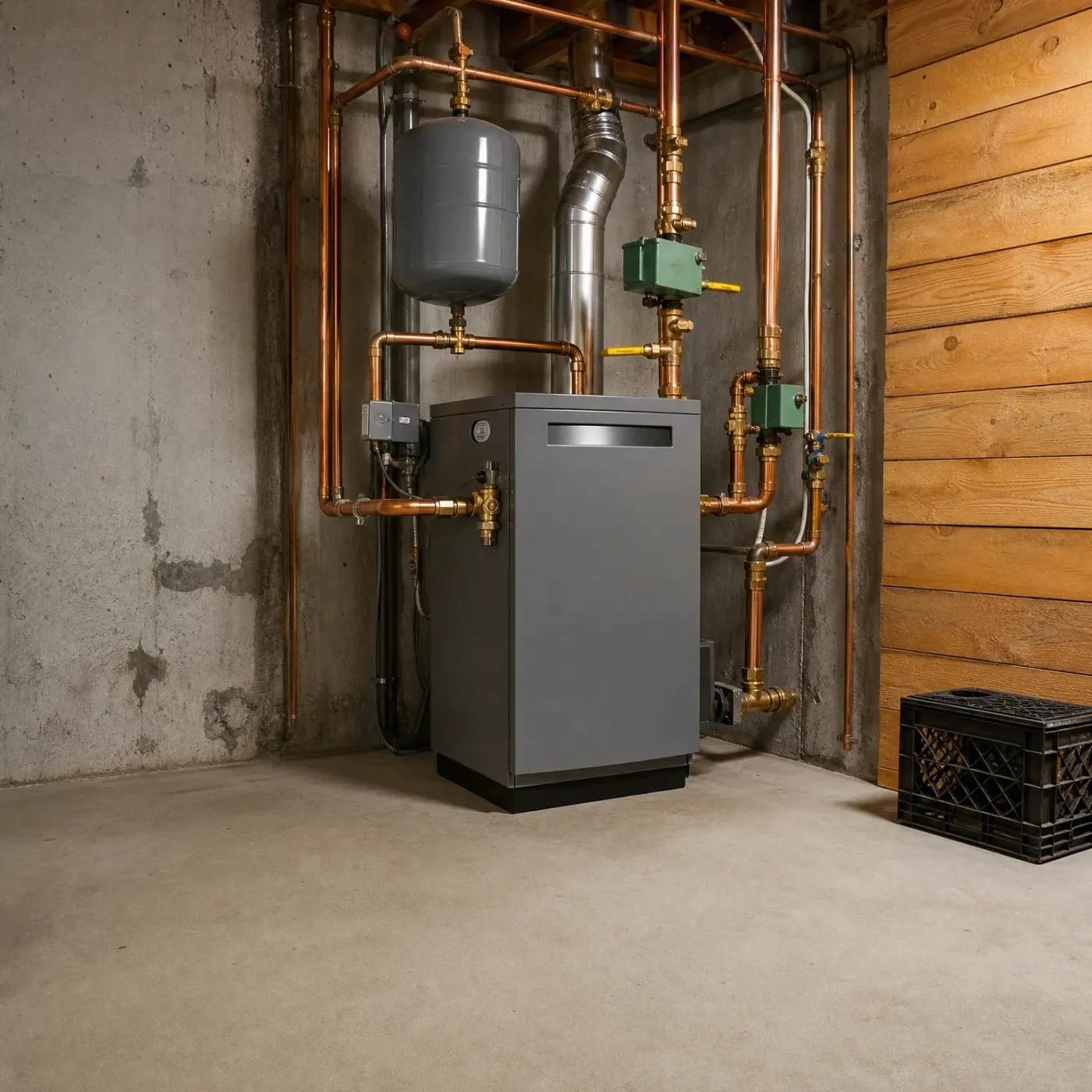
A gray boiler unit on a concrete pad in a basement corner, connected to copper piping, valves and a metal flue against painted concrete block walls.

Running quiet

A boiler that's venting steam and heating water the way it should stays mostly silent, maybe a low hum from the burner. Pipes run warm and even, the expansion tank holds steady pressure, and nothing in the system has reason to knock against the pipes or the tank.


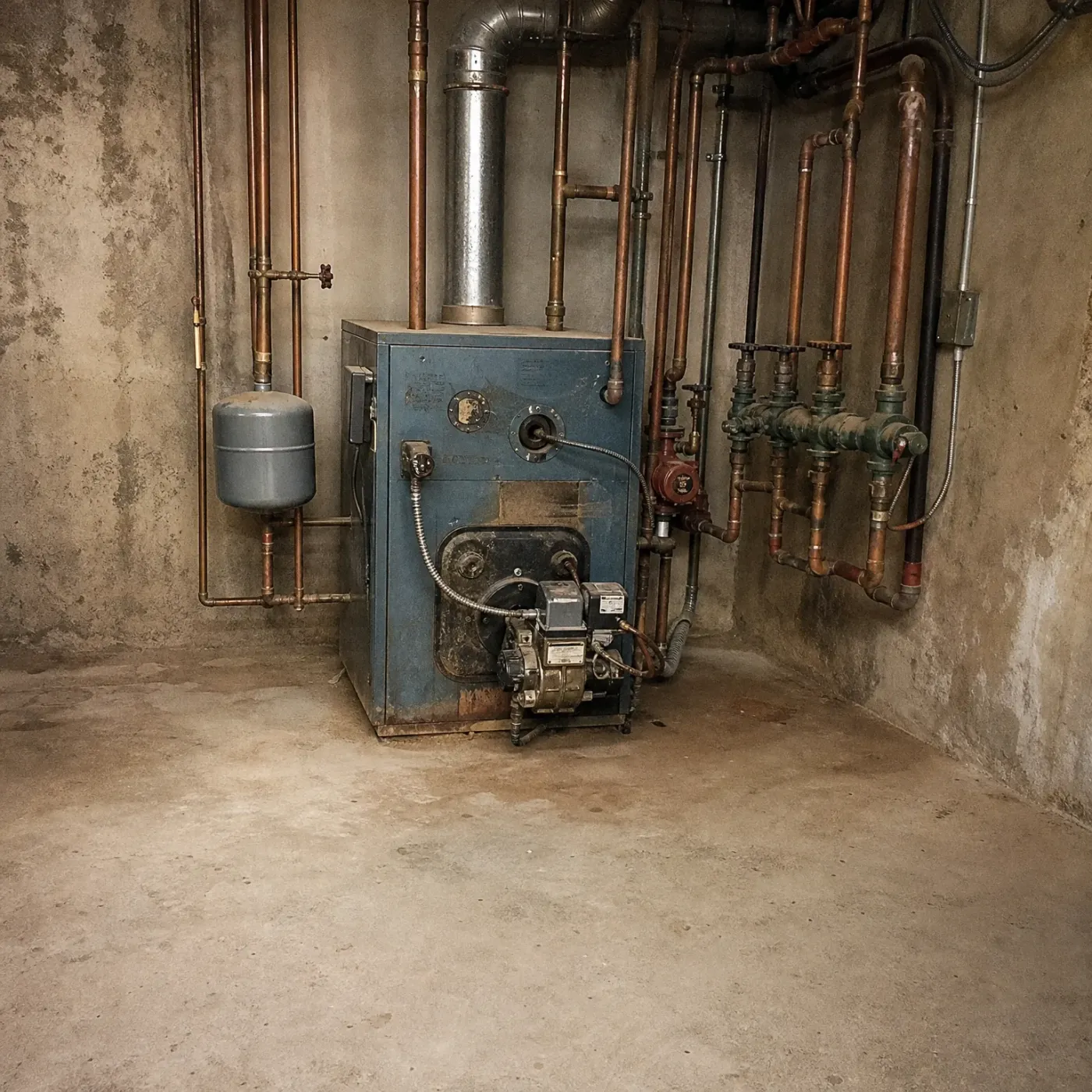
A blue oil-fired boiler with a burner unit sits on a concrete pad in a basement corner, with copper piping, valves and a gray expansion tank overhead against concrete block walls.

Banging and knocking

A boiler banging away is telling you something inside isn't moving the way it's built to. Water sits where it shouldn't in a pipe that's lost its slope, or scale has built up on the heat exchanger. Left alone, that knocking can wear at joints and fittings over a winter of heating.

What's Behind the Banging

Water hammer

  • A steam pipe pitched the wrong way, or sagging where it used to run level, lets condensate pool instead of draining back to the boiler.
  • Steam moving through the pipe hits that pooled water and slams it into a fitting or valve, which is the bang you hear.
  • The noise tends to show up at the start of a heating cycle, when steam first pushes into pipes that still have water sitting in them.
  • A contractor can check the pitch of the return lines and reset or re-support any section that's sagged.
  • Low water in the boiler itself can cause the same kind of hammering, since steam has more room to move fast before it meets resistance.
  • This kind of banging usually comes from one or two spots, not the whole system at once.

Scale buildup

  • Minerals in the water settle on the bottom of the boiler and harden into a layer of scale over time.
  • When the burner fires, that scale heats unevenly and water trapped under or around it flashes into steam faster than it can escape.
  • The sound from scale is often a rumble or a series of knocks from inside the boiler itself, not from the pipes.
  • Scale thick enough to cause noise usually means the boiler has been running with hard water for a long stretch without being flushed.
  • A contractor can drain and flush the boiler to clear loose scale, though heavy buildup on the heat exchanger may need more than a flush.
  • Left alone, scale makes the burner work harder to heat the same amount of water, on top of the noise.
A smiling bearded man in a dark green hooded jacket and blue t-shirt sits on a couch in a living room with shelves, a potted plant, and a bowl of popcorn on a wooden table.
A smiling man in a green long-sleeved shirt sits on a beige sofa in a living room, with a bowl of popcorn in the foreground, a large potted plant and shelving behind him.
A smiling man in a dark blue T-shirt sits on a couch in a dimly lit living room with a bowl of popcorn and a remote on a wooden table, a lit floor lamp and bookshelves behind him, and windows showing greenery.
A smiling bearded man in a dark green long-sleeved shirt sits on a leather couch in a living room, with a bowl of popcorn and a remote control on a wooden table in the foreground.

A local pro for your boiler repair

Send the request today and stop worrying about who to call.

You only hire the pro if you want to.

What scale does to the noise

Hard water leaves mineral deposits on the bottom of the tank, and that layer builds up over time if it's never been flushed. Heat can't pass through it evenly, so the water right against the metal flashes to steam before the rest of the tank catches up. Those little pockets of steam collapse again as soon as they rise into cooler water, and each collapse is a knock. The more scale sits there, the more surface it has to form on, so a boiler that's gone years without a flush usually bangs more than one that was drained and cleaned a season or two back.

Why it gets worse before it gets better

Scale doesn't wear down or thin out on its own. It builds in layers, and each layer insulates the water a little more from the heat below it, so the boiler has to run longer to get the same rooms warm. A furnace running on electricity, which is what most homes around Arkansas use for heat, turns that extra runtime straight into a higher bill, and the knocking tends to get louder across the same stretch of weeks. Left alone, scale buildup is also one of the more common reasons a boiler's heat exchanger fails early.

An older blue boiler with a burner unit stands in a concrete basement corner, connected to copper and steel piping, valves and a gray expansion tank on the wall.
Before you get your boiler repair
A gray boiler unit in a basement corner with copper piping, brass valves, a gray expansion tank, a metal flue duct, concrete walls and a wood-paneled wall, with a black plastic crate on the floor at right.
After you get your boiler repair
  1. Burner fires and heats water against the tank's bottom surface

  2. Scale or pooled water flashes into steam unevenly

  3. Steam bubbles collapse fast against cooler water around them

  4. Collapsing bubbles slam the tank wall or nearby pipe

A woman in a dark gray sweater reclines on a light sofa with eyes closed and a slight smile, under a textured gray blanket with an open book resting on her lap, with a lit table lamp and plant in the background.
A smiling bearded man in a navy crewneck sweater sits at a dinner table with a glass of red wine, plates and glasses in the foreground, in a dimly lit room with a lamp and framed picture behind him.

Winter nights average 32°F statewide

Winter nights here average 32°F, so your boiler is cycling on and off most nights from December through February. Each time it fires back up, water and steam move through pipes that cooled down, which is exactly when pooled condensate or built-up scale makes the most noise.

NOAA nClimDiv 1991-2020 county normals weighted by homes

What the banging tells you

  • Banging almost always traces back to trapped water meeting steam, either pooled condensate in a mispitched pipe or scale coating the tank bottom.
  • A pipe sloped correctly and a tank flushed on a normal schedule run quiet, so the noise points to one of those two things failing.
  • The sound gets worse on the coldest nights because the boiler cycles more often, moving steam through pipes that just cooled down.
  • Leaving it alone doesn't fix the slope or clear the scale, and the knocking keeps hitting the same fitting until something gives.
  • Sending in your information means a licensed contractor takes over figuring out which one it is, not you.
  • Once that happens, finding someone to look at the boiler is off your list for the evening.

The noise has one of two sources. Either condensate is pooling in a pipe that isn't pitched right, or scale has built up on the tank bottom and is throwing off how the water heats. Steam hitting either one is what makes the sound you're hearing. A boiler running the way it should doesn't make that sound, so something in the system has moved out of the shape it's supposed to hold. Arkansas winter nights pushing down toward freezing mean the boiler is firing more often, and every cycle sends steam back through pipes that just cooled off, which is when a bad slope or a scaled tank makes the most noise. None of that gets better by itself. The pipe won't re-pitch itself and the scale won't thin out on its own, so the banging keeps landing on the same joint or fitting, night after night, until that spot gives out. Figuring out which of the two it is, and how bad it's gotten, means someone looking at the pipe run and the tank itself. That's not something to sort out alone at ten at night with a wrench and a guess. Send in what you know about the boiler and the noise, and a licensed contractor takes it from there, working out whether it's the slope, the scale, or both. Once that's sent, you're done with the part that was yours to do. The system still needs looking at, but finding someone to do that looking is no longer sitting on your list.

A beige upholstered armchair with a dark green pillow sits beside a woven basket holding a cream fringed throw, with a potted leafy plant in a second basket near a window.
Sunlit living room corner with a beige upholstered sofa and striped linen cushion, a potted small-leaved tree in a woven basket beside sheer curtains, a framed artwork on the wall, and a jute rug on a wood floor.
A wooden storage bench with a long linen bolster cushion sits against a pale wall beneath hanging jackets, beside a doorway showing a plant and chair in sunlight, with a woven rug on the wood floor.
A dark wood sideboard holding a shallow wooden bowl and a pale ceramic vase with leafy branches, against a beige wall with a framed artwork and a window showing a sunset sky and trees.
A lit ceramic table lamp with a tapered fabric shade sits on a wooden side table beside a small wooden bowl, with a woven basket on the shelf below, next to a gray upholstered sofa and a dark-framed window at dusk.

Get the right pro for your boiler

Send it once and finding someone is no longer on you.

Get my match

Asking costs nothing, and the choice to hire stays yours.