Tell a local repair pro what your boiler is doing.
A boiler in Arkansas is less common than the electric systems most homes here rely on, and that's exactly why a leak catches people off guard. Boilers are a different kind of machine, with pressure, water, and venting that don't work like the furnace or heat pump next door has. Water on the floor or dripping from a pipe doesn't tell you where it's coming from, and guessing wrong can mean a part gets replaced that was never the problem.
A leak can come from a loose fitting, a failed pressure relief valve, a cracked heat exchanger, or corrosion inside a tank that's been sitting quiet most of the year, since boiler heat usually only runs in the coldest stretch of winter here. Each of those has a different fix, and a different cost, and only someone who can look at the system and trace the water back to its source can tell you which one you have.
Finding that person is its own task. You'd be searching for a contractor who actually works on boilers, since plenty of outfits around here handle electric furnaces and heat pumps all day but rarely touch a boiler. Then there's calling around to see who can come out, explaining the leak and the model and the symptoms to each one, and trying to compare quotes that aren't quite measuring the same thing.
This page connects you with a contractor suited to your situation, one who services boilers and can take a look at what's actually happening in your system. Once you're matched, that contractor reaches out to you directly. No searching, no repeating the story to five different voices on the phone. Just the next step, with someone who knows what they're looking at.
Why is my boiler leaking water?
A puddle under the boiler or water dripping from a pipe is usually a sign something inside has given out, not just a loose fitting. Since boilers run under pressure, a leak can mean the problem is getting worse even if the amount of water seems small right now.
A failed seal, a cracked part, or too much pressure is pushing water out
Most leaks come from one of three places. The pressure relief valve can open and drip if the system is holding too much pressure. A circulator pump seal can wear out and weep water around the pump housing. Or a fitting, valve, or the tank itself can crack from corrosion built up over years of use. Since a boiler is a sealed, pressurized system, even a small leak means something failed rather than just loosened. Left alone, pressure keeps working against that weak point, and a slow drip can turn into a bigger failure. Because boilers aren't the system most Arkansas homes run, finding a contractor who still works on them regularly matters more here than it would with a furnace.
Running the way it should
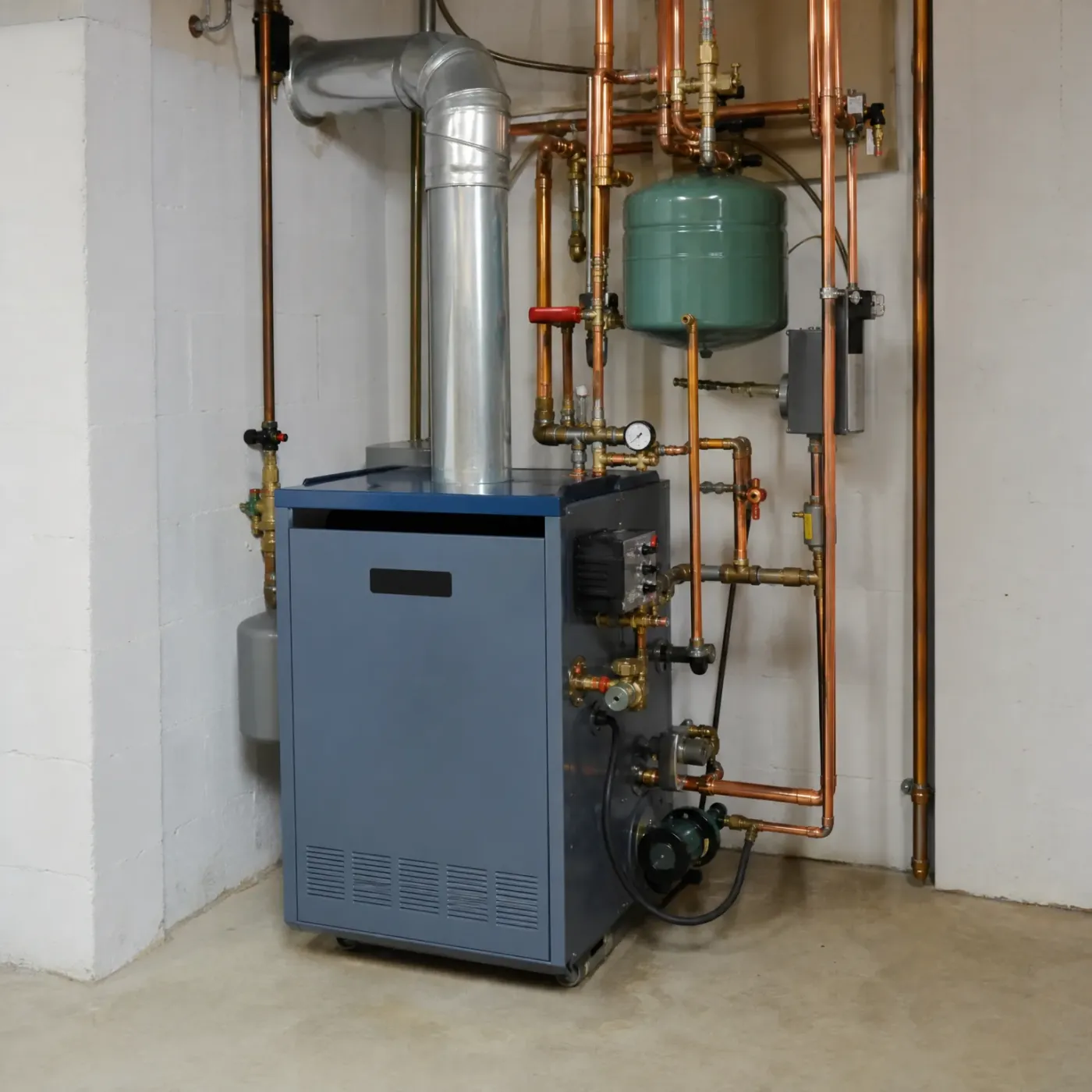
A boiler like this holds pressure in a closed loop of copper pipe and brass fittings. No drips at the joints, no rust on the floor underneath, no puddle near the expansion tank. Water only moves through the system, never out of it.
A leak you can't ignore
Water at the base of the boiler or along the pipe runs means a seal, valve, or fitting has failed somewhere in that loop. Left alone, the pressure keeps dropping and the boiler has to work harder to heat your home at all.
What are you seeing around your boiler right now
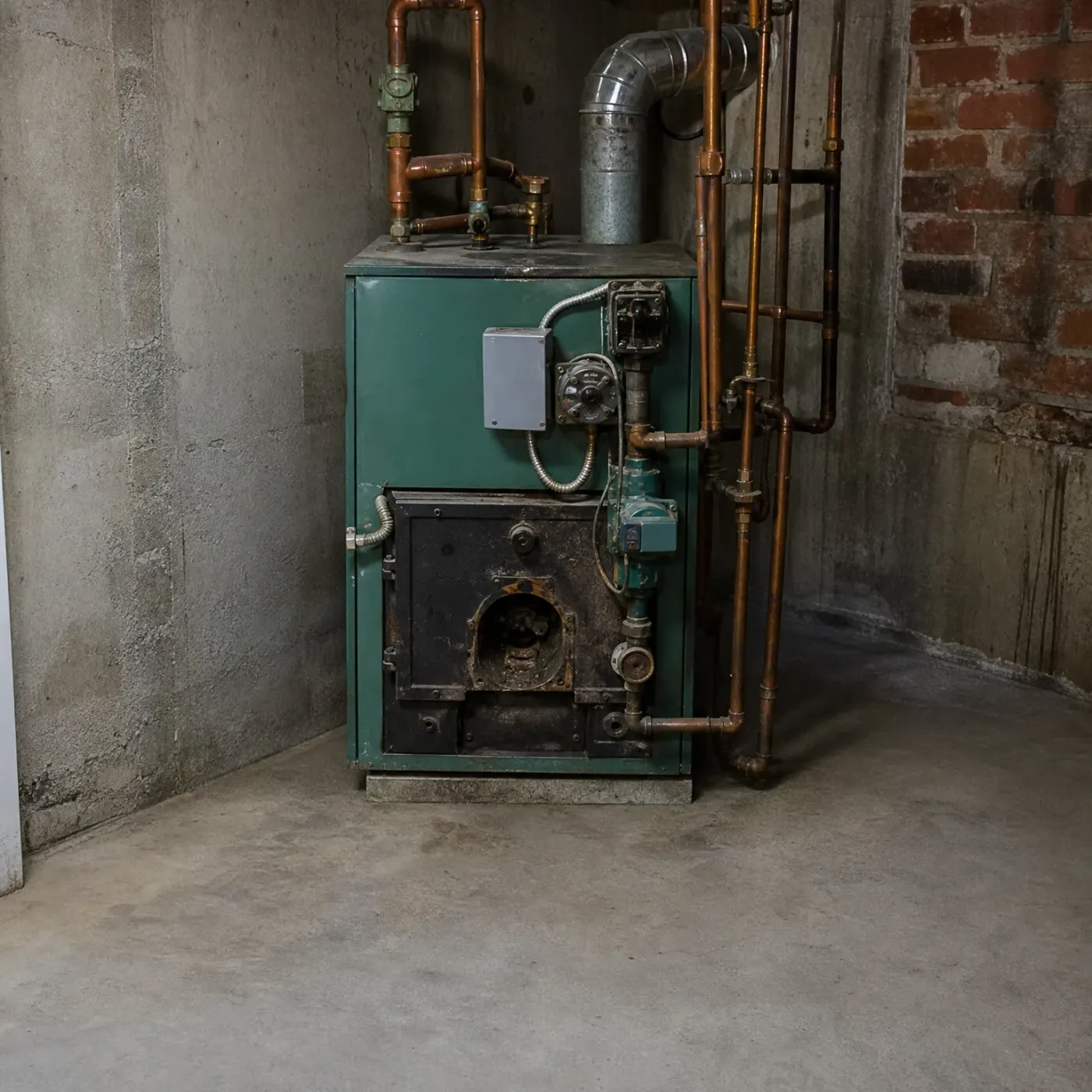
Look at the floor under the unit. A damp ring or a trail of rust-colored water means it's been dripping a while, not just today. Check the pipe joints and the valve on top of the tank, that's where a slow drip usually starts. You might hear a hiss or see a thin spray if a fitting has worked loose under pressure. Some homeowners notice the boiler running more than it used to, since a system losing water has to work harder to hold pressure. Left alone, a small drip can wear through metal that was fine a month ago, and a leak near wiring or a gas line is worth shutting the system down for until someone looks at it.
1
Water pressure inside the boiler climbs past what the system can hold.
2
The pressure relief valve opens to let the excess escape.
3
Released water runs down a discharge pipe toward the floor or a drain.
4
A worn valve or seal keeps dripping even after pressure drops back down.
A leaking boiler isn't a part you can wait out. Boilers are less common in Arkansas, where most houses run on electric heat, so finding someone who actually works on them isn't as simple as calling the first name you see. You could spend an afternoon on the phone, describing the puddle and the rust stains to one company after another, only to find out half of them don't service boilers at all. That's the part worth skipping. Instead of tracking down and vetting contractors one by one, you answer a few questions about what you're seeing and a contractor who works on boilers reaches out to you directly. No explaining the leak five separate times, no stacking up quotes to compare. Your boiler still needs a look, the water on the floor is proof of that, but getting someone qualified out to look at it doesn't have to be the hard part.
A boiler holds water under pressure in a sealed loop, usually between 12 and 15 psi. Once a seal or valve fails, that pressure pushes water out through the weak point instead of keeping it circulating.
That's why a leak rarely stays small. The same pressure forcing water out now will keep forcing it out tomorrow, through the same spot or the next weak one.
Before you get your boiler repairAfter you get your boiler repair
Left alone
The drip keeps feeding the same weak point. Pressure stays high, the leak widens, and what started at a valve or seal can end with the boiler shutting itself down.
Winter nights here only dip to about 32°F on average, so your boiler isn't working against the kind of cold that pushes a system hard. If it's leaking now, the cause is a worn part, not the weather asking too much of it.
NOAA nClimDiv 1991-2020 county normals weighted by homes
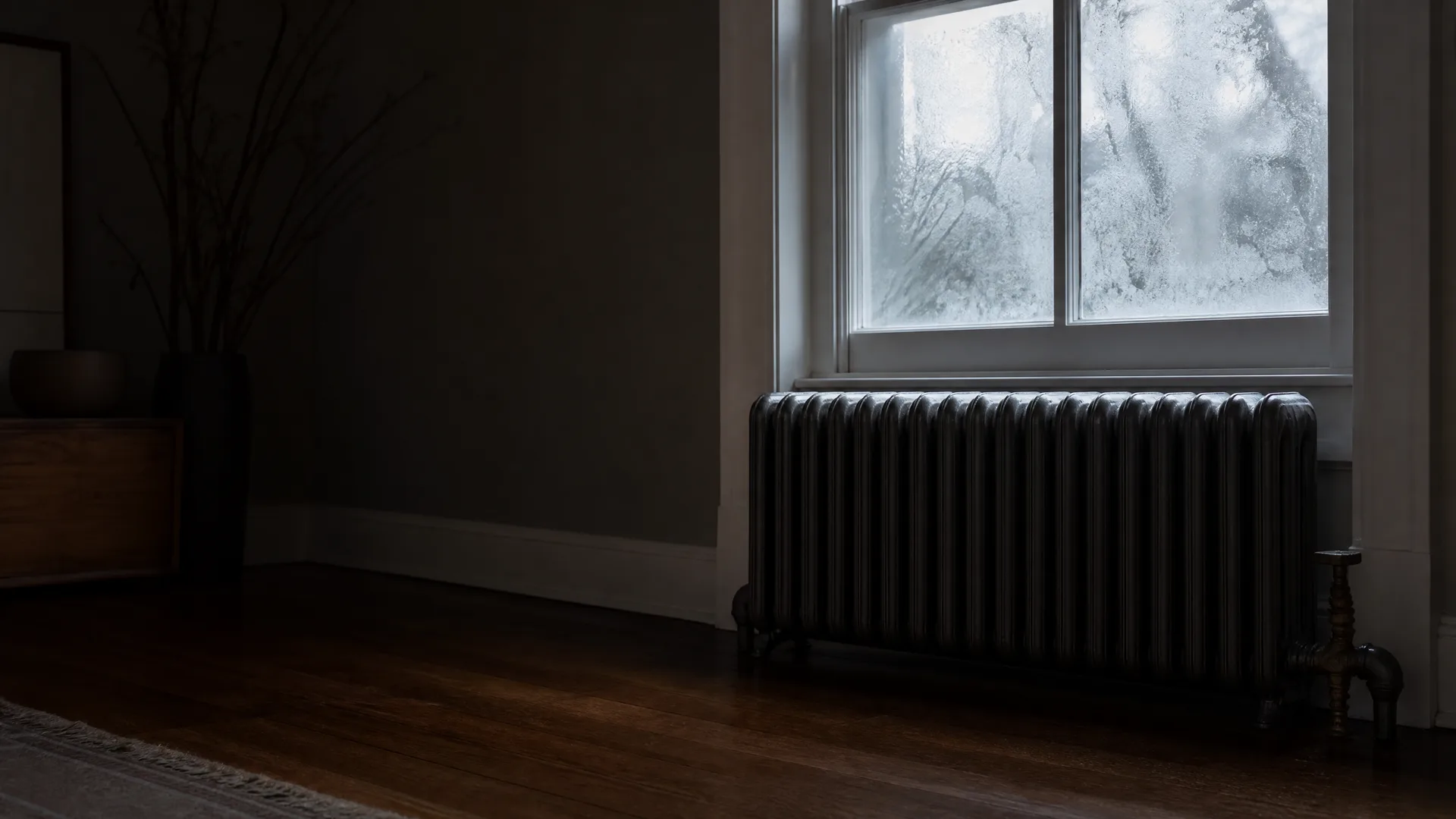
Seven in the morning and the living room is still dark. You walk past the radiator under the front window and the glass has ice on the inside of it, a thin film you could scrape with a fingernail. The radiator should be putting out heat against that cold, but when you touch the cast iron it's lukewarm at best. You look down and see why. A thin line of water has run from the base along the floorboard, pooling where the wood meets the wall. You grab a towel and press it against the puddle, and it's already cold, like it's been sitting there since before you woke up.
A leak from your boiler comes down to a seal, valve, or joint that can no longer hold back the pressure inside, and it won't fix itself. Left alone, it gets worse, not better. The part that's worth doing now is having someone who actually works on boilers look at it, since they're less common here than the electric systems most Arkansas homes run, and that narrows who you can call. Instead of searching through contractors who mostly handle electric heat, calling around to ask if they even work on boilers, and explaining the same drip and puddle story to each one, you can skip straight to someone matched to your situation who will reach out to you. No sorting through quotes from people who aren't sure what they're looking at. You already know where the water is coming from and roughly what's wrong. What's left is getting the right person out to your house to deal with it before the leak decides the timeline for you.