
Profile view of a bearded man wearing a dark green baseball cap and a dark gray T-shirt against a plain light background.

What your boiler pressure should be in Arkansas

Step 1 of 3: Equipment

What should my boiler pressure be?

You check the gauge on the front of your boiler and aren't sure if the number you're seeing is normal or a sign something's wrong. Most homes in Arkansas lean on electric heat, so a boiler isn't something you think about often, which makes it harder to tell at a glance whether that needle means trouble or nothing at all.

It should read between 12 and 15 psi when the system is cold

That range keeps enough water pressure in the system to push hot water through the radiators or baseboards without straining the pump or the boiler itself. When the heat kicks on and the water warms up, the needle will climb a bit, maybe to 20 or 25 psi, and that's expected. What matters is where it sits before the system fires. If it's reading below 12 when cold, the system is low and may need water added through the feed valve. If it's holding above 15 cold, or creeping past 30 once it's running, that's too much pressure for the system to handle safely over time.

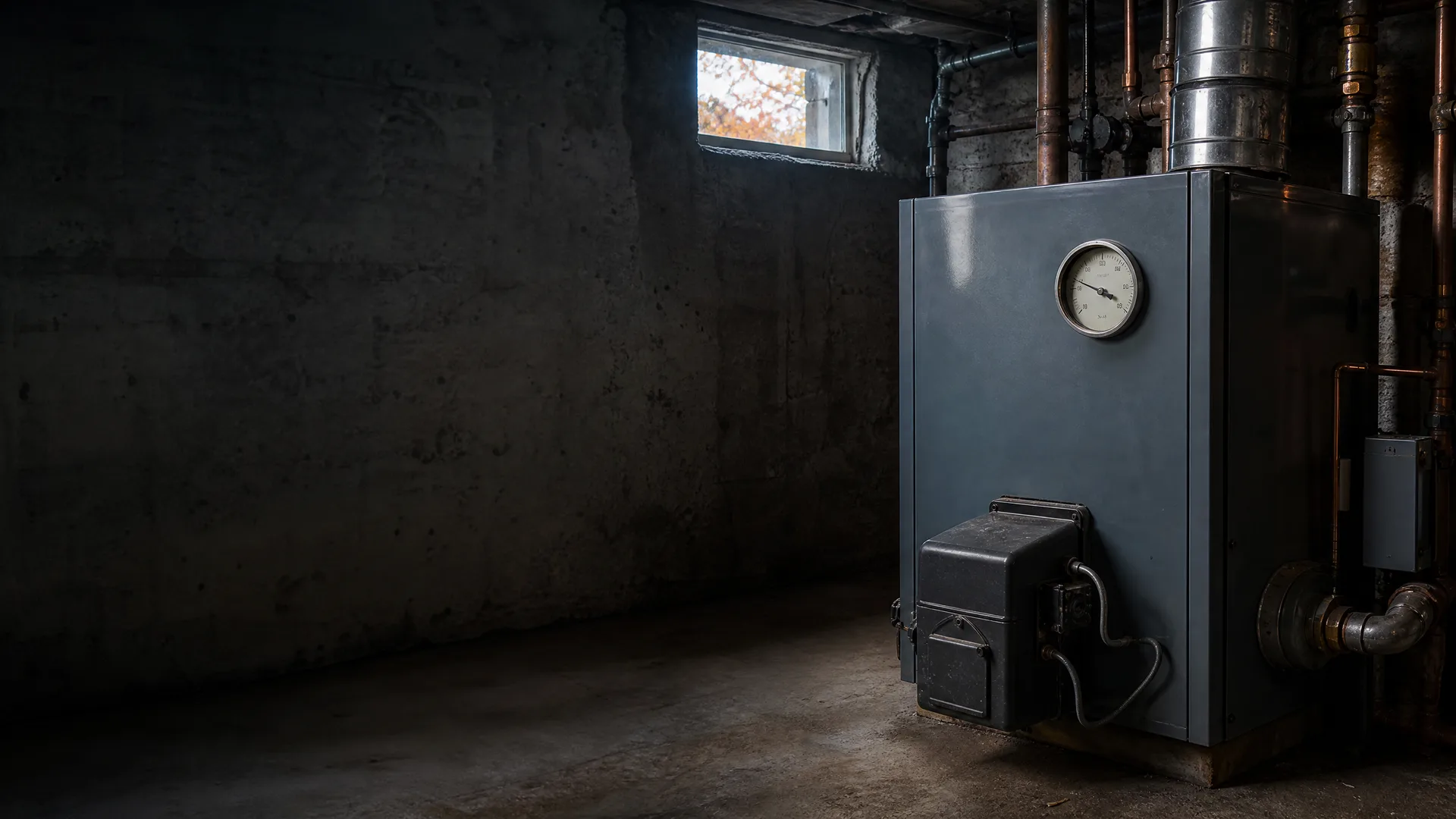
A gray boiler with a round pressure gauge and copper and metal pipes stands in a dim concrete basement lit by a small window.

You're down in the basement on a gray October afternoon, a sweater on because the house hasn't quite caught up to the cold snap yet. The boiler sits in the corner, humming the way it always does, and you crouch down to check it the way you've started doing since the weather turned. The gauge reads low, the needle sitting well under where it was last time you looked. You tap the glass once, like that might change anything. Outside, the first real cold front of the year is pushing through, and you're left wondering how long the needle's been sitting there before you noticed.

Why is the needle sitting where it is

Maybe you noticed it because the radiators upstairs aren't getting as hot as they used to, or one of them stays cool at the bottom no matter how long the boiler runs. Maybe you heard a gurgle in the pipes, or saw a damp spot near the boiler's base where water has been seeping out. A needle sitting low usually means the system has lost water somewhere along the way. A needle sitting high means too much pressure is building against the seals and valves. Left alone, either one wears at the system faster than it should, and a boiler that's losing water or running too hot can end up shutting itself down on the coldest night you need it.

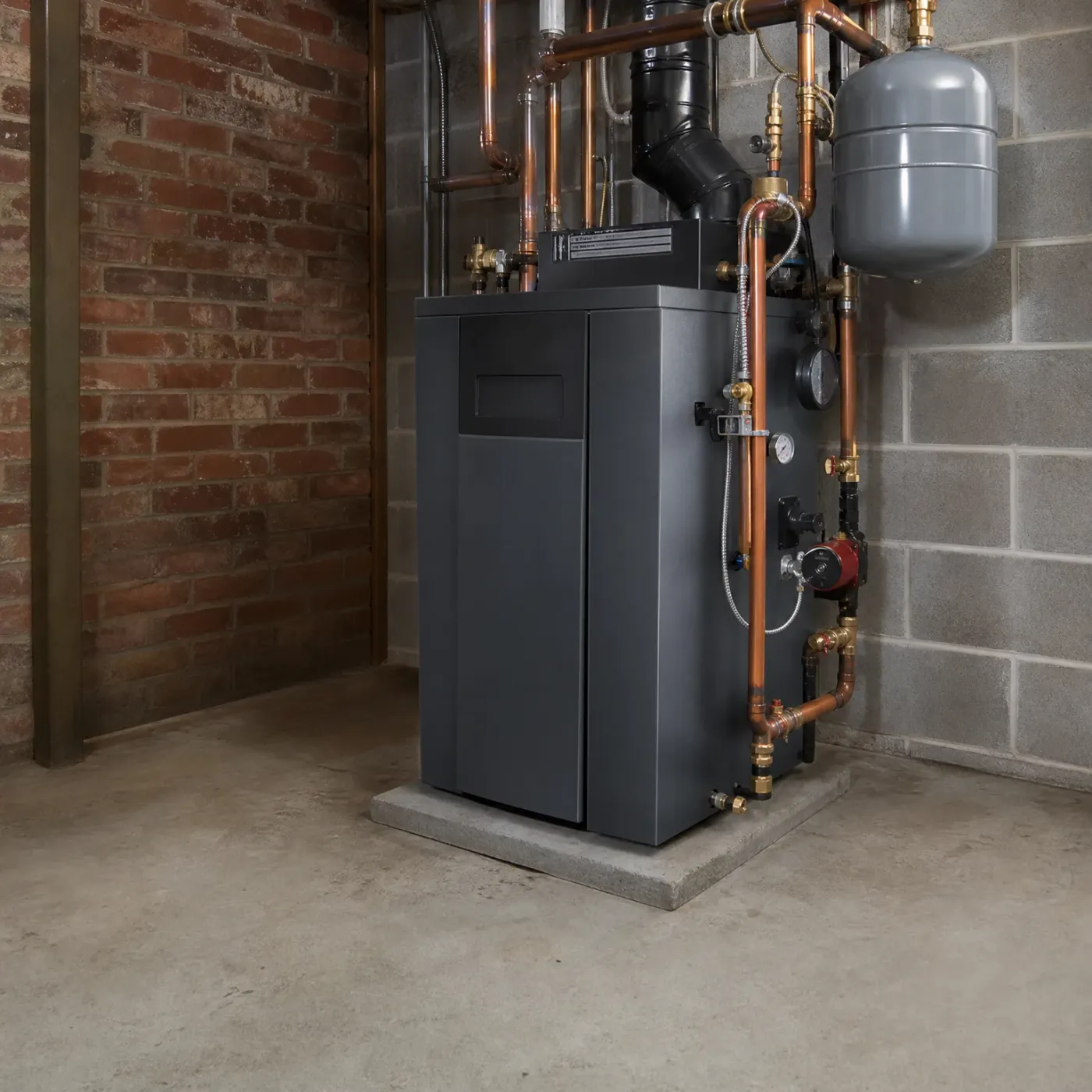
A dark gray floor-standing boiler on a concrete pad in a basement, connected to copper piping, valves, a circulator pump, a gauge, a black flue pipe, and a gray expansion tank, with a brick wall on the left and concrete block wall behind.

Reading right where it should

A gauge sitting between 12 and 15 psi, cold, with the needle steady and not creeping up or down between checks. The pipes and valves around it are dry, no mineral crust at the joints, no drip at the expansion tank. The boiler cycles on, heats, shuts off, and the needle barely moves.
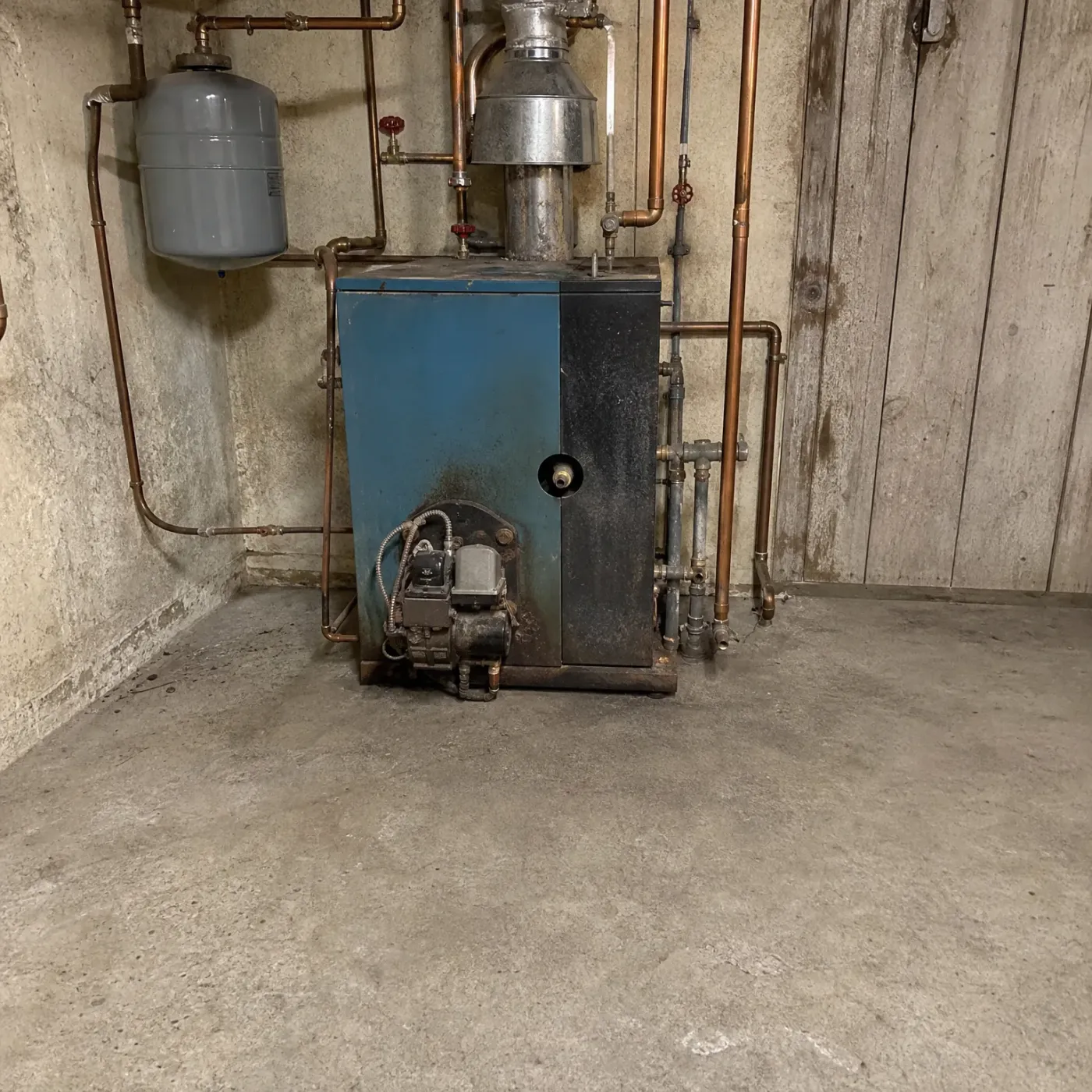

A blue and black boiler with a burner unit, flue, expansion tank and copper and steel piping stands on a concrete basement floor against a concrete wall and wooden plank partition.

Reading that needs a look

A gauge pinned low, under 10 psi, or climbing past 20 whenever the boiler fires. Rust streaks or a chalky buildup around a fitting usually means it has been losing water and pressure for a while. An old expansion tank can lose its charge and stop absorbing pressure the way it should.

A woman with dark hair in a bun reclines on a sofa with her eyes closed, wrapped in a cream fleece blanket, a closed blue hardcover book resting in front of her, with a lit lamp and a vase of dried flowers in the background.
A smiling bearded man in a navy sweater sits at a candlelit dinner table with a glass of red wine, a bowl of salad, and plates of food in the foreground.

Send one request and you're done looking

A boiler like yours is not a common setup here, with so many houses running on electric heat, and that is exactly why it is worth getting someone who still works on these every week. A boiler that sits at the wrong pressure all winter wears on the same spots each time, the circulator, the expansion tank, the seals around the valves, and a tech who sees this equipment regularly knows which of those tends to go first in a system your age and what to check before it does. You already have the gauge in front of you and a sense something is off. The next step is getting a second set of eyes on it, someone local who can look past the number on the dial and tell you what it means for your house. Send the request and let that be the part you hand off.

How the system holds its pressure

  • The pressure relief valve opens on its own once the system climbs past 30 psi, dumping water to protect the boiler from a crack.
  • Pressure rises as water heats because hot water takes up more room than cold water in the same closed loop.
  • The expansion tank holds a pocket of air that compresses as that heated water pushes into it, keeping the system from over-pressurizing on its own.
  • A feed valve near the bottom of the boiler is what lets you add water and bring a low reading back up to normal.
  • If that feed valve is left open even slightly, pressure creeps up over days without anyone touching it.
  • A bladder that's failed inside the expansion tank is a common reason pressure keeps climbing even when nothing else changed.

The boiler is a closed loop, and everything it does comes back to that one fact. Water sits in the pipes and radiators cold, then the burner fires and that same water expands. It has nowhere to go except into the expansion tank, a sealed tank with a pocket of air inside that gets squeezed down as the hot water pushes in. That give is what keeps the gauge from climbing past a safe number every time the heat runs. If the tank is doing its job, you will see the needle rise a few pounds while the boiler is running and settle back down once it cools. If the bladder inside that tank has failed, the air pocket is gone and the water has nowhere to compress into, so the pressure keeps climbing with nowhere to go but up, sometimes until the relief valve near the top opens and dumps water onto the floor to keep the boiler from splitting. On the other end, the feed valve near the bottom is how pressure gets added back when the system runs low, usually by hand with a key or lever. Left open even a little, that same valve lets water trickle in nonstop, and pressure creeps up over days without a single thing changing upstairs. Knowing which of these is at play, rising with heat or rising on its own, tells you a lot about what's actually wrong before anyone opens the panel.

A smiling man in a dark navy sweater sits on a light sofa in a living room, with a glass bowl of popcorn on a wooden coffee table and bookshelves behind him.
A smiling man in a dark green sweater sits on a tan leather sofa in a dimly lit living room, with a bowl of popcorn in the foreground and a kitchen area blurred behind him.
A smiling middle-aged man in a dark shirt sits on a gray sofa in a living room, with a bowl of popcorn on a side table and shelves, a window and kitchen area behind him.
A smiling bearded man in a dark gray t-shirt sits on a gray couch in a living room, with a large glass bowl of popcorn on a wooden table in the foreground.

Why the cold reading is what counts

The number worth trusting is the one you see before the boiler fires, not after. A cold system reads lower because the water hasn't expanded yet. Check it first thing in the morning, or after the boiler has sat idle for a few hours, and you're looking at the true baseline. Catch it mid-cycle and the needle will sit higher just from the heat, which can make a normal system look like it's running hot when it isn't. The cold reading is the one that tells you whether 12 to 15 psi is actually where you stand.

What a slow drop usually means

A boiler that needs repressurizing every few weeks isn't imagining things wrong with itself, it's telling you water is leaving the loop somewhere. Sometimes that's a valve that weeps a little each cycle. Sometimes it's a fitting losing a drop at a time, slow enough you'd never see a puddle. Topping off the pressure gets you through the evening, but it doesn't answer where the water went. A system that holds steady for months and then starts needing attention every week has developed a leak worth tracing, not just topping off.

Winter nights average 32°F statewide

Winter nights here average 32°F, right around freezing, so your boiler isn't working against extreme cold most of the season. That steadier load is part of why pressure tends to hold once you've got it set right, rather than swinging hard with every cold snap.

NOAA nClimDiv 1991-2020 county normals weighted by homes

A cold reading between 12 and 15 psi, holding steady, is what you want to see, and most of what goes wrong with a boiler shows up as that needle drifting one way or the other. A boiler is rare enough in Arkansas that finding someone who still works on them every week matters more than it would with a furnace. The contractor who gets matched to you is local and licensed, someone who sees this equipment all season and knows whether a slow drop points to a bad valve or a leak at a fitting you'd never think to check. You're only dealing with one contractor, not a handful of companies competing for the callback, so there's no round of calls to field while you're trying to get a straight answer about your own pressure gauge. Once you send the request, the search is off your plate. Whatever the needle is doing on your boiler, you'll have someone who knows this equipment looking at it instead of guessing alone in the basement.

A lit ceramic table lamp with a linen shade sits on a round wooden side table with a small vase of greenery and a dark shallow bowl, beside a beige upholstered sofa with a cushion and knit throw, below a framed artwork on a pale wall.
Corner of a beige linen sofa with a large woven cushion and a fringed knit throw, beside a potted leafy tree in a woven basket against a neutral wall.
Sunlit interior corner with a wood-framed armchair with beige cushions and a striped pillow, a leafy plant in a tall ceramic pot, a window with wood sill showing green foliage outside, and dark wood flooring.
A lit black path light beside a stone walkway leading to a dark front door of a white clapboard house, with shrubs and flowering plants in the bed at dusk.
A covered porch at dusk with a wooden front door, a lit lantern wall sconce on gray horizontal siding, a black rocking chair with a cream throw, a potted white flowering plant, a coir doormat, and a window showing a lit interior lamp.

Finding a pro stops being your job

A licensed local pro takes the request for your boiler tune-up.

Send my request

It costs nothing to send, and you don't have to hire anyone.









