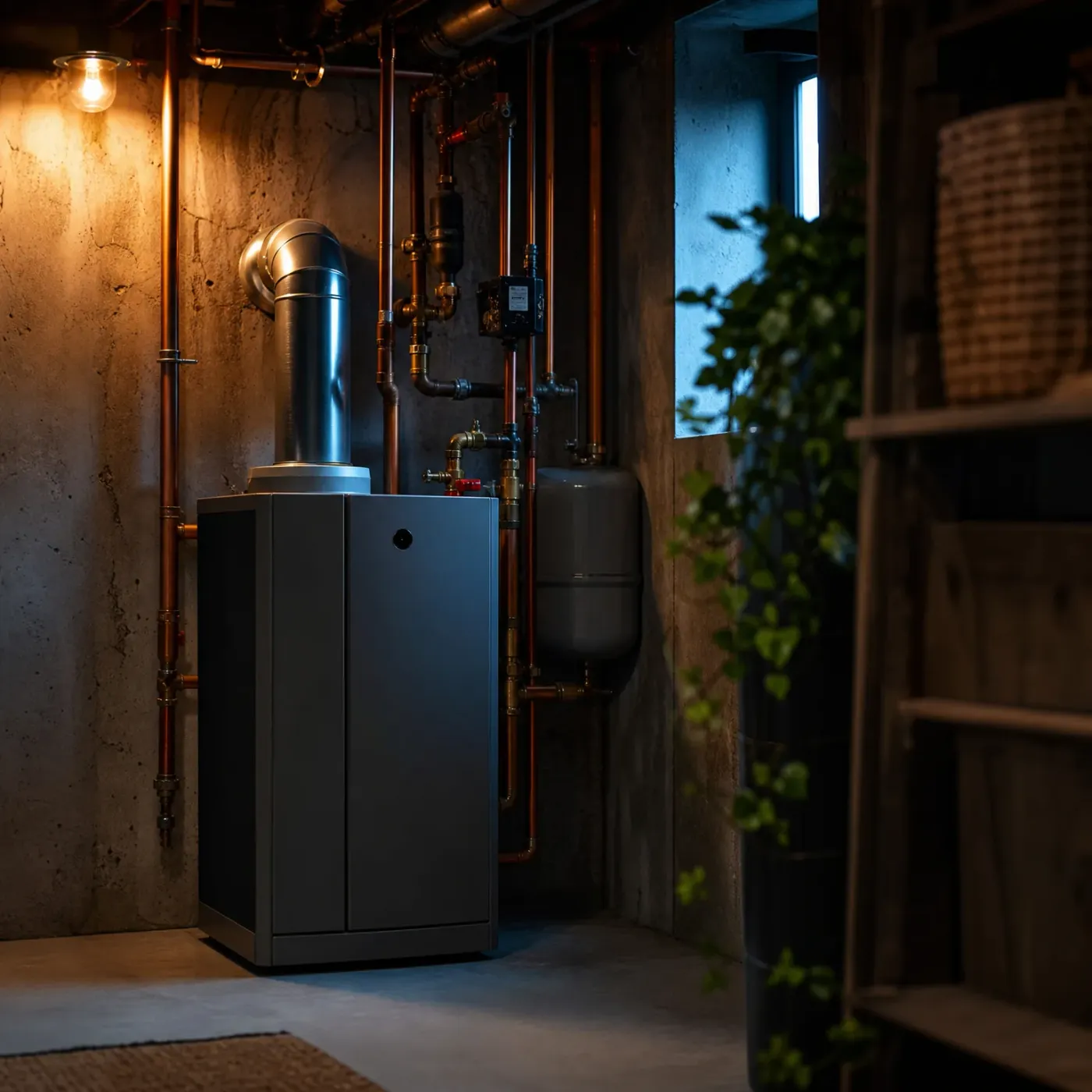








A dark grey floor-standing boiler with a metal flue stands against a concrete basement wall, surrounded by copper pipework, valves and a wall-mounted expansion tank, with ivy and a shelving unit at right.

Let someone else find the pro

What size boiler an Arkansas home needs

Boiler size comes down to your home's heat loss, not its square footage alone. A unit that's too big cycles on and off and wears out early; one that's too small can't keep up when it's cold. Below is what goes into sizing one right, and a way to skip the back and forth of calling around to find out.

Let a pro reach out

A boiler is sized by a heat loss calculation, not by the square footage of your house. In Arkansas, most homes heat with electricity, so a boiler is less common here, which makes getting the size right even more important since there are fewer local jobs for a contractor to compare notes against. The calculation looks at your walls, windows, and insulation to figure out how much heat the house loses on the coldest night, then matches a boiler's output to that number. Too large, and it will short cycle, heating the house in bursts that waste fuel and wear out the parts early. Too small, and it will run constantly without ever catching up when temperatures drop. The only way to know the right size is to have someone measure your house, not guess from its age or layout.

A man in a blue sweatshirt reclines with closed eyes in a brown leather armchair in a living room with a bookshelf, houseplant, sofa, window, and a side table holding newspapers and a dark mug.
A bearded man in a gray pullover reclines with closed eyes on a brown leather sofa in a sunlit room with a window, framed picture, potted plant, and a wooden cabinet holding papers and a dark mug.
A man in a gray sweater leans back with closed eyes in a brown leather armchair beside a wooden side table holding a dark mug and a folded newspaper, with bookshelves and a window seat behind him.
A man in a green sweater reclines in an armchair with his eyes closed and a slight smile, beside a window with plants, a small table holding a mug and folded newspaper, and bookshelves behind him.

Sizing a boiler starts with heat loss, not floor plan. A contractor works through the house room by room, adding up what escapes through walls, windows, ceilings, and the gaps around doors, then checks that total against the coldest temperature your area sees. The result is a BTU-per-hour number the boiler has to match. Go too big and the unit fires, heats the water quickly, shuts off, then fires again a few minutes later, and that short cycling puts more stress on the heat exchanger than a longer, steady run would. The radiators or baseboards matter too, since their length and layout decide how fast heat actually moves out of the water and into the room. Two houses with the same square footage can land on different numbers depending on how many windows they have, how well insulated they are, and how tall the ceilings run. Since boilers aren't the usual heating choice in Arkansas, finding someone who runs this calculation properly, instead of sizing off a rule of thumb, counts for more here than it would somewhere boilers are everywhere.

How a boiler is actually sized

  • A Manual J calculation adds up the heat lost through walls, windows, ceilings, and air leaks, room by room, not just total floor area.
  • Boiler output is measured in BTUs per hour, and that number has to match the house's actual heat loss at the coldest expected outdoor temperature.
  • An oversized boiler short-cycles, meaning it fires, heats the water fast, shuts off, and fires again within minutes, which wears the heat exchanger harder than steady runs.
  • Radiators or baseboard length and layout factor into the sizing math, since they determine how fast the heat actually leaves the water and reaches the room.
  • Window count, insulation levels, and ceiling height all change the heat loss number for two houses of the same square footage.
  • Because boilers are less common in Arkansas, a contractor doing the load calculation here is worth more than one guessing from a rule of thumb.
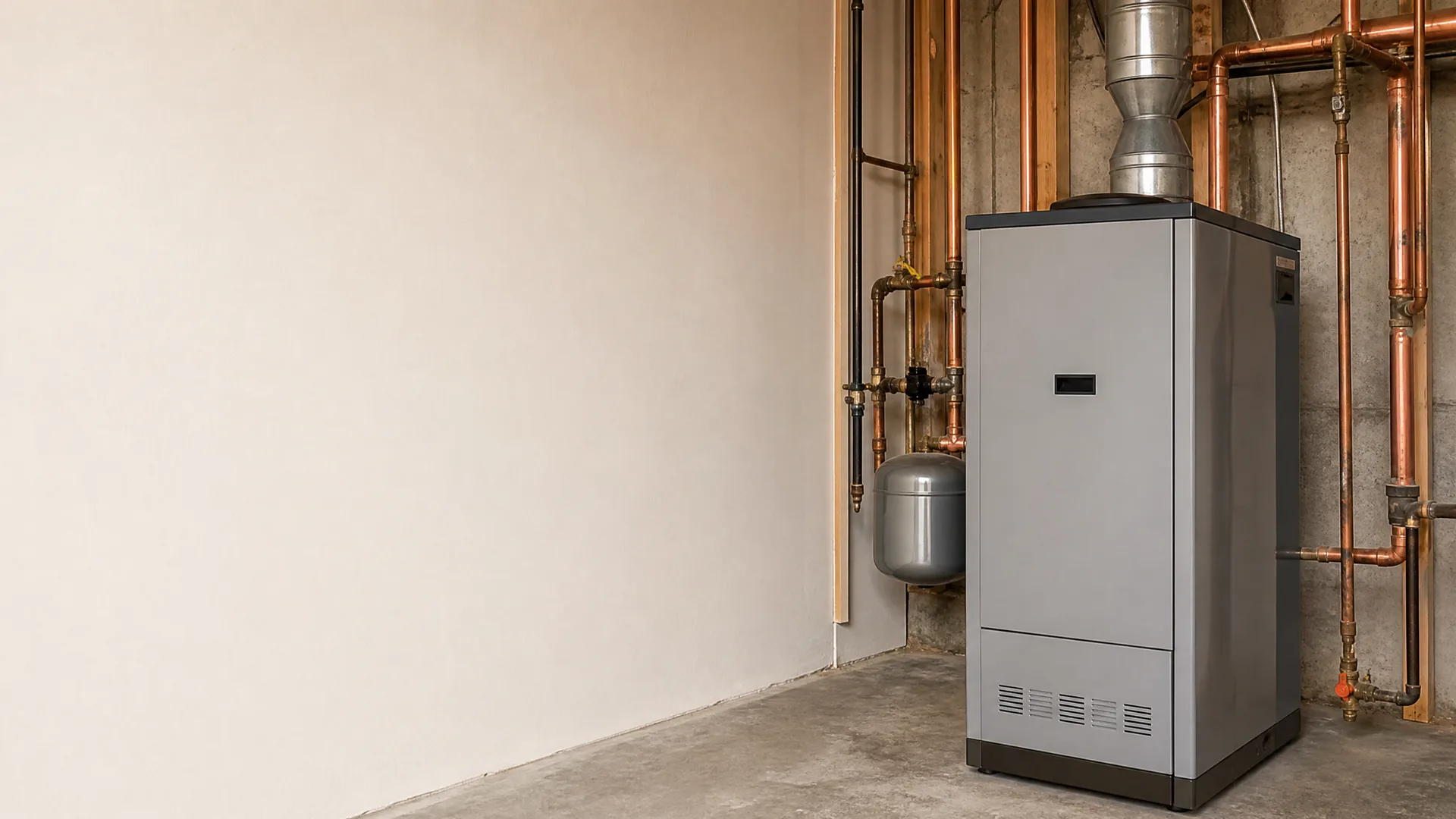
A gray residential boiler with a metal flue pipe stands in a concrete-block basement corner, surrounded by copper piping, valves and a gray expansion tank.
Before you get your boiler installation
A dark gray floor-standing boiler in a concrete-walled basement, connected to copper piping, circulator pumps, a gray expansion tank, and a cream-colored storage tank to the left.
After you get your boiler installation

One request and it's handed off

One form replaces the calls you'd make to find a boiler pro.

No charge to send it. You decide if you hire them.

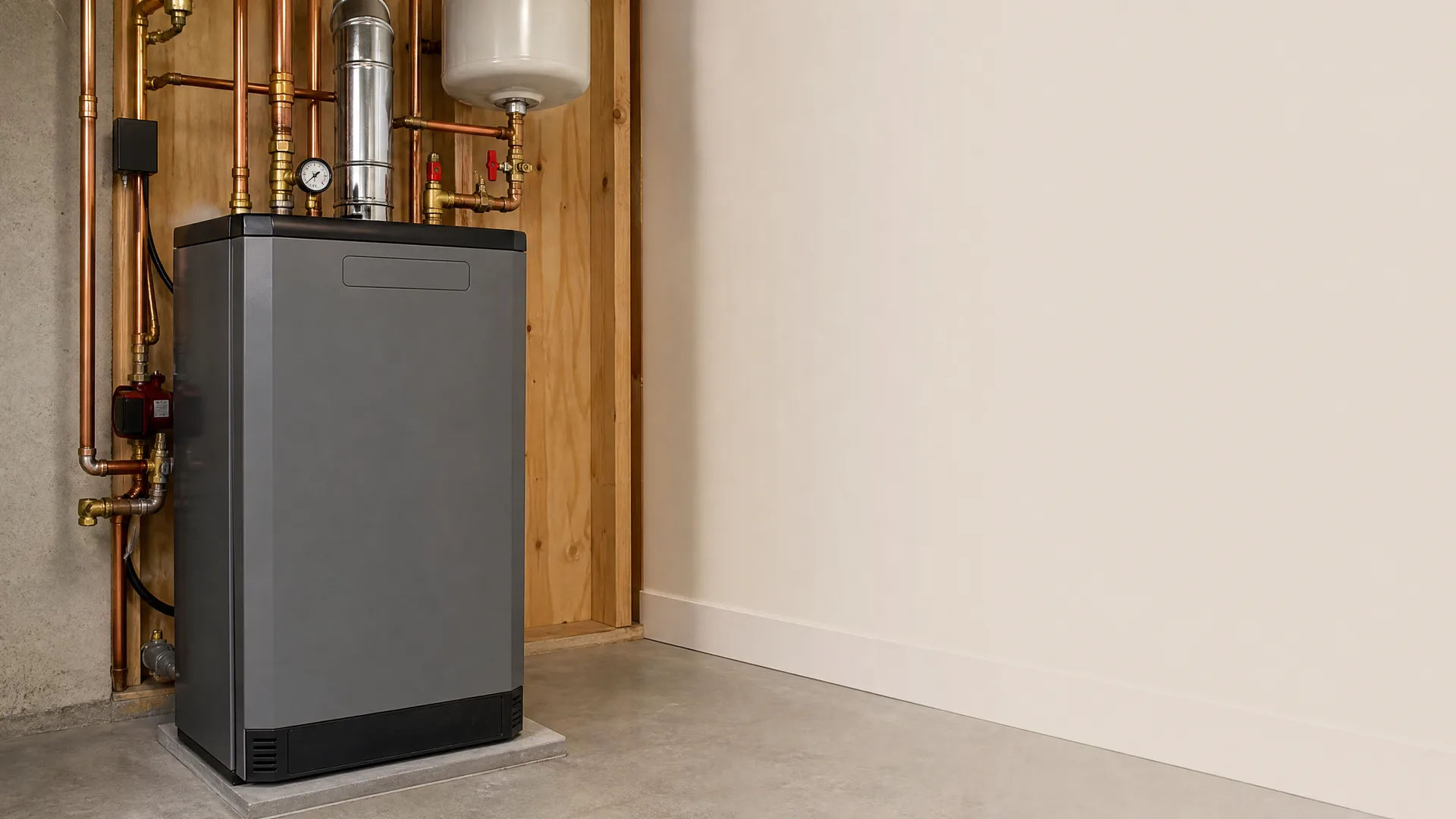
A dark grey floor-standing boiler on a concrete floor in front of a plywood wall, with copper pipes, valves, a pressure gauge, a flue pipe and a white expansion tank above it, beside a plain light-coloured wall.

Insulation changes the number

Two houses the same size can need different boilers. A newer house with good windows and tight walls holds heat longer, so it loses less per hour and needs less output. An older house with single-pane windows or gaps around doors loses heat faster, even at the same square footage. That's why the calculation looks at the walls, windows, and ceilings directly instead of going by size alone.

A gray boiler unit with a metal flue pipe stands in a basement corner, surrounded by copper piping and an expansion tank against a plain light wall and concrete floor.

Radiators and baseboard units differ

What's attached to the boiler matters too. Cast iron radiators hold and release heat slowly, so a system built around them is sized a bit differently than one running baseboard units, which respond faster but hold less heat in reserve. The pipes and emitters already in a house factor into what size boiler will actually heat it, not just the rooms themselves.

Why does one room never get warm?

A boiler that's undersized runs the whole time it's cold outside and still leaves the room farthest from it cooler than the rest of the house. You'll notice the radiators or baseboard there barely get warm to the touch even when the ones near the boiler are hot. An oversized boiler shows up differently: it fires, heats the house fast, shuts off, and fires again within a few minutes, all day. That short-cycling is hard on the burner and the heat exchanger, and a unit run that way tends to need repairs sooner than one sized to the house. Either way, the thermostat setting stops matching what you actually feel in the room.

A gray boiler with a metal flue pipe stands in a basement against concrete and concrete-block walls, connected to copper piping, a circulator pump, and two gray expansion tanks.

Sized and running right

A boiler sized to your home's heat loss keeps a steady output, the gauges hold their pressure, and every radiator in the house gets warm, including the farthest one. The expansion tanks and circulator do their job quietly, and the unit cycles on a normal pattern instead of fighting the cold.


A gray boiler on a concrete pad in a basement with painted concrete block walls, copper piping, a metal flue, and electrical control boxes.

Wrong size, worn out

An old boiler sized by guesswork instead of a heat loss calculation struggles in a corner of the basement, short-cycling or running nonstop depending on which way it missed. The flue and controls age faster under that strain, and replacing it is the chance to size the next one correctly.

Winter nights average 32°F statewide

On a cold night your boiler is working against a 32°F outdoor temperature, not the daytime high. That overnight low is what the heat loss calculation has to hold against, since it sets the coldest stretch your boiler needs to cover without falling behind.

NOAA nClimDiv 1991-2020 county normals weighted by homes

  1. A contractor measures every wall, window, and ceiling for heat loss.

  2. The calculation adds up losses room by room, not total square footage.

  3. That total sets the BTU output your boiler has to deliver.

  4. The contractor matches a boiler model to that exact BTU number.

A closed silver laptop and a ceramic mug of dark coffee sit on a wooden table in front of two chair backs, with a kitchen counter, tiled backsplash, wooden cutting boards, a vase of greenery and a potted plant by a window behind.

The right size comes from the math, not the square footage

A heat loss calculation tells you the BTU output your house needs, room by room, against that 32°F overnight low. That number is the answer. Everything else on this page, the insulation, the windows, the room that never warms up, is just what feeds into getting that number right.

Boilers aren't common in Arkansas since most homes here heat with electricity, so there aren't many local contractors who size and install them every week. Finding one who does this often, getting them out to measure the house, and sorting through what each one quotes you is its own job on top of a cold house. Send the form and that search stops being yours to run.

Interior corner of a room with a window and sheer curtain at left, a gray upholstered sofa with a cushion at right, and a round wooden table holding stacked books and a round vase with an olive branch.
A gray-haired man with a beard in a blue button-placket shirt reclines on a couch with his eyes closed, beside a sunlit window with a green plant.
A woman in a cream knit sweater sits in an armchair with her eyes closed near a window showing yellow autumn foliage, with a mug on a round wooden side table beside her.

Boiler Installation

Done looking for a boiler pro

Skip the round of in-home estimates for a new boiler.

A black-framed smartphone standing upright against a plain white background, its screen filled with solid green.
Step 1 of 3: Equipment




