
Ozark Boiler

Is radiant floor heat worth it in Arkansas

Get in touch with a local installer about a new boiler.

Get matched

Is radiant floor heat worth it in Arkansas?

You've got a boiler already, and you're weighing whether radiant floor heat is worth putting in. It's a fair question in Arkansas, where most homes heat with electricity and your boiler puts you in a different position than most of your neighbors. You want warm floors in January, but you also want to know this is actually a good use of money before committing to the work.

Yes, if you're already running a boiler

Radiant floor heat makes the most sense when there's already a boiler to run it, which is your case. You're not paying to add a heat source, just a better way to distribute the heat you already generate. Since most homes in Arkansas heat with electricity, your boiler puts you ahead of the usual setup here. Radiant floors heat the room evenly from the ground up instead of blowing air around, so rooms feel warm at a lower thermostat setting. Winters in Arkansas don't demand the same output year-round as colder states, so a radiant system paired with your boiler can run efficiently without being oversized for the climate.

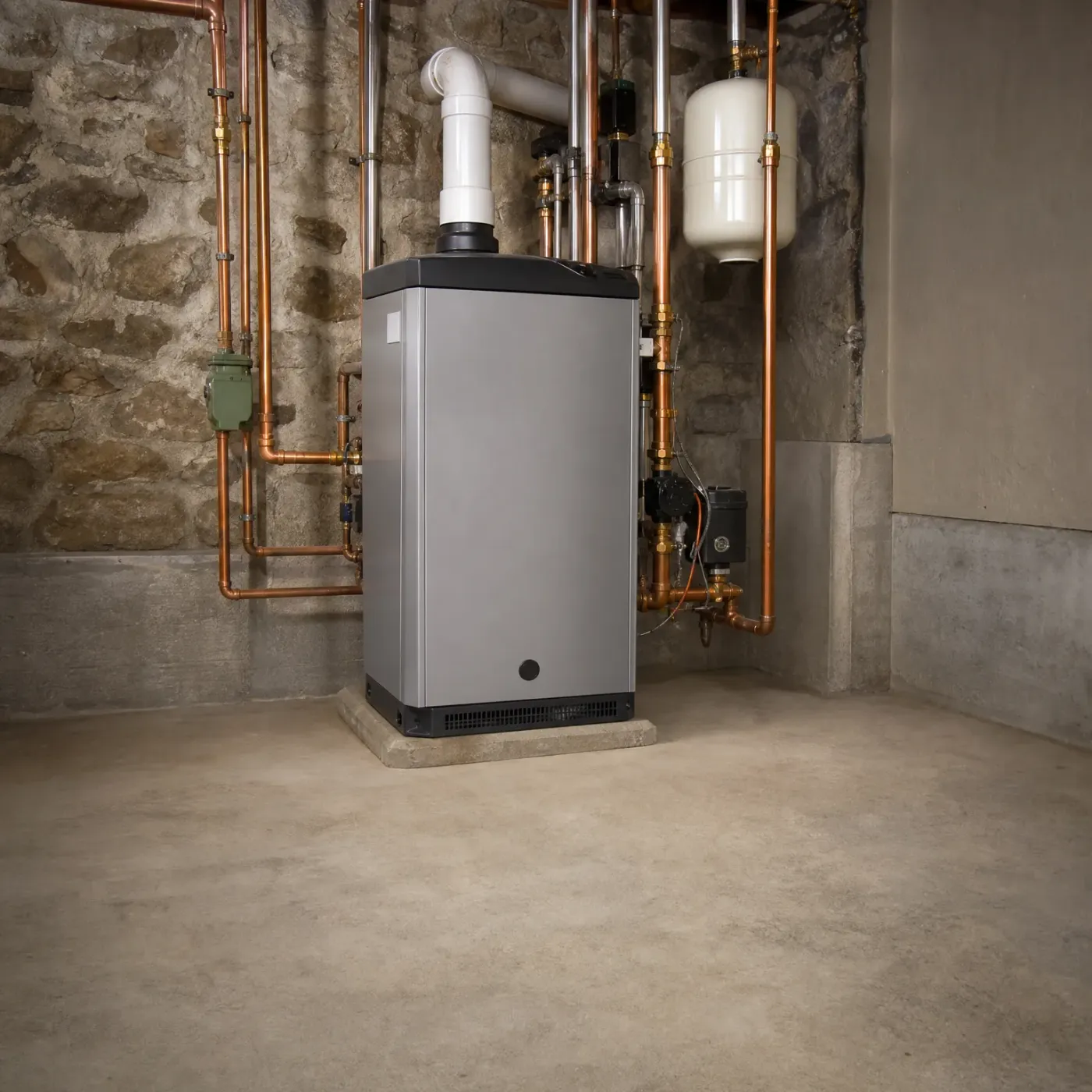
A gray floor-standing boiler on a concrete pad in a basement, connected to copper pipes, a white expansion tank, and a white PVC vent against a stone and concrete wall.
A boiler like this one can run radiant floor loops directly, since it's already set up to heat water and push it through pipe.
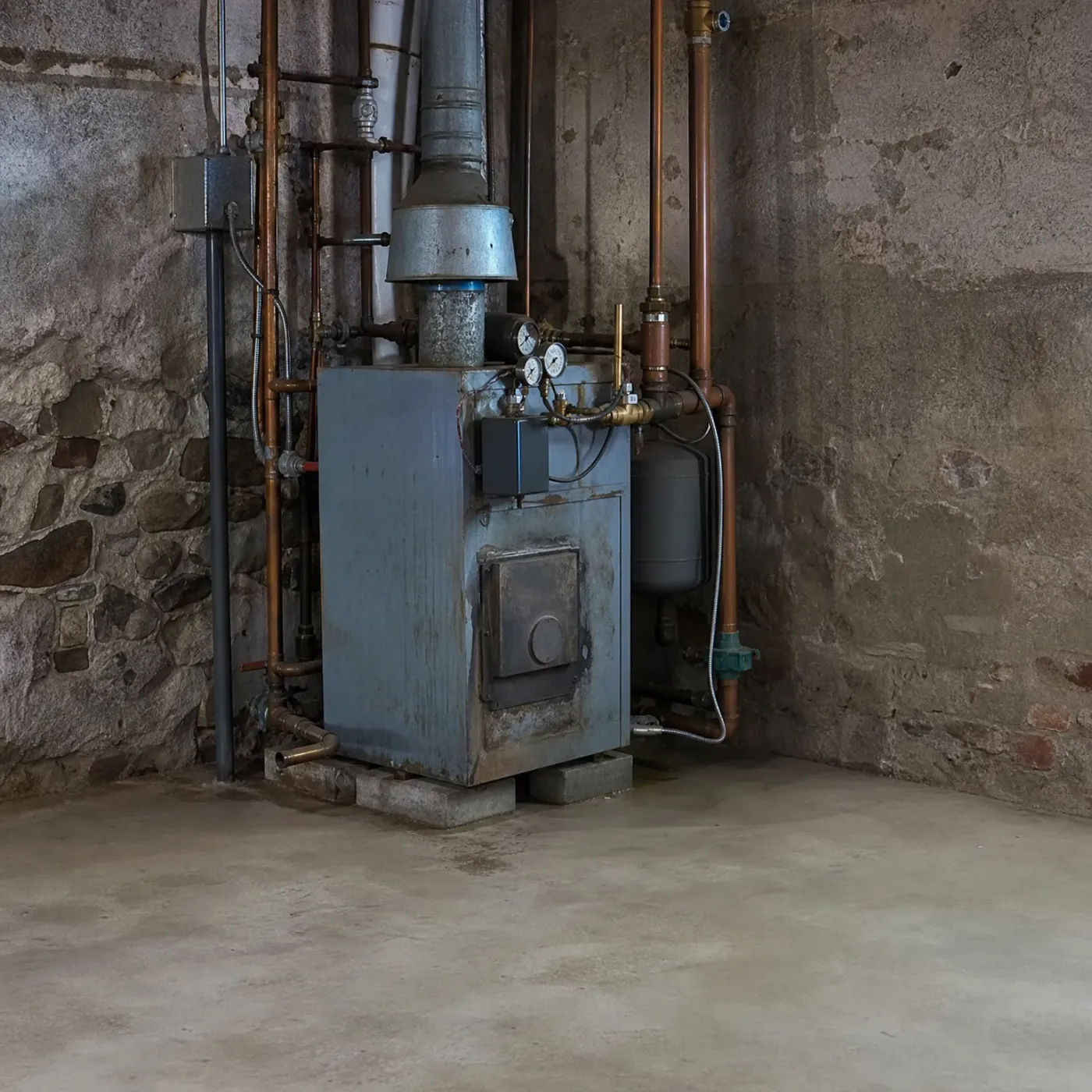
An older gray boiler with a metal flue, copper piping, pressure gauges and an expansion tank sits on concrete blocks in a basement corner with stone and concrete walls.
A boiler this worn is a harder case for radiant floors, since new loops ask a lot of a unit already struggling to keep up.

How Radiant Floor Loops Work

  • Radiant floor heat moves water through loops of PEX tubing laid under or in the floor, not forced air through ducts.
  • Your boiler heats that water to around 100 to 130 degrees, far cooler than the 160 to 180 degrees baseboard loops usually need.
  • A manifold splits the supply into separate zones, so a bedroom and a kitchen can run at different floor temperatures at the same time.
  • The floor itself stores heat and releases it slowly, so the boiler cycles on and off less often than it would feeding radiators.
  • A mixing valve or injection pump often has to step the water down to that lower temperature before it enters the floor loops.
  • Rooms heat from the floor up, so the air near your feet stays close to the air near the ceiling instead of stratifying.

A radiant floor system doesn't push warm air through your house. It runs hot water through loops of PEX tubing laid in or under the floor, and the floor itself becomes the heat source. Your boiler doesn't have to work as hard to feed it. Baseboard loops usually want water in the 160 to 180 degree range, but floor loops only need something like 100 to 130 degrees, so if your boiler is set up for baseboard now, that water has to come down before it reaches the floor. That's the job of a mixing valve or an injection pump, stepping the supply down to the lower temperature the floor loops can use. From there, the water runs through a manifold, which is what lets a kitchen run hotter than a bedroom down the hall, each zone fed and controlled on its own. Once the floor's warm, it holds that heat and gives it up slowly, so the boiler isn't kicking on and off all day the way it might feeding radiators. And because the heat starts at the floor instead of blowing out of a vent near the ceiling, the air in the room stays more even top to bottom. You're not standing in a warm pocket while your feet sit in a cold one. For a boiler already in the house, it's less about adding a new heat source and more about rerouting how that heat gets delivered.

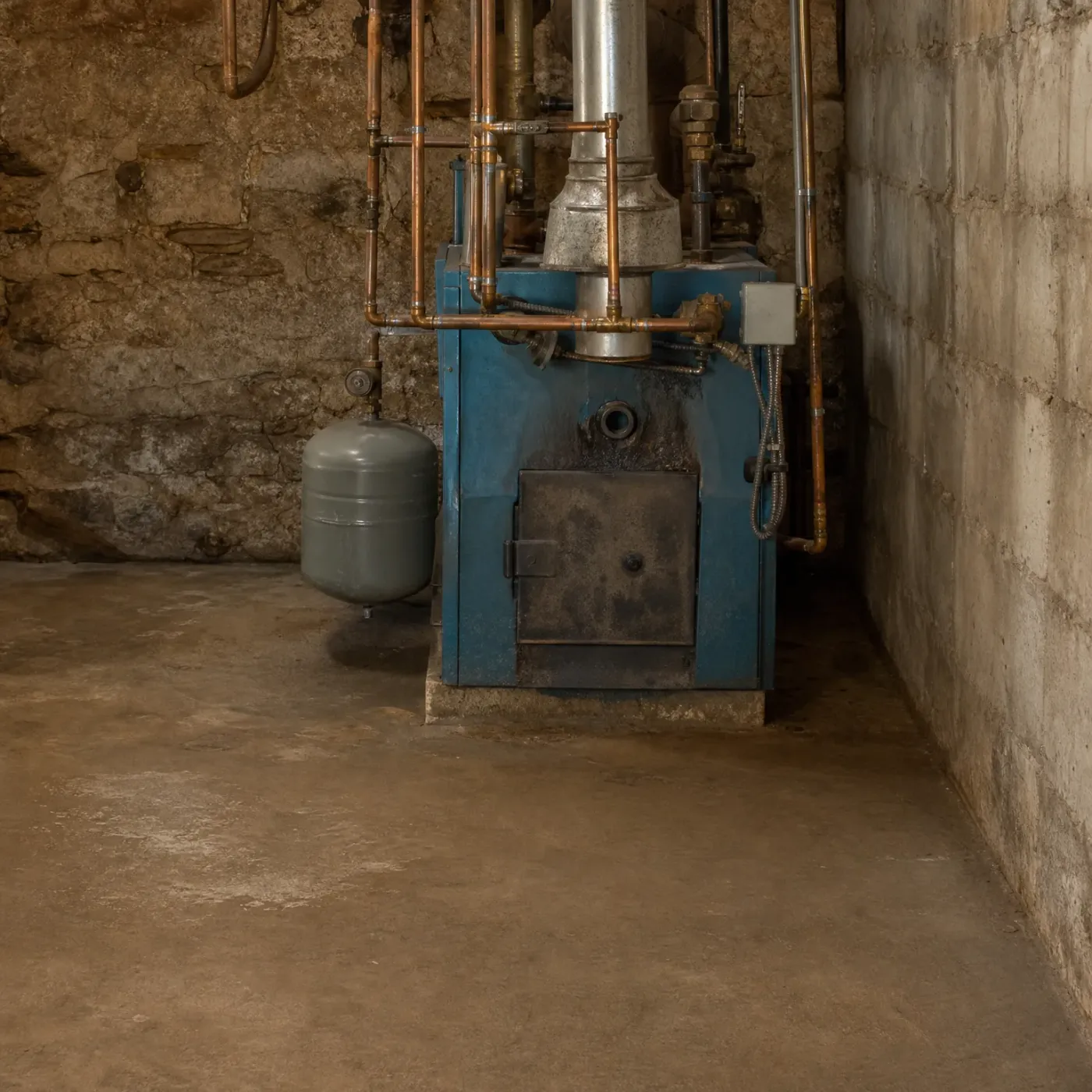
A blue cast-iron boiler with a metal flue pipe and copper piping stands against a stone and concrete block basement wall beside a gray expansion tank on a bare concrete floor.
Before you get your boiler installation
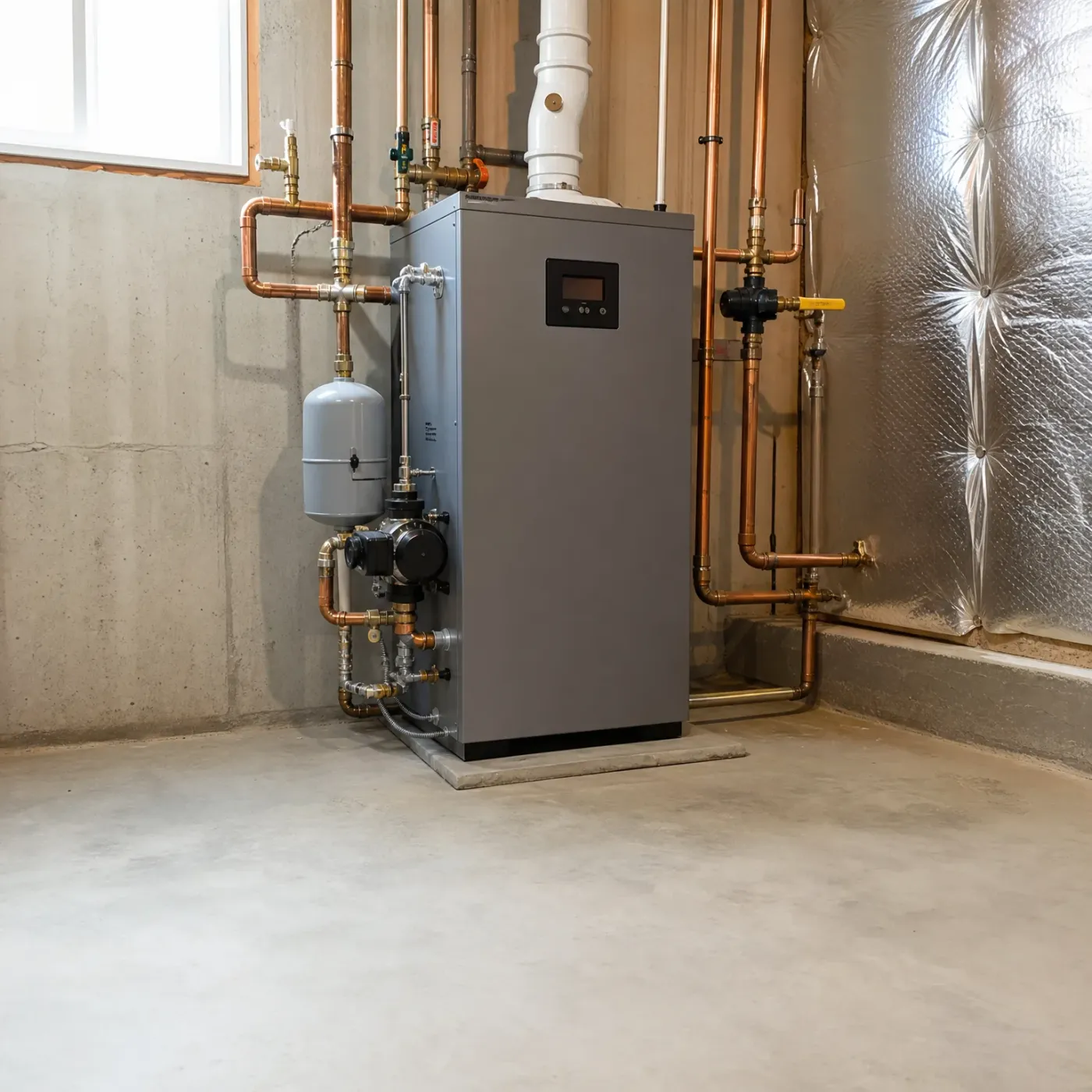
A gray boiler unit with a digital display stands on a concrete basement floor, connected to copper piping, a gas valve, a circulator pump and an expansion tank, beside a concrete wall and foil-faced insulation.
After you get your boiler installation
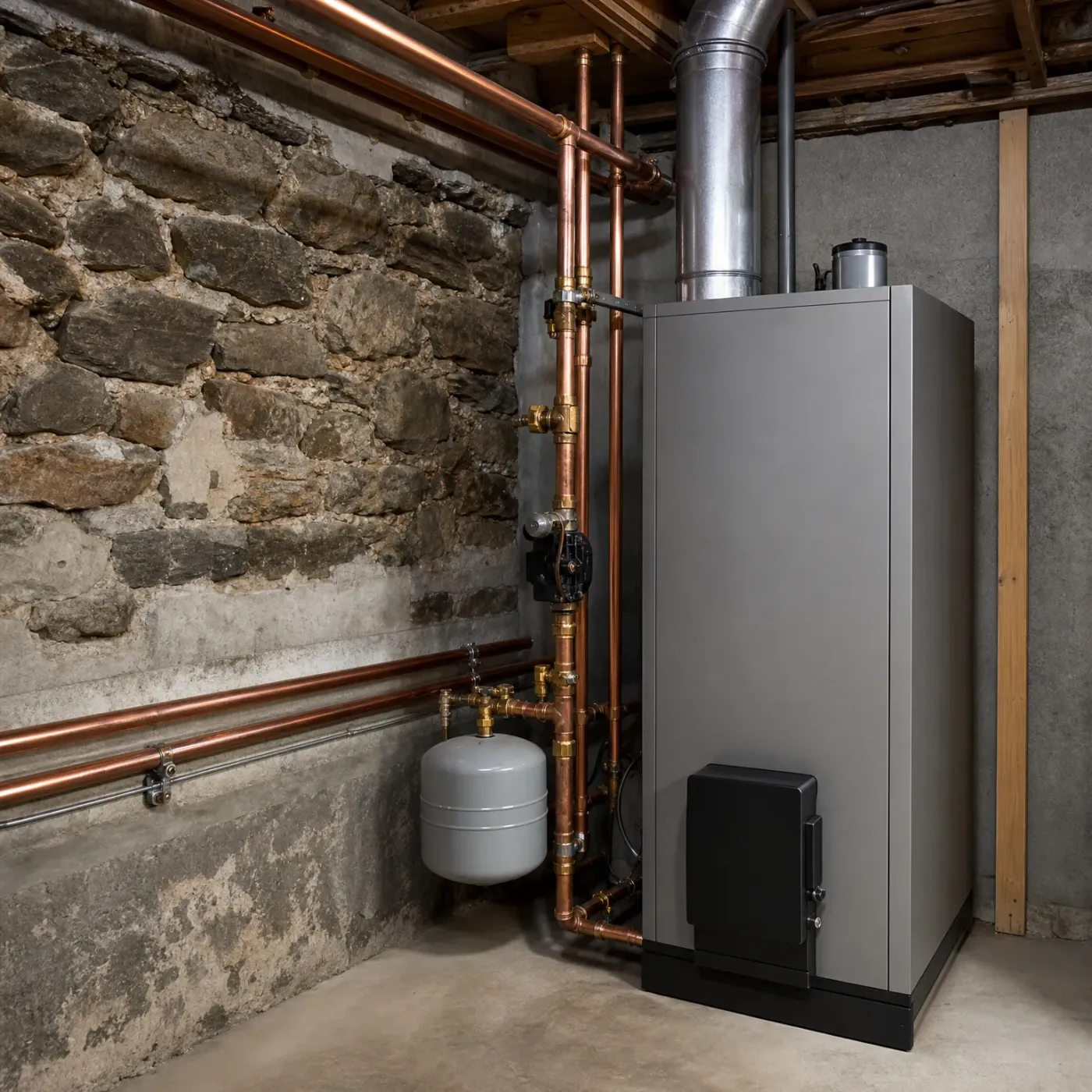
A gray boiler unit with a metal flue stands in a basement beside copper piping, valves and a small expansion tank, against a stone and concrete wall with wooden joists overhead.

Matched to your boiler job

Your request goes to one pro, not a list of companies.

A local installer who puts in boilers gets your project.

Reach a local pro

There's no charge for the request.

Radiant Floors Or Stay As Is

Radiant floors

  • Floors stay warm underfoot, which matters more in January than most people expect until they have it.
  • Rooms heat evenly from the ground up, so you don't get the cold feet and warm head feeling forced air leaves behind.
  • There are no vents or returns to work around, so furniture and rugs go wherever you want them.
  • Installing new loops means opening up the floor in the rooms you want heated, which is more work if you're not already renovating.
  • Your boiler has to run constantly at a lower water temperature rather than cycling on and off, which changes how it's used day to day.
  • Rooms with radiant floors can't be cooled through the same system, so you're still relying on something else for Arkansas summers.

Staying as is

  • Electric heat is what most homes around you already use, and power here is cheap enough that the bill isn't the deciding factor.
  • Your current setup doesn't require tearing into floors or planning around which rooms get loops and which don't.
  • Whatever you're heating with now already handles the humidity swings between an Arkansas winter and its muggy summer.
  • Skipping radiant floors means skipping the even heat and warm floors, which some people live without just fine and others miss immediately.
  • If your boiler is older or already stretched thin, asking it to run radiant loops on top of what it does now is a bigger ask.
  • Sticking with what you have is the simpler path if nothing about your current heat actually bothers you.
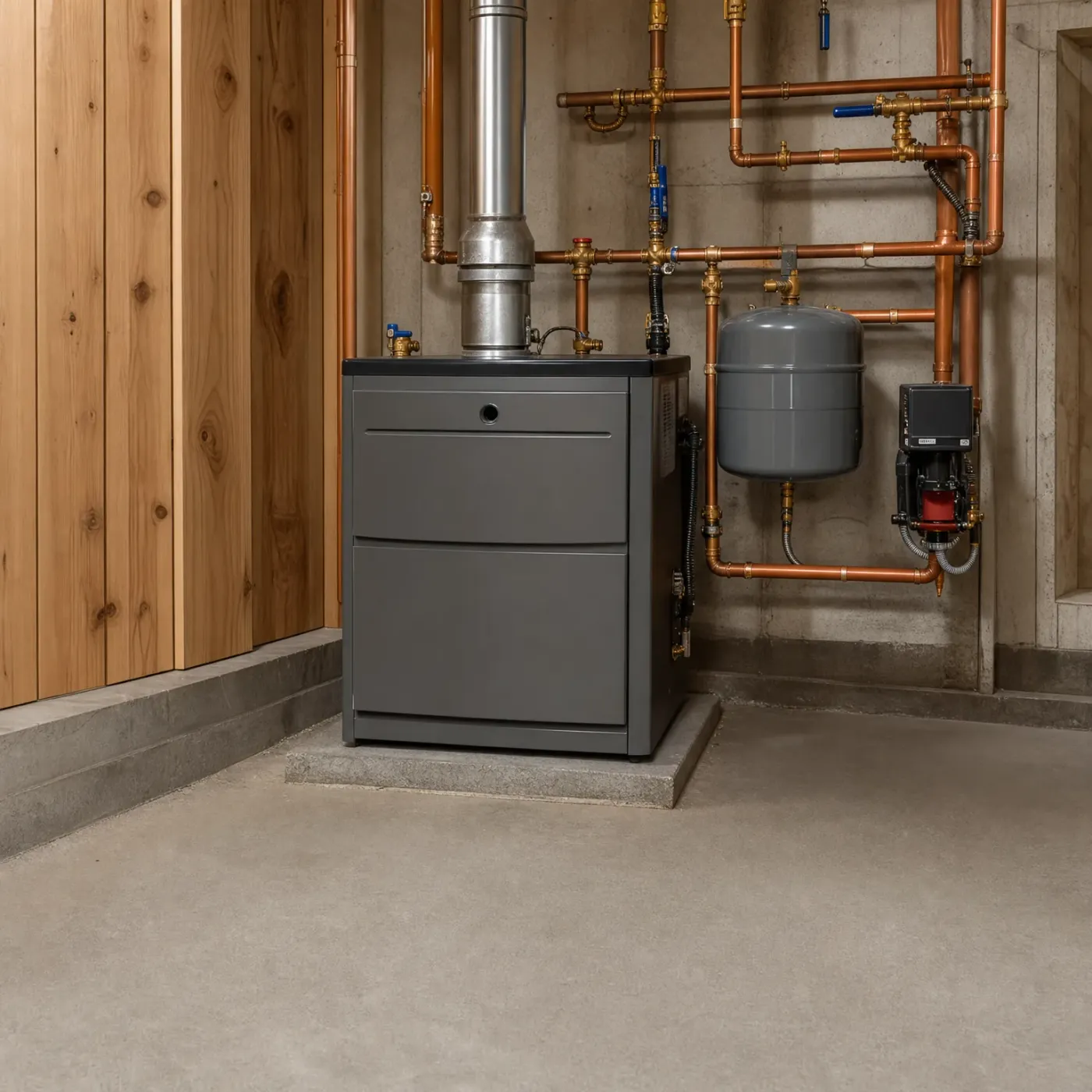
A gray boiler on a concrete pad in a basement, with a metal flue pipe and copper piping, brass valves, a gray expansion tank and a circulator pump mounted on the concrete wall beside wood paneling.

Boiler running right

A boiler like this keeps the pipes, the expansion tank, and the pump working the way they should. It holds steady pressure and even heat, which is what a radiant loop needs from the unit feeding it. Adding floor loops to a boiler in this shape is a straightforward ask.
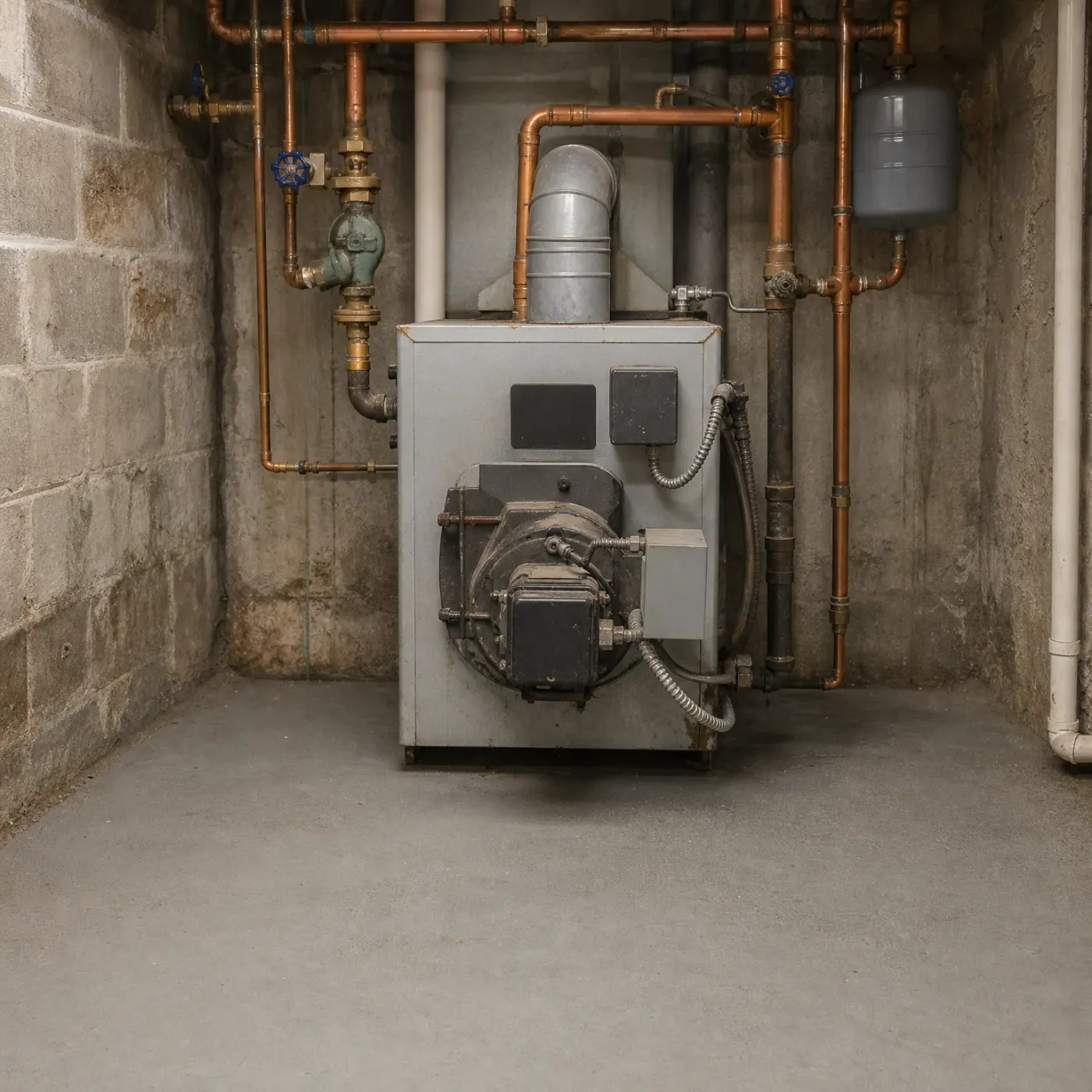

A gray boiler with a flue pipe and burner unit stands against a concrete block basement wall, surrounded by copper and steel piping, valves, and a gray expansion tank, on a bare concrete floor.

Boiler showing its age

A boiler in an unfinished basement like this one, with old shut-off valves and bare copper overhead, may still run, but it's already carrying its share of wear. Asking it to feed new radiant loops on top of that is asking more from a unit that has less left to give.

A gray-haired bearded man in a dark coat and scarf dusted with snow stands smiling in a dimly lit entryway with a white front door, a side table with a lit lamp, an oval mirror, and a patterned rug.
An older bearded man in a dark snow-dusted coat and gray scarf stands just inside a dimly lit home entry, with a framed picture, lit table lamp, and an adjoining room with a fireplace behind him, and snow visible through the open door.
A gray-haired, bearded man in a dark snow-dusted coat stands smiling in a dimly lit entry hall with a staircase, a lit table lamp, a framed picture, and a living room visible through a doorway.
An older man with gray hair and a beard, wearing a dark jacket dusted with snow, stands smiling in a dimly lit hallway with lamps and a living room visible behind him.

Radiant loops hold heat in the slab or subfloor long after the boiler stops firing, so the floor keeps giving off warmth between cycles instead of cold air creeping back in right away.

That's why a radiant system can run at a lower water temperature than baseboard and still keep a room comfortable, which is easier on a boiler that's doing the work either way.

Winter nights average 32°F statewide

A 32°F overnight low is about where your boiler will sit most nights from December through February. Radiant loops fed by water in the 100 to 130 degree range stay ahead of that, warming the floor back up before the house ever feels the dip.

NOAA nClimDiv 1991-2020 county normals weighted by homes

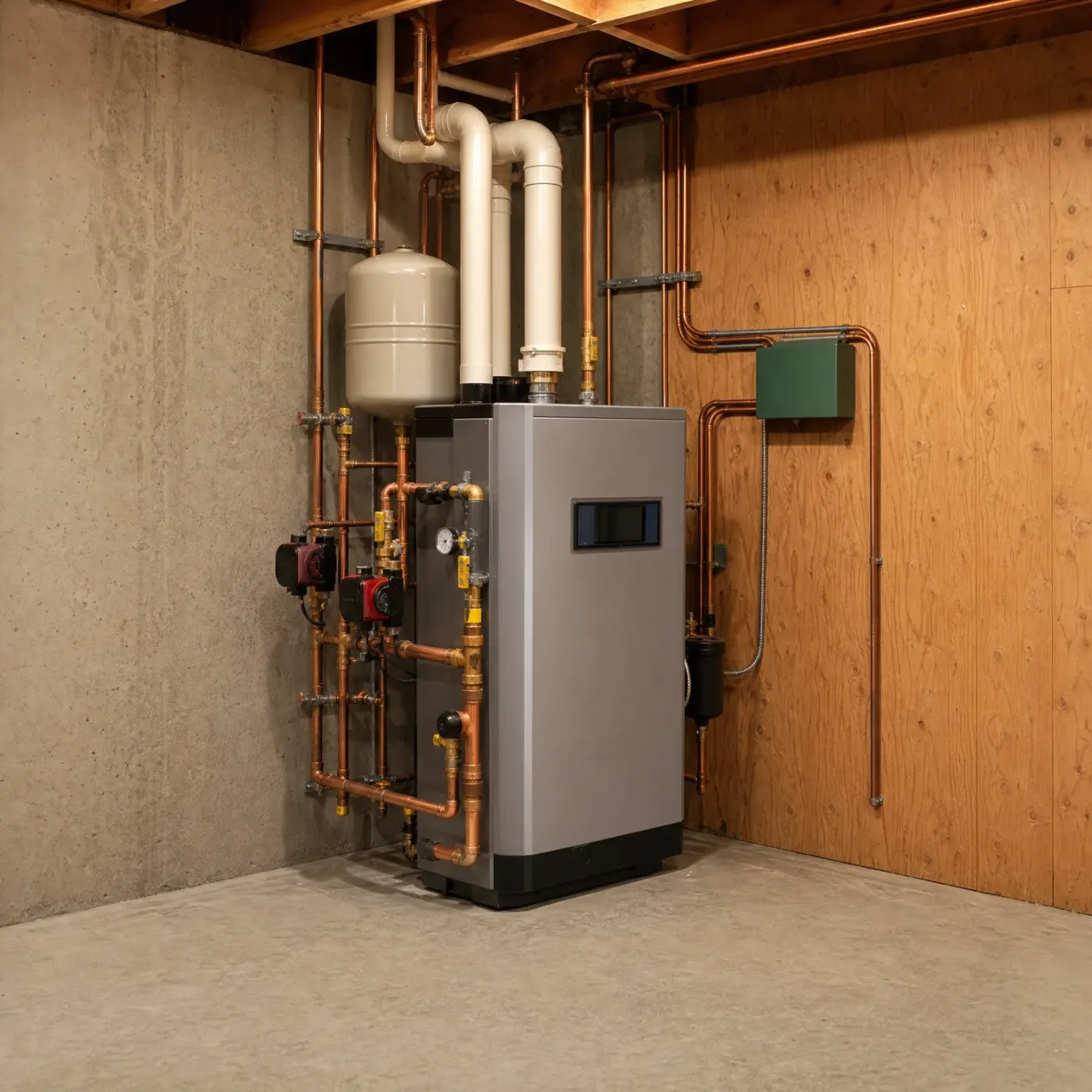
A gray floor-standing boiler in a basement corner with copper piping, two red circulator pumps, a beige expansion tank, white PVC vent pipes, concrete and plywood walls.

What a healthy boiler looks like

The copper pipes are clean, the pressure gauge reads steady, and the expansion tank is doing its job. A unit like this is holding the pressure and temperature a radiant loop depends on, which makes it a sound base for adding floor heat.

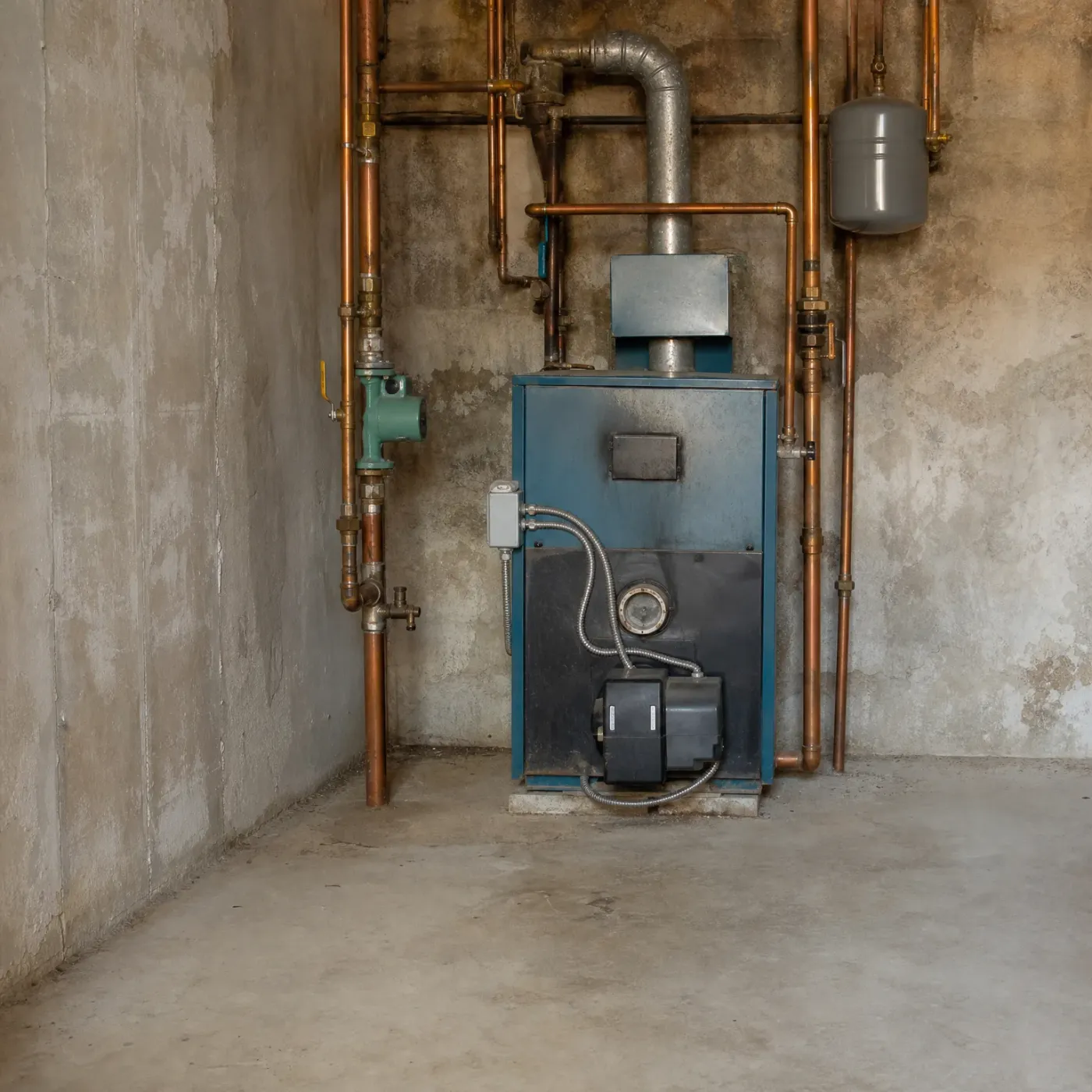
A blue residential boiler with a metal flue, pressure gauge and burner unit stands against a stained concrete basement wall, surrounded by copper pipes, a green circulator pump and a gray expansion tank.

What a struggling boiler looks like

Bare concrete walls, an older burner assembly, flexible fuel lines showing their age. A boiler in this shape is working hard just to heat the house it already serves. Asking it to run new radiant loops on top of that is asking more than it may have left to give.

Radiant floor heat is worth putting in if your boiler is sound, and not worth it if your boiler is already struggling. That's the whole answer. A boiler holding steady pressure and even heat has what a radiant loop needs to run on, and in a state where most homes are heating with electric strip heat or a furnace, that boiler already puts you ahead before you add a single loop. If yours is older and working harder than it should, the loops are the wrong next step until the boiler itself is sorted out. A local contractor who works on boilers and radiant systems all winter can tell you which case yours is after a look at the pressure, the pipes, and how the unit is cycling now. That's a judgment worth getting from one person who knows this equipment, not a guess made from a brochure or a forum post.

At dusk, a dark board-and-batten house with a standing-seam metal roof and lit entry walkway of stone pavers, with two large outdoor heat pump units on a stone-walled pad at right and trees and hills in the background.

Boiler Installation

A boiler pro near you

Step 1 of 3: Equipment
  • A corner of a room with an upholstered wood-framed armchair holding a floral pillow, a round side table with a ceramic lamp, books and a vase of greenery, a framed landscape painting on the wall, a patterned rug, and a sunlit multi-pane window.
    • Say what's going on with your boiler, and a pro who works on them reaches out.
    • A local pro who knows boilers gets your details and gets in touch.
  • Interior corner with a wood-framed window showing green foliage outside, a framed landscape print on a beige wall, and a rounded stone vase of leafy branches on a wooden cabinet.
    • Send the form and stop researching installers for the new boiler.
    • Once you send the form, finding a pro is off your list.
  • A pale ceramic vase holding olive branches sits on a dark wooden countertop beside a carved wooden dough bowl, next to a wood-framed window and a light painted plank wall.
    • Describe the project once instead of to every installer.
    • Skip collecting and comparing quotes for the new boiler.
  • A dark wood round side table holding a brass lamp with a cream shade, a blue-and-white patterned bowl, and a white textured pot of greenery, beside an upholstered chair with a gray patterned cushion and a white-framed window showing green trees and flowering shrubs.
    • The pro who reaches out is licensed in Arkansas.
    • Only one pro gets your request, so you hear from one company.