

How to bleed radiators before an Arkansas winter

A local pro who services boilers gets in touch about the tune-up.

Get my match

Bleeding a radiator means opening the small valve at its top to let trapped air out, so water can fill the whole radiator again. Air gets in over time, and it collects at the top since it's lighter than water. A radiator with air in it will be cool at the top and hot at the bottom, or it may stay cool all over while the rest of your system runs fine. You'll want every radiator in the house putting out full heat before Arkansas winter settles in, since a boiler works harder to make up for the ones that aren't. To bleed one, hold a cloth and a small container under the valve, turn it with a radiator key until water hisses out steadily with no more air, then shut it. Do this for each radiator, starting with the one furthest from the boiler. Check the boiler's pressure gauge afterward, since bleeding drops it, and top it up if it reads low.

A dark gray floor-standing boiler on a concrete pad in a basement, surrounded by copper piping, brass valves, a gray expansion tank, a circulator pump, and a metal flue pipe against concrete block walls.

Radiators heating evenly

Water fills the radiator from the valve to the top, so heat spreads across the whole thing. The pipes run full, the pump moves water without fighting trapped air, and the boiler doesn't run longer than it needs to just to get a room warm.

A blue boiler on a raised concrete pad in a basement corner, with copper and steel pipes, a gauge cluster, an expansion tank, and a metal flue running up the bare concrete walls.

Air trapped in the system

A radiator with air at the top stays cool up high and warm only near the valve. The boiler ends up running more to make up for it, and the pump works against the air pocket instead of moving water through.

Bleed it yourself or call a contractor

Bleed it yourself

  • A radiator key costs little, and most valves take a quarter turn before water reaches the opening.
  • You can do every radiator in the house in one afternoon, starting upstairs and working down.
  • You need a cloth under the valve, since a bit of water will come out once the air clears.
  • If the boiler pressure drops after bleeding, you still need to know how to top it back up.
  • Skipping a radiator because the valve feels stuck means that room stays cool all winter.

Have a contractor check it

  • A contractor bleeding the system can also check boiler pressure and refill it if bleeding dropped it low.
  • Air that keeps coming back after bleeding usually means a leak somewhere, which a contractor can trace.
  • You skip calling around and explaining the same cool-radiator problem to more than one company.
  • A contractor who knows boilers can catch a stuck valve or a failing pump while they're already in the room.
  • Matching with a contractor who services boilers means someone used to this system, not just radiators in general.
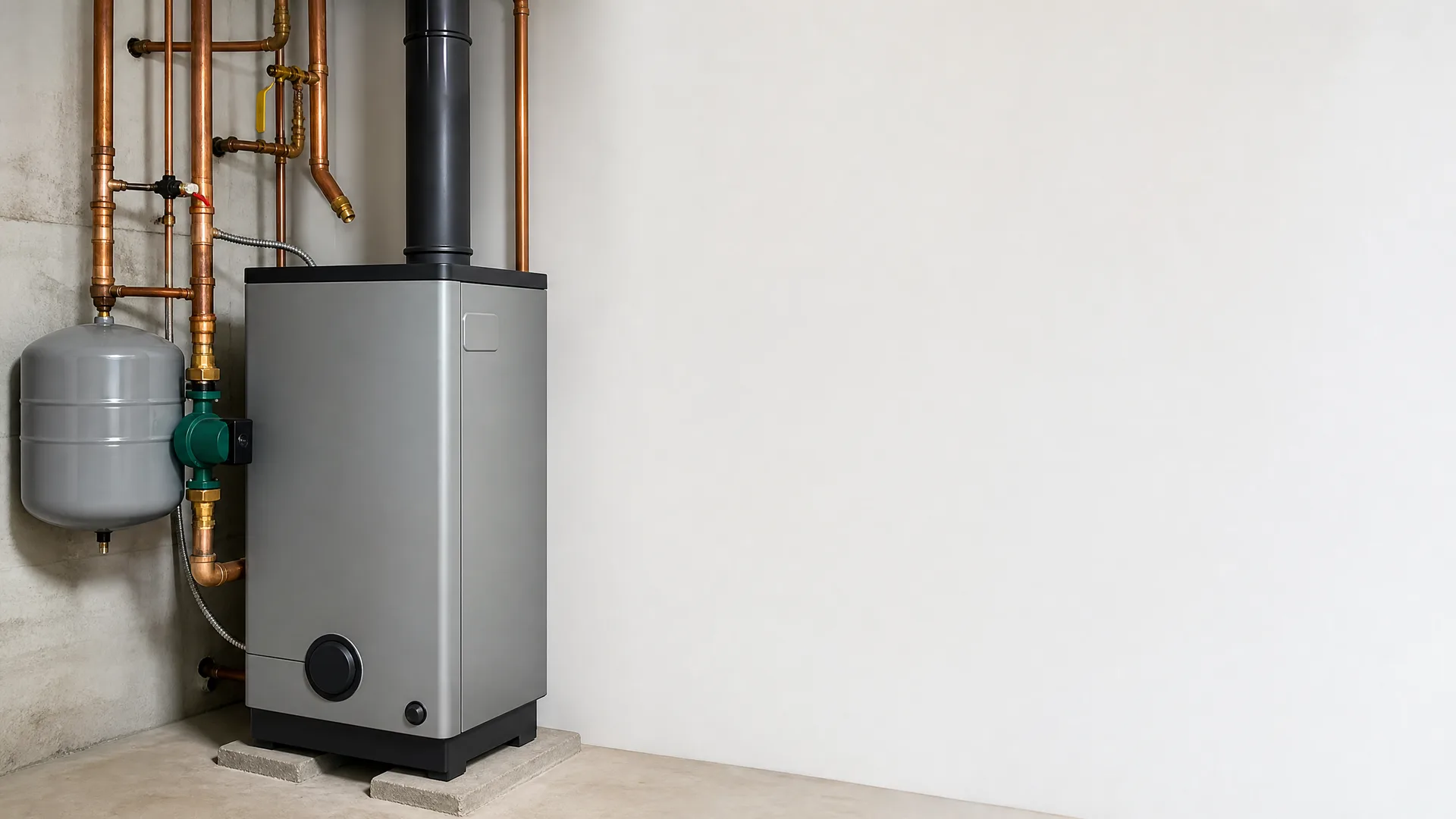
A gray floor-standing boiler with a black flue pipe stands on concrete blocks in a corner, connected to copper pipes, a green circulation pump, and a gray expansion tank on the wall.

Why air gets in every year

Water expands and contracts as the boiler heats and cools, and small amounts of air work their way in through fittings and the expansion tank with each cycle. Over a summer of sitting idle, that air collects at the top of every radiator. By the time you turn the heat back on, there's usually enough of it to keep at least one radiator from heating all the way across.

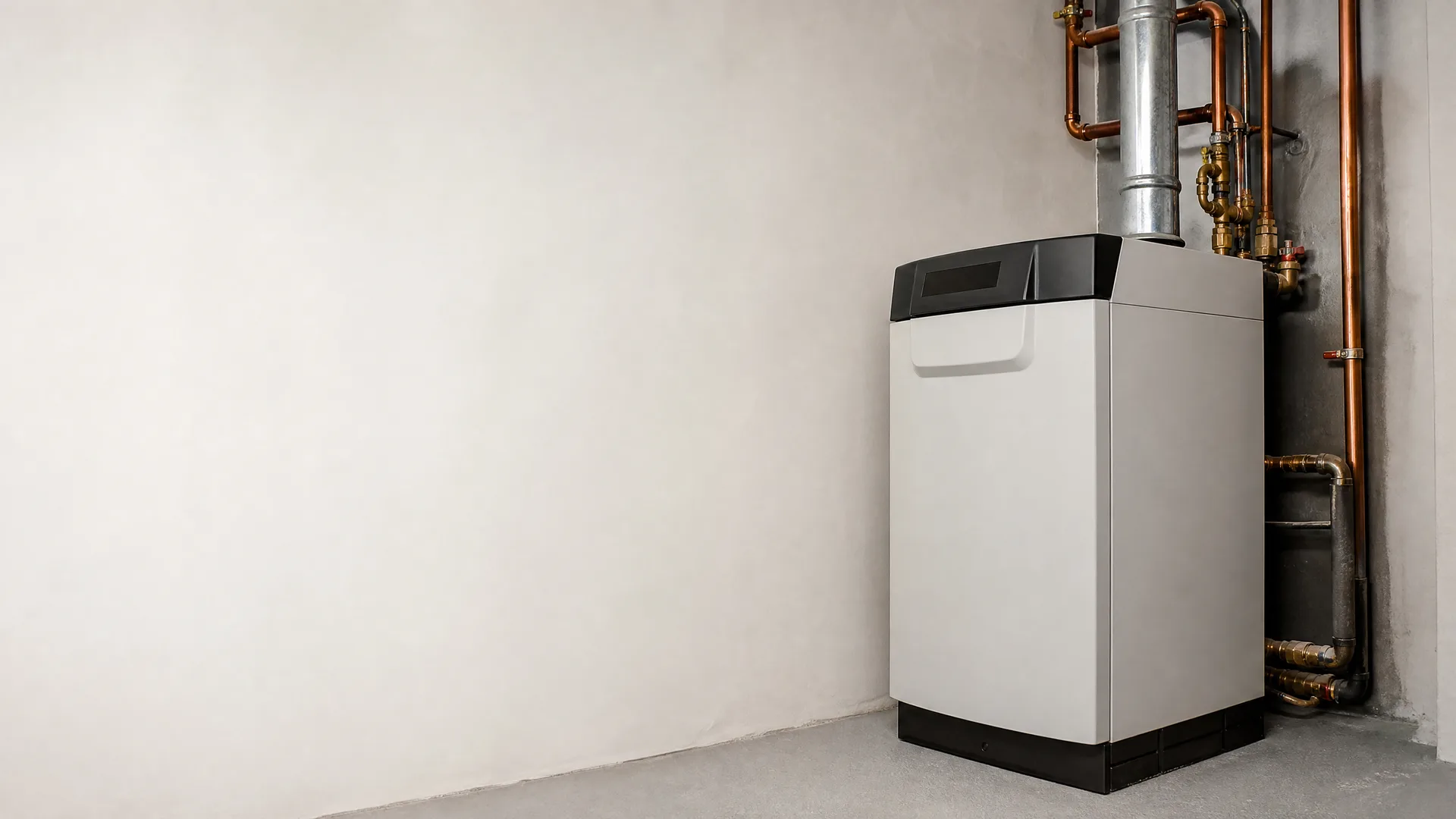
A white and black floor-standing boiler in the corner of a bare plastered room, with copper and metal pipes running up the wall behind it.

What the hiss and water tell you

Turn the key until you hear a hiss, that's the trapped air leaving. Keep it open until the hiss stops and water starts to dribble out steady, then close it. If a radiator never hisses at all and water comes out right away, there wasn't much air in it to begin with, and that one was already heating fine before you touched it.

Winter nights average 32°F statewide

Nights settle near freezing across the state all winter, so your boiler is running most hours it's dark out. A radiator with air trapped at the top won't heat evenly, and on a night that cold, the room feels it fast.

NOAA nClimDiv 1991-2020 county normals weighted by homes

One cold radiator in a back bedroom means the boiler runs longer to try to heat a room that isn't getting the water it needs, and that room stays the coldest one in the house all winter.

Bleed that radiator once before the cold sets in and the room heats like the rest of the house, with the boiler working the way it's supposed to instead of fighting trapped air.

A woman wrapped in a thick beige fleece blanket sits on a sofa with an open book on her lap, beside a lit table lamp, with a frost-covered window behind her.
A smiling older woman with gray hair in a cream knit sweater stands in a dimly lit kitchen beside a window showing snow outside, with a round loaf of bread on the counter in the foreground.
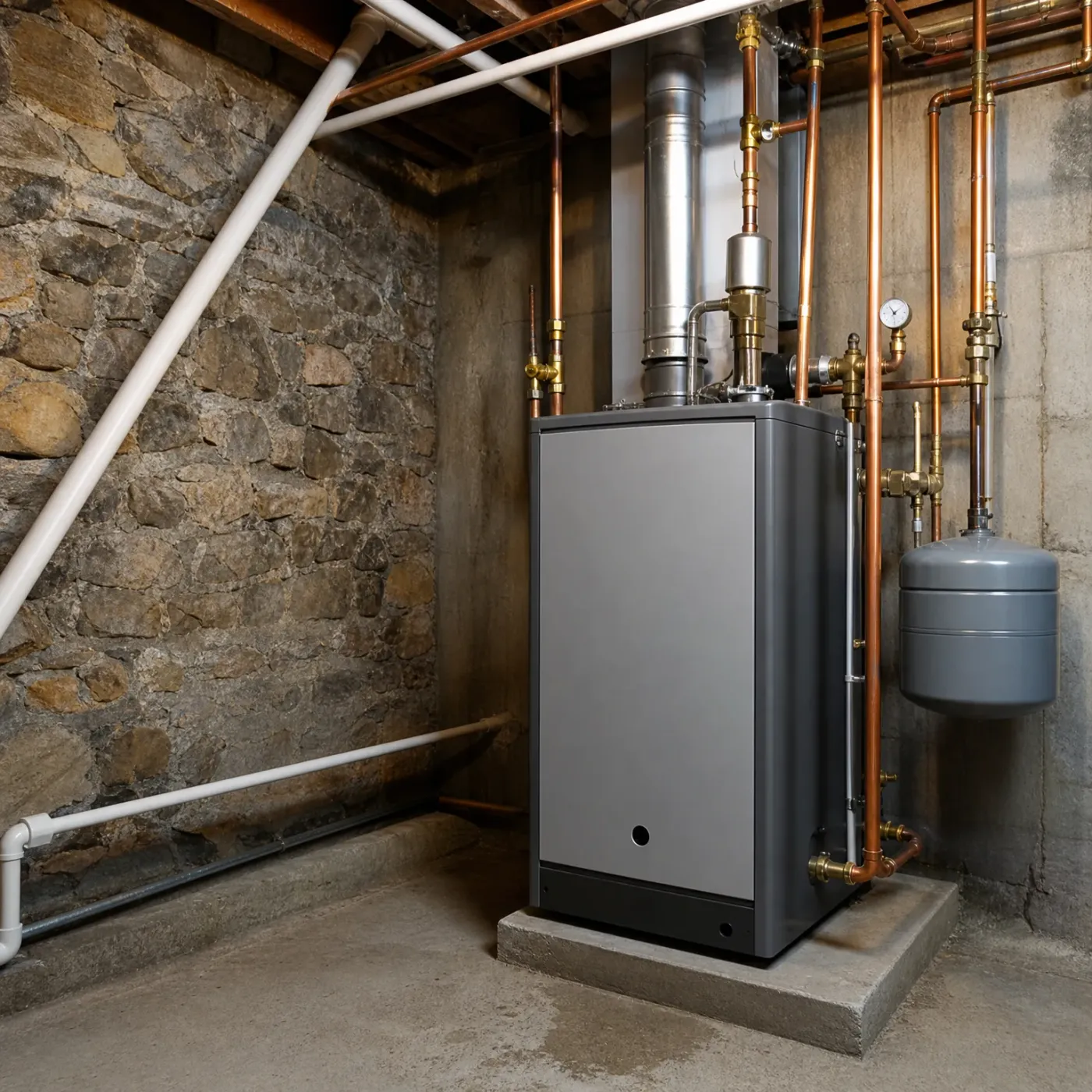
A gray floor-standing boiler on a concrete pad in a basement, connected to copper piping, a metal flue, a gauge, and a gray expansion tank, beside a stone wall and white insulated pipes.

Matched to your boiler job

Fill out one form instead of calling around for a boiler tune-up.

Describe your boiler job, and a local pro who handles it gets in touch.

Describe it once

You're not committing to anything by asking.

Why is this radiator cold at the top but warm at the bottom

That's air sitting at the top of the radiator, keeping hot water from reaching it. You might notice one room runs colder than the rest of the house no matter how high the thermostat goes, or the boiler cycles longer than it used to. Some radiators gurgle or tick as water tries to push past the trapped air. Leave it long enough and the boiler keeps working harder for the same heat, which shows up on the bill. The radiator itself isn't damaged by this, but a boiler that runs longer than it should, night after night, wears sooner than one that doesn't have to fight trapped air to do its job.

A gray-haired, bearded man in a dark coat dusted with snow stands smiling in a dimly lit room with a lamp, mirror, framed art, and a sofa in the background.
An older man with white hair and a beard, wearing a dark snow-dusted coat and scarf, stands in a warmly lit interior hallway with a framed landscape picture, a table lamp and a potted plant behind him, and a snowy view through a window at left.
An older man in a dark snow-flecked overcoat and scarf stands smiling in a warmly lit home entryway, with a glass-paned door showing darkness outside and a lamp-lit room visible through a doorway behind him.
An older man with gray hair and a beard, wearing a dark snow-dusted jacket and scarf, stands smiling in a warmly lit interior hallway with a lit table lamp, a vase of dried branches, and a framed picture in the background.

What order should I bleed the radiators in?

With more than one radiator in the house, it's not obvious whether the order matters, or if you can just start wherever's closest. You want to get it right the first time instead of redoing the whole house.

Start with the radiator farthest from the boiler, then work back toward it

Air tends to settle furthest from the boiler, where the water has traveled the longest way through the pipes. Starting there and working back toward the boiler clears that air ahead of the water as it fills in behind it. If you bleed the closest radiator first, you can push air further down the line instead of out, and end up doing that one again. If your house has two floors, bleed the upstairs radiators first, since air rises and tends to collect there, then move downstairs. Go room to room in that order and you shouldn't need to repeat any of them.

A gray boiler unit on a concrete pad in a basement corner, connected to copper piping, circulator pumps, and a ceiling-mounted expansion tank against bare concrete walls.

Boiler running clean

Pipes run full, pumps turn without fighting air, and the expansion vessel holds steady. Every radiator takes water straight from the valve, so the boiler fires for as long as the house actually needs and no longer.

A blue oil-fired boiler with a pressure gauge, burner unit and metal flue sits on a concrete pad in a basement corner, surrounded by copper and black pipes against bare concrete walls.

Boiler under strain

A boiler left unbled works harder than it should, pushing water past pockets of trapped air to try to reach every radiator. The pressure gauge drifts, the burner cycles more, and parts near the pump wear faster than they would otherwise.

A man in a dark blue shirt stands in an open front doorway of a stucco and wood-clad house, facing a blond woman seen from behind in the foreground on a stone walkway.

A few minutes with a key, before the cold nights start

Bleeding a radiator comes down to one thing: letting trapped air out so water can fill it all the way to the top. Every radiator in the house, checked and bled before the first hard freeze, means the boiler isn't working around a cold spot it can't fix on its own. That's the whole answer, and now you have it.

What you don't have to work out is who shows up to look at the rest of the system, whether the boiler itself is holding pressure the way it should, or what else needs attention before the nights settle near freezing for good. Matching with a contractor who knows these systems means you skip the calling around and the repeating yourself on the phone. They reach out to you, already knowing what you're dealing with.

Interior corner of a living room with a beige upholstered sofa and dark cushion in the foreground, a ceramic vase of leafy branches on a dark side table by a curtained window, a framed picture on the wall, and a wood-surround fireplace at right.
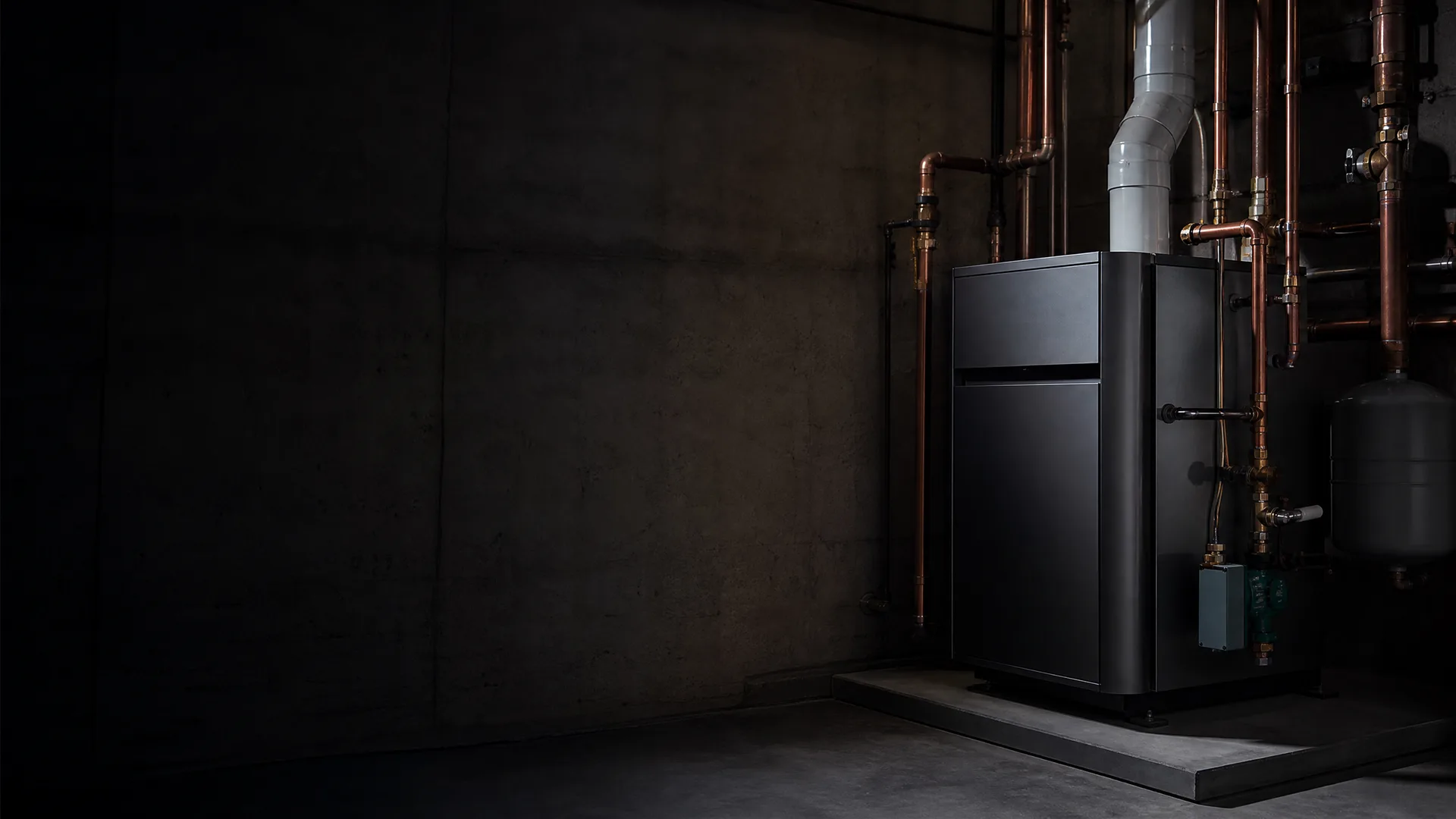
A black boiler unit on a concrete pad in a dim basement room, connected to copper pipes, a metal flue duct, and an expansion tank against a bare concrete wall.

A boiler pro near you

Skip calling around to set up a boiler tune-up.

Step 1 of 3: Equipment