Profile view of a bearded man wearing a black baseball cap and a dark gray T-shirt against a plain light background.

How long a boiler lasts in Arkansas

Step 1 of 3: Equipment

A boiler in Arkansas typically lasts 15 to 20 years. Most homes here heat with electricity, so a boiler usually means the house was built with one or had it added later, and that system keeps running on its own schedule regardless of what the house next door uses. The limit comes down to the tank and heat exchanger, which corrode slowly from mineral buildup and the constant cycle of heating and cooling water over the years. Winters in Arkansas are mild enough that a boiler here isn't pushed as hard as one running flat out for months in a colder state, which can help it reach the far end of that range. What matters is where yours falls in that span. A boiler past 15 years is worth watching for signs of wear, rust at fittings, uneven heat, rising noise, since replacing it on your own timeline beats replacing it after it fails in January.

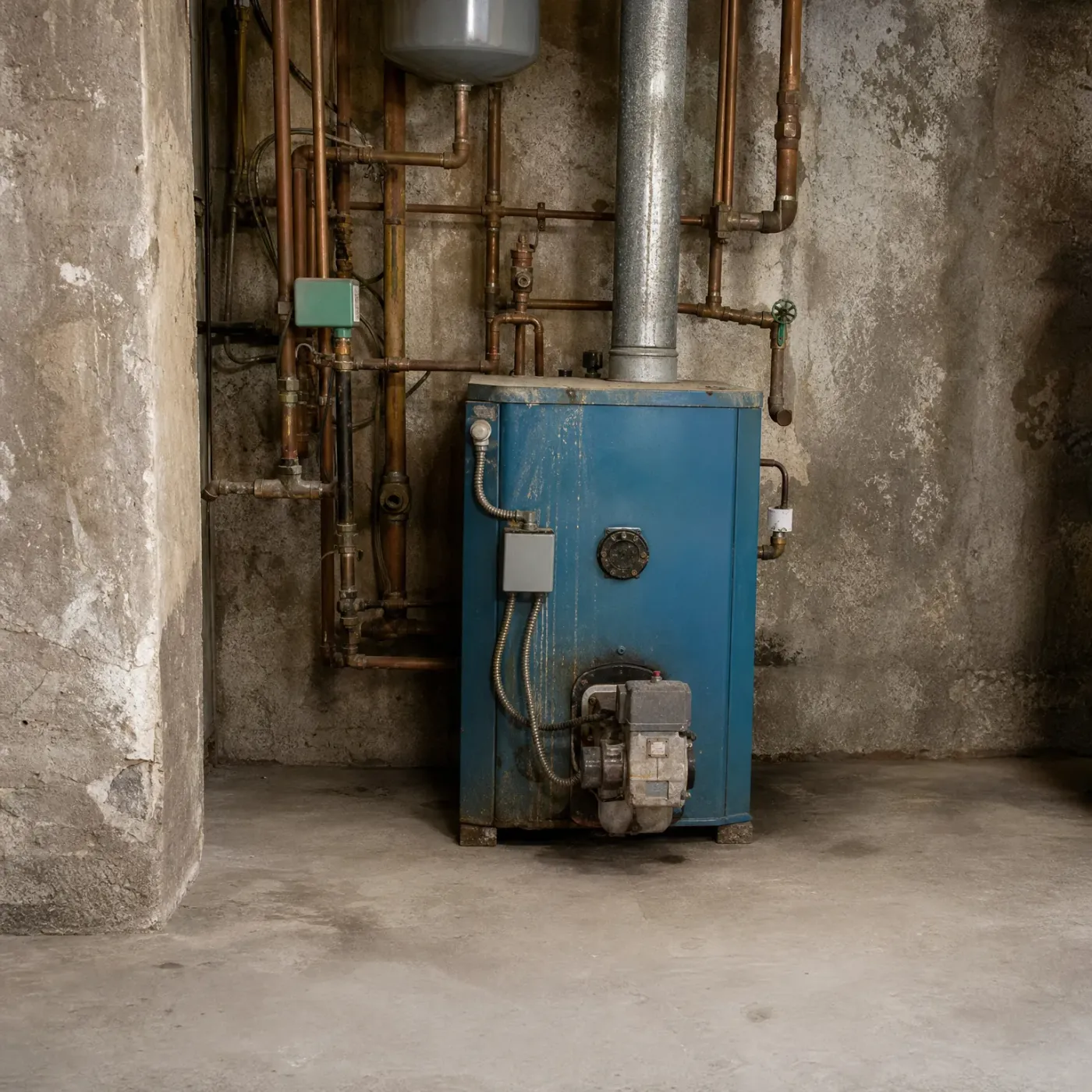
A blue oil-fired boiler with a burner unit and pressure gauge stands in a concrete basement corner, connected to copper pipes and a metal flue.
Before you get your boiler installation
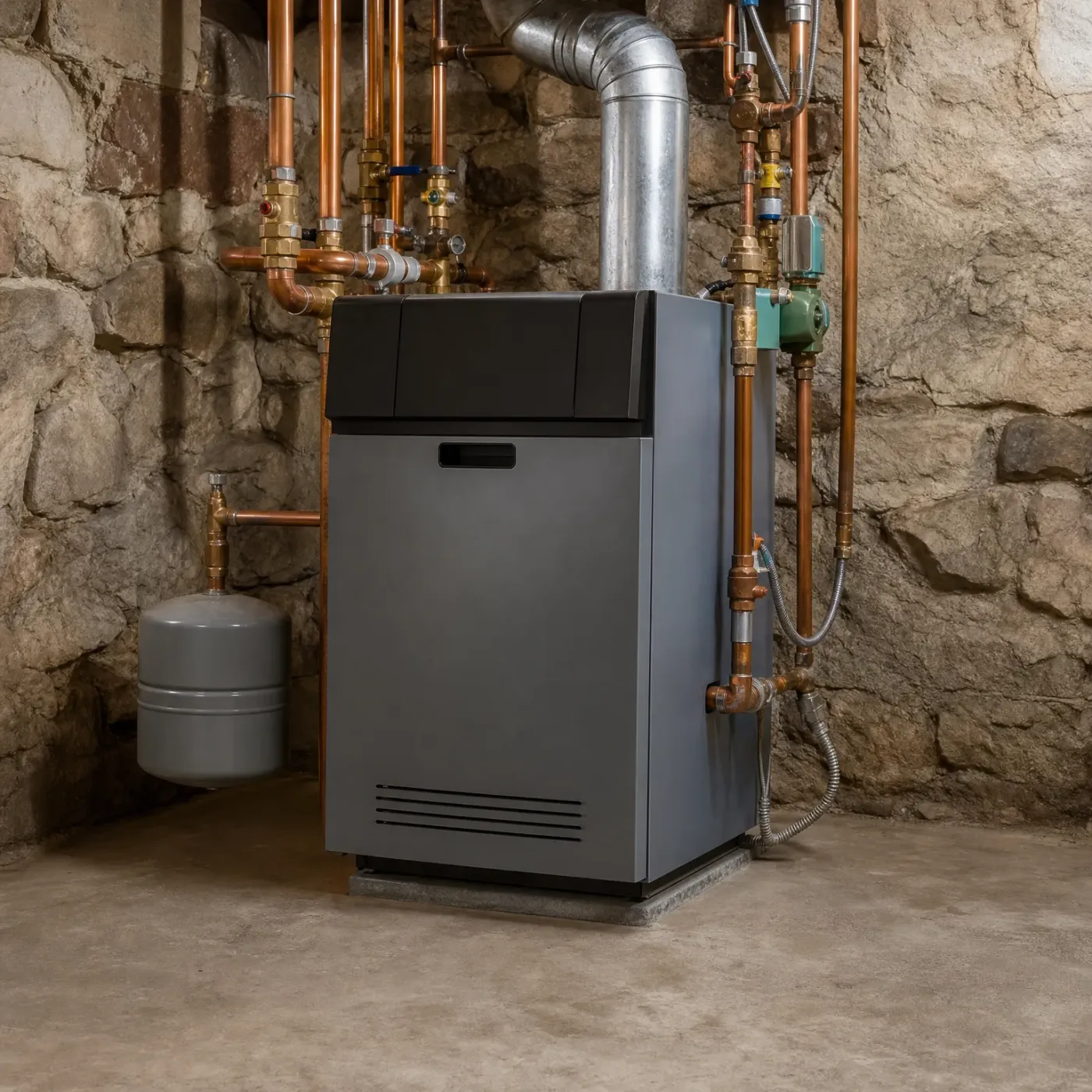
A gray floor-standing boiler with a metal flue stands against a concrete block wall, connected to copper pipes, brass valves and a gray expansion tank, on a bare concrete floor.
After you get your boiler installation
A gray residential boiler on a concrete pad in a basement with stone walls, connected to copper piping, brass valves, a circulator pump, an expansion tank, and a metal flue duct.

Still running right

A boiler like this one, with clean pipes and a steady pump, can hold its pace for years yet. The joints aren't weeping, the pressure holds, and the heat comes up even. That's a system with life left in it.

A blue cabinet boiler with a metal flue pipe and copper piping stands against a bare concrete wall in a basement with a concrete floor.

Running on borrowed time

That flue pipe and the bare wiring at the burner are what an old boiler looks like near the end. It may still heat the house, but a unit this worn can fail on the coldest night of the year, not the easiest one.


A woman with long gray hair wrapped in a checked blanket sits on a sofa by a window with yellow autumn foliage outside, with a lamp, framed picture and plant in the background.
An older woman in a cream knit sweater sits on a sofa by a window, looking out at sunlit trees with yellow and orange autumn leaves, with a bookshelf and lamp behind her.
A woman with gray shoulder-length hair in a dark knit sweater sits on a cushioned seat by a window, looking out at yellow autumn foliage, with a living room, armchair, houseplant and framed picture behind her.
An older woman with gray hair in a bun, wearing a cream knit sweater, sits on a sofa with a gray blanket and looks out a large window toward yellow-green autumn trees, with a lit table lamp and dark armchair behind her.

15 to 20 years

That's the span most boilers reach here before they're done. Where yours falls in that range depends on the water, the pressure, and how the pump and valves have held up.

Skip the calls

One boiler, one schedule

Since most houses in Arkansas heat with electricity, a boiler here runs on its own clock, not the one next door. Its age is the one number worth knowing.

Skip the calls

Watch It or Replace It

Keep watching it

  • A boiler past 15 years can still hold pressure and heat evenly if the joints aren't weeping and the pump runs quiet.
  • Waiting costs you nothing if the system is still cycling on its own without you having to bleed or reset it.
  • A boiler that's been maintained on a regular schedule often outlasts the average for its age.
  • You get to see another winter through before committing to the cost of a new system.
  • If the pressure gauge holds steady and there's no rust at the fittings, there's no urgency yet.

Plan the swap now

  • Once a boiler starts losing pressure or needs water added every few weeks, the end is closer than it looks.
  • Replacing a boiler on your own terms means you pick the timing instead of doing it during a January cold snap with no heat.
  • An aging boiler run until it fails forces a rushed choice, often with whatever unit a contractor has on hand that day.
  • Planning ahead means you can get quotes, compare them, and choose without the pressure of a house going cold.
  • A boiler nearing 20 years is the one piece of equipment in the house on its own clock, separate from everything else running on electricity.
  1. Water fills the boiler and sits in a sealed loop.

  2. A gas burner or electric element heats that water.

  3. The pump pushes hot water out to radiators or baseboards.

  4. Heat radiates into the room as water passes through.

What is your boiler telling you right now

Stand near it and listen. A boiler past its years will knock or gurgle as it fires, or take longer than it used to for the radiators to warm up. You might see a damp spot at a joint or fitting, or notice the pressure gauge dropping faster than it used to, meaning you're topping it off more than you should. Some rooms heat slower than others now. If it's the only heat this house has, a failure in January leaves you without options until someone gets out to look at it. None of that means it's done, but it's worth paying attention to before it picks the coldest week to quit.


A woman in a cream knit sweater sits in an armchair with her eyes closed and a slight smile, beside an open window showing orange autumn foliage, with a mug, books and a lit candle on a small side table.
An older man with gray hair and a beard leans back on a beige sofa with his eyes closed, in a sunlit room with potted plants, a wicker chair and large windows behind him.
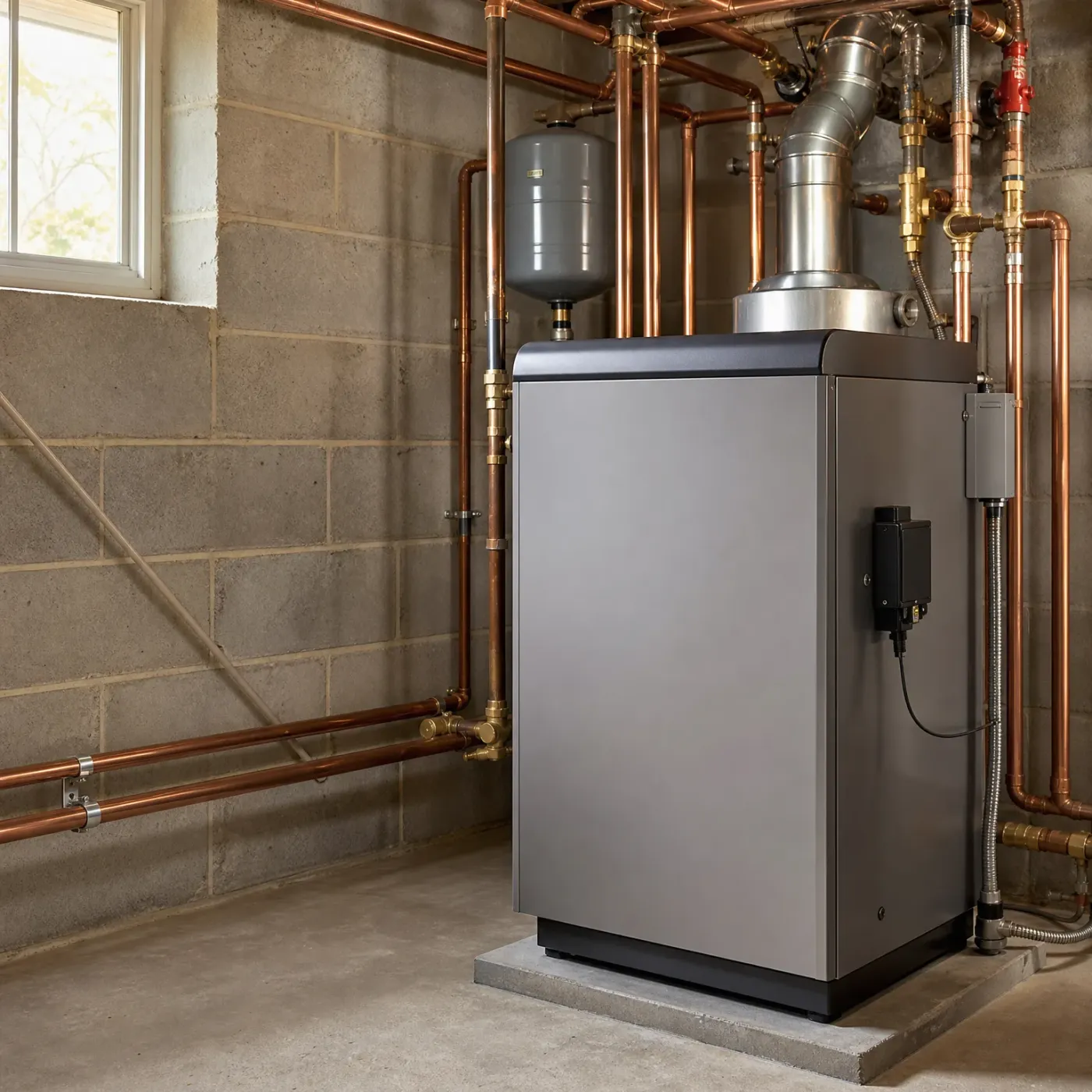
A gray floor-standing boiler on a concrete pad in a basement with concrete block walls, connected to copper piping, a flue vent, and an expansion tank.

Get your boiler to the right pro

Describe your boiler job once, to one pro.

Describe your boiler job, and a local pro who handles it gets in touch.

Answer a few questions

No charge to send it. You decide if you hire them.

Winter nights average 32°F statewide

A 32°F night means your boiler is firing most of the night to keep the water hot enough to push through the radiators. That's steady, repeated cycling, and a system in its later years will struggle more to hold the pressure through it.

NOAA nClimDiv 1991-2020 county normals weighted by homes

A dark gray floor-standing boiler on a concrete pad in a basement, surrounded by copper piping, brass valves, a gray expansion tank, a circulator pump, and a metal flue pipe against concrete block walls.
Copper lines run clean to every fitting, pressure gauge steady, nothing weeping at the joints.
A blue boiler on a raised concrete pad in a basement corner, with copper and steel pipes, a gauge cluster, an expansion tank, and a metal flue running up the bare concrete walls.
Bare concrete, an aging flue, and a boiler working harder each winter to keep up.

What actually wears out inside a boiler after 15 or 20 years?

You've heard the number, 15 to 20 years, but a span like that doesn't tell you what's actually giving out inside the unit. You want to know what part of a boiler stops doing its job first, and why age is the thing that catches up with it rather than one sudden failure.

The heat exchanger and the pump wear out first

Water moves through the heat exchanger every time the boiler fires, and over years that constant heating and cooling causes the metal to expand and contract until hairline cracks form at the welds. That's where leaks start. The circulator pump wears out too, since its bearings and seal are running almost nonstop through a cold winter. Once the pump seal goes, you'll see moisture around the pump housing or hear it running louder than it used to. Gaskets and valve seats harden with age as well, so they stop sealing tight and the system loses pressure slowly instead of all at once. None of this happens overnight. It happens one heating season at a time.

A gray boiler unit on a concrete pad in a basement corner, connected to copper piping, circulator pumps, and a ceiling-mounted expansion tank against bare concrete walls.

Still in good shape

The pipes are clean, the fittings are tight, and the pump runs quiet behind the unit. A boiler set up like this holds its pressure and heats evenly, winter after winter. Nothing here is asking for attention yet.

A blue oil-fired boiler with a pressure gauge, burner unit and metal flue sits on a concrete pad in a basement corner, surrounded by copper and black pipes against bare concrete walls.

Worn down and straining

The gauge on the front tells you more than the burner does. An older boiler like this works harder each winter to hold pressure, and the flue and fittings around it show the wear. This is what the last years of a boiler look like before it's replaced.

A woman in a cream cardigan and jeans stands with one hand raised facing an open front door of a gray horizontal-siding house, with a black lantern wall light, a potted shrub with yellow flowers, and a stone-faced porch column.

15 to 20 years, and then it's a decision

A boiler in Arkansas runs 15 to 20 years before it's done. Yours is somewhere on that line right now, either still holding its pressure and heating even, or starting to knock, leak at a joint, or take longer to warm the radiators than it used to. The signs you've been watching tell you which one it is.

If you're past that point, the next step isn't calling around to find out who installs boilers in your area, explaining the same thing to three different companies, then sitting with quotes trying to compare apples to apples. It's getting matched with a contractor who installs them and having that person reach out to you directly, already knowing what you're dealing with.


A living room corner with a beige upholstered armchair holding navy and striped cushions, a small round wooden side table with a carved bowl and a potted green plant, a framed landscape picture on a pale wall, built-in shelving, and a curtained window.
Corner of a house with light horizontal lap siding, a white gutter and downspout, and a window, beside a mulched bed with small shrubs, a lawn, wooden fence and trees in the background.
Close-up of a white gutter along an asphalt-shingle roof edge with dry brown leaves collected in it, a downspout and lap siding below, and blurred autumn trees in the background.
Exterior corner of a house with horizontal lap siding above a stone veneer base and a dark-framed window, with ornamental grasses and shrubs in the foreground and trees in low sunlight behind.
A white horizontal-siding house with a steep gray shingled gable roof, fronted by trimmed shrubs, a brick walkway, and a lawn scattered with fallen autumn leaves.
Corner of a house with cream horizontal lap siding, a black-framed window, asphalt shingle roof with dark fascia, white hydrangea blooms and green shrubs below, and a leafy tree and wood fence to the right.

The right pro for this job

Skip collecting and comparing quotes for the new boiler.

Describe it once

There's no charge for the request.