Tell us about the job
Takes about a minute. No obligation.
A boiler repair in Conway County starts with the parts that actually cycle: the burner, the ignition system, and the heat exchanger. Homes in Conway County, AR run heat about seven months a year, from October through April. Across those months the burner fires repeatedly, the ignition system lights it, and the heat exchanger expands and contracts with every cycle. By the time a boiler shows a fault, those components have already logged the bulk of the work the system will do all year. A contractor pricing a repair here looks at ignition wear and heat exchanger condition first, because that is where accumulated stress lands.
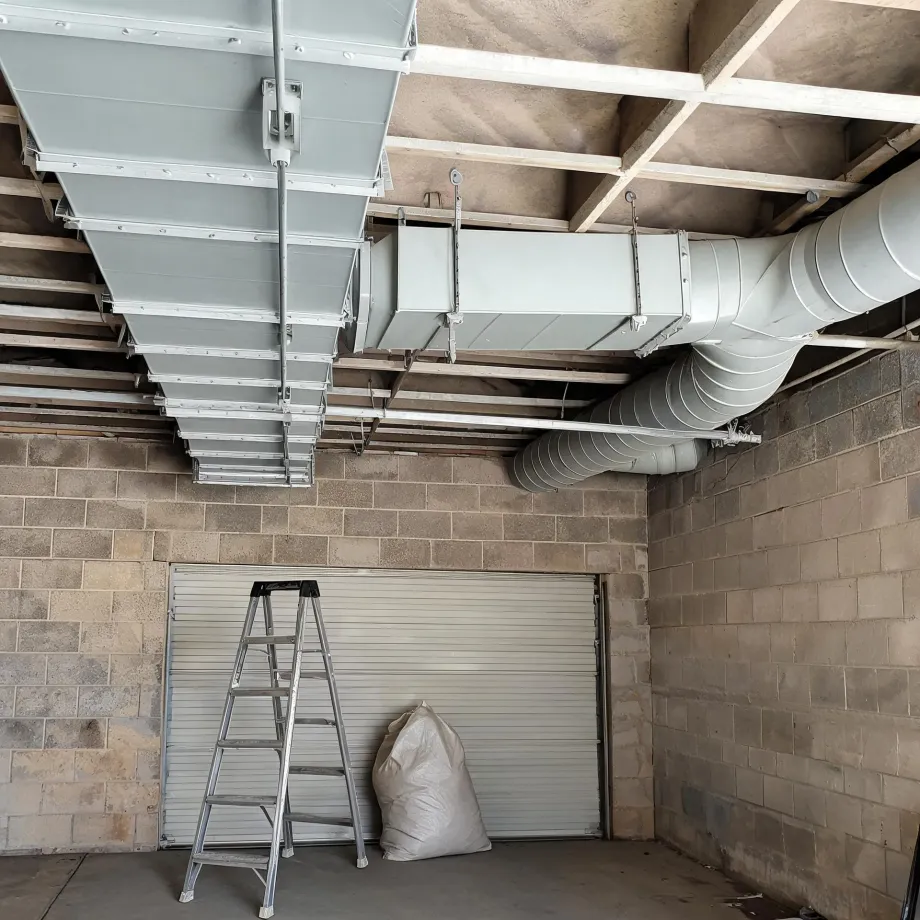
Half the homes in Conway County, Arkansas were built in 1984 or earlier (2020-2024 ACS 5-year). A house that old has had time to accumulate changes: original distribution piping may have been patched, valves replaced piecemeal, or zones added without full replumbing. When a contractor opens a boiler here, what decides the scope is often what the piping and zone controls reveal, not what the boiler itself looks like from the outside. Parts for a system this vintage are not always still in production, and a repair that looks straightforward on the thermostat call sheet can widen once the internal components are out.
The Parts of a Boiler a Contractor Checks First
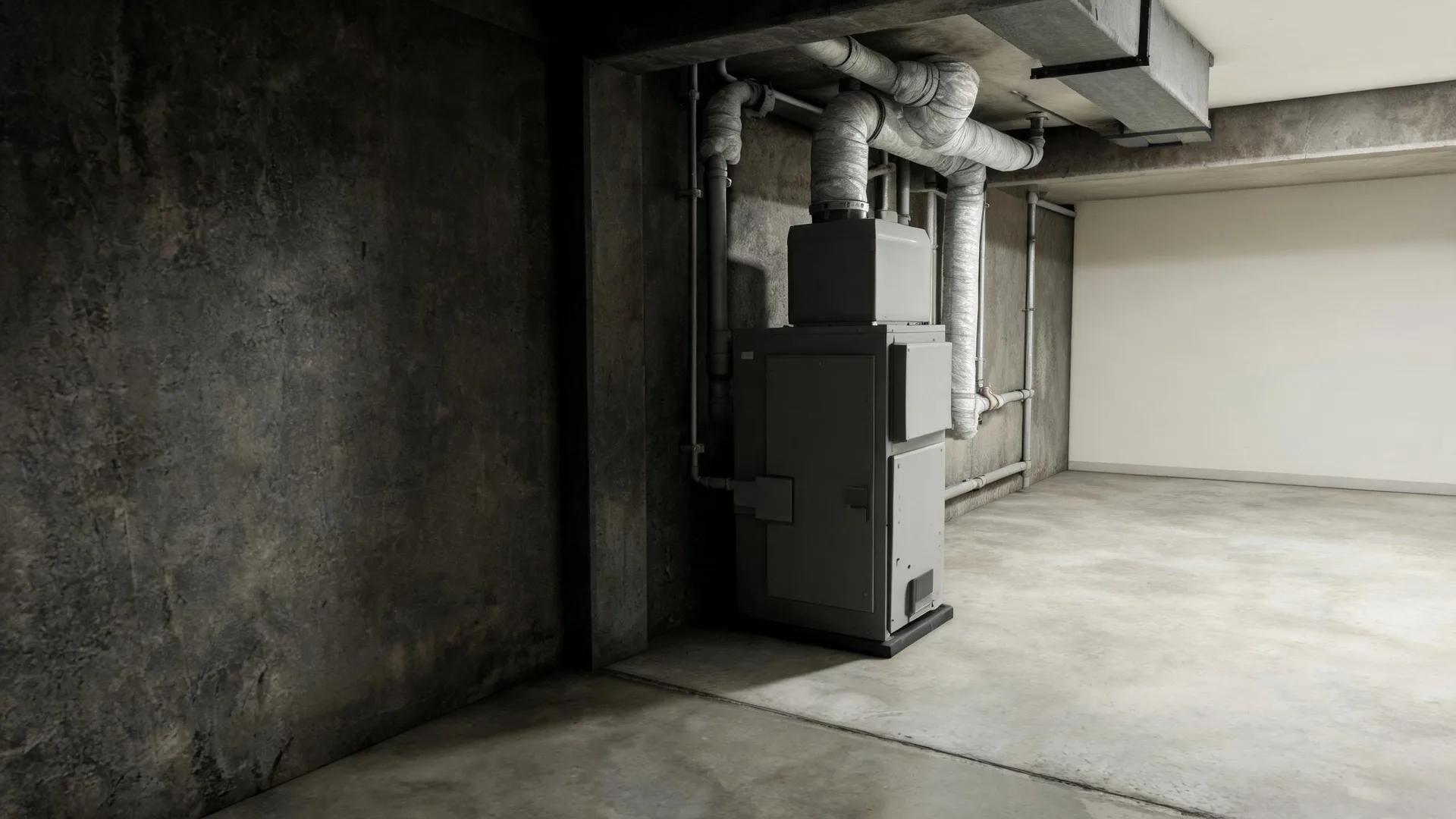
The boiler itself sits in the basement or a mechanical room and is the piece a contractor goes to first. It heats water and sends it out through the system. When it fails, the signs range from no heat at all to strange sounds coming from the unit itself, and the burner, heat exchanger, and pressure vessel are the first things a contractor examines.
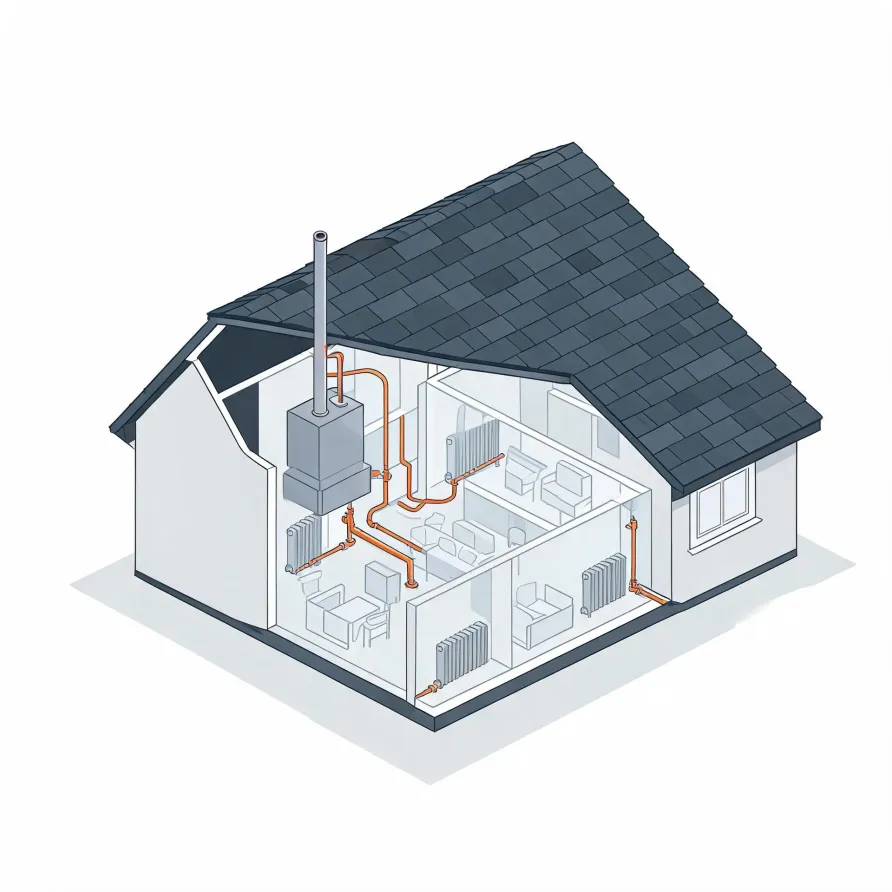
From the boiler, hot water travels through supply pipes to radiators or baseboard units in each room, then returns through a separate line. The circulator pump drives that flow, and when it fails the water sits still and the heat stops moving. The expansion tank and pressure relief valve sit close to the boiler and protect the system when pressure climbs.
The drawing shows the general layout of a boiler system, and a licensed contractor determines which components apply to the specific setup in your house.
Find a contractor in Conway CountyConway County, Arkansas, by the numbers
79 severe weather events were recorded in Conway County, Arkansas between 2015 and 2024.
NOAA National Centers for Environmental Information, Storm Events Database, bulk CSV export, events 2015-01-01 through 2024-12-31.Half the homes in Conway County, Arkansas were built in 1984 or earlier (2020-2024 ACS 5-year).
U.S. Census Bureau, 2020-2024 American Community Survey 5-Year EstimatesConway County, Arkansas holds 9,703 housing units (2020-2024 ACS 5-year).
U.S. Census Bureau, 2020-2024 American Community Survey 5-Year EstimatesOwners occupy 74.1% of the occupied homes in Conway County, Arkansas (2020-2024 ACS 5-year).
U.S. Census Bureau, 2020-2024 American Community Survey 5-Year EstimatesCodes & Standards Governing Boiler and HVAC Repair in Conway County, Arkansas2 sourced rules and standards
Licensing and Legal Requirements in Conway County, Arkansas
An Arkansas HVACR licence is good across the state: no city or county may require its own licence to do HVACR work, though local permits and inspections still apply.
Arkansas requires an HVACR licence or registration: it is unlawful to do HVACR work without the appropriate one unless the chapter exempts you.
Severe Weather Events in Conway County
Boilers in Conway County work against whatever the weather delivers, and the stress of extreme conditions shortens the life of components and raises the odds of a breakdown at the worst time. How hard the climate pushes on local equipment is a repair question, and it is answered locally.
79 severe weather events, 2015–2024. Source: NOAA National Centers for Environmental Information, Storm Events Database.