Tell us about the job
Takes about a minute. No obligation.
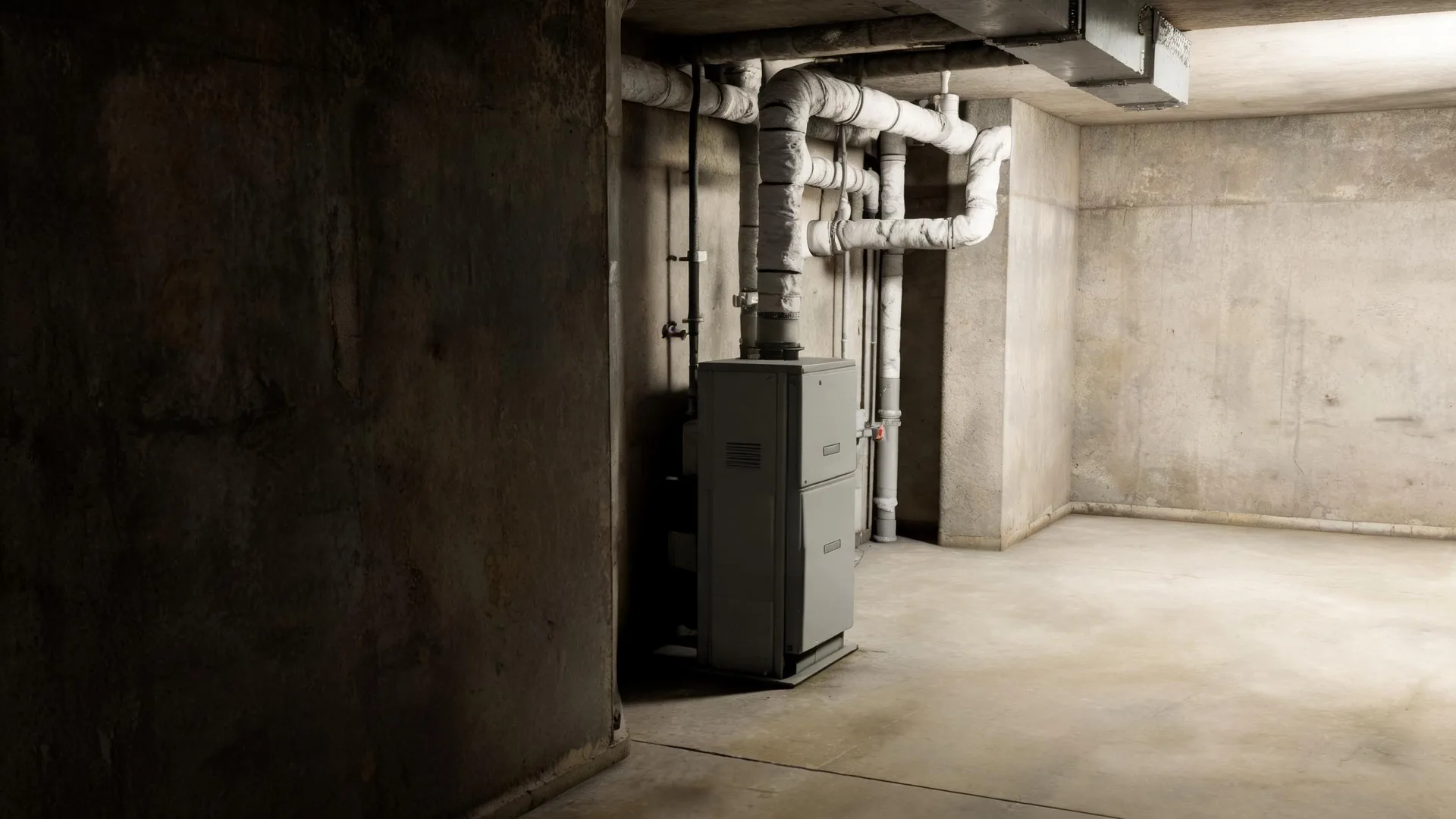
A boiler running through a long heating season puts its wear where it cycles: the burner, the ignition system, and the heat exchanger take the load every time the unit fires. Homes in Washington County, AR run heat about seven months a year, from October through April. By the time a homeowner calls for a repair, those parts have cycled through months of daily on-off demand, and a contractor checking the system starts there. Ignition failures and heat exchanger fatigue show up mid-season, not at the end of it, so the diagnosis rarely begins with the controls or the circulator pump.
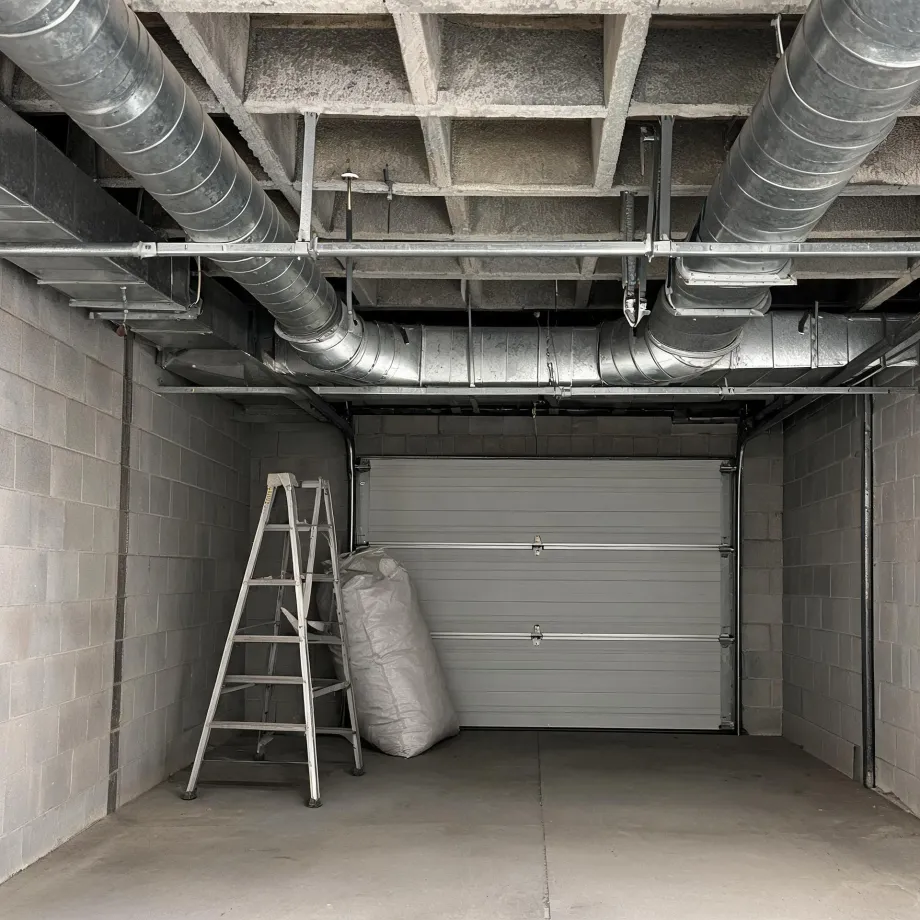
Boiler repair in older housing turns on what the original installation left behind: flue runs sized for a different appliance, supply and return piping that has been patched across decades, and expansion tanks that may have been added, removed, or ignored entirely. Half the homes in Washington County, Arkansas were built in 1995 or earlier (2020-2024 ACS 5-year). A contractor opening a system in stock like this finds conditions specific to that address, and the repair scope follows from what the pipe and the flue actually show, not from the model number on the unit.
The Parts of a Boiler a Contractor Checks First
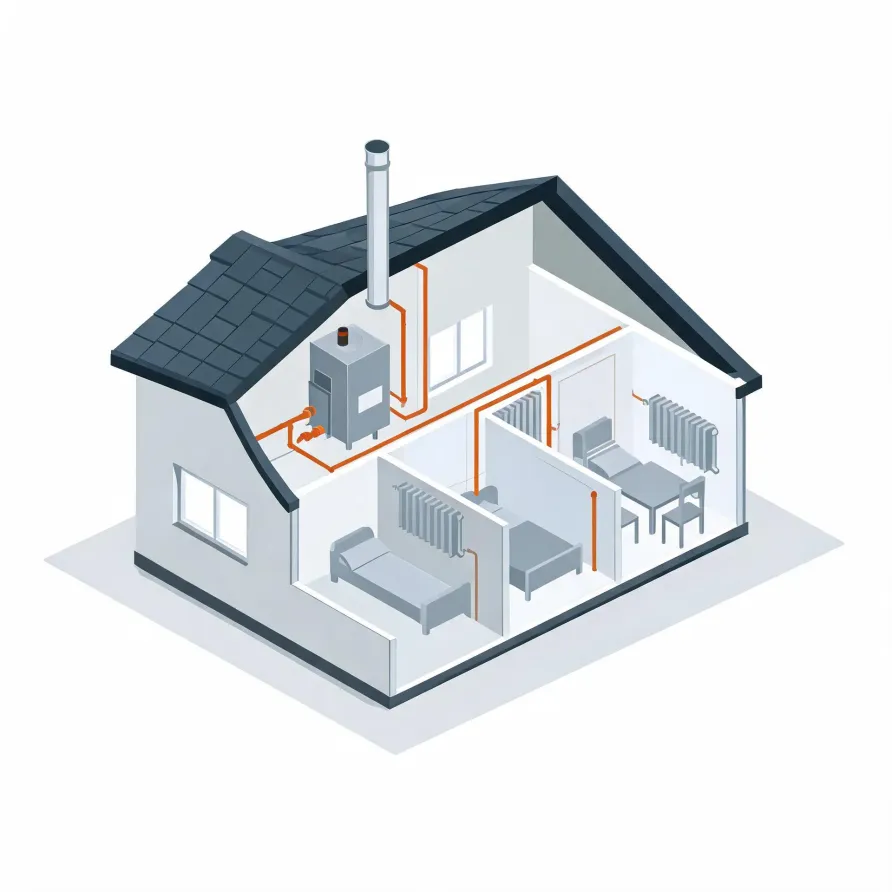
The boiler itself sits in the basement or a mechanical room and is the piece a contractor goes to first. It holds and heats the water that the rest of the system runs on. A failed igniter, a cracked heat exchanger, or a faulty pressure relief valve all live here, so this is where most repair calls begin.
From the boiler, pipes carry hot water to radiators or baseboard units in each room, and a circulator pump keeps that water moving through the loop. The expansion tank, usually mounted close to the boiler, absorbs pressure changes as water heats and cools. A contractor checks the pump and tank alongside the boiler itself, since a fault in any one of them can show up as a problem in another.
The drawing shows a typical boiler layout, and a licensed contractor will determine which parts and conditions apply to your specific home.
Find a contractor in Washington CountyWashington County, Arkansas, by the numbers
250 severe weather events were recorded in Washington County, Arkansas between 2015 and 2024.
NOAA National Centers for Environmental Information, Storm Events Database, bulk CSV export, events 2015-01-01 through 2024-12-31.Half the homes in Washington County, Arkansas were built in 1995 or earlier (2020-2024 ACS 5-year).
U.S. Census Bureau, 2020-2024 American Community Survey 5-Year EstimatesWashington County, Arkansas holds 105,461 housing units (2020-2024 ACS 5-year).
U.S. Census Bureau, 2020-2024 American Community Survey 5-Year EstimatesOwners occupy 55.6% of the occupied homes in Washington County, Arkansas (2020-2024 ACS 5-year).
U.S. Census Bureau, 2020-2024 American Community Survey 5-Year EstimatesCodes & Standards Governing Boiler and HVAC Repair in Washington County, Arkansas2 sourced rules and standards
What Washington County, Arkansas Requires for HVAC Repair Work
An Arkansas HVACR licence is good across the state: no city or county may require its own licence to do HVACR work, though local permits and inspections still apply.
Arkansas requires an HVACR licence or registration: it is unlawful to do HVACR work without the appropriate one unless the chapter exempts you.
Severe Weather Events in Washington County
Boilers work hardest when outside conditions swing hard, and Washington County's weather record is part of what drives that load. Repair demand follows weather, which makes local event history a real factor in how equipment holds up over time.
250 severe weather events, 2015–2024. Source: NOAA National Centers for Environmental Information, Storm Events Database.