Tell us about the job
Takes about a minute. No obligation.
Sizing a boiler for this area requires a contractor to account for the full load the burner and heat exchanger actually carry each year. Homes in Lincoln County, AR run heat about five months a year, from November through March. A burner cycling through that stretch accumulates wear on the ignition system and fireside surfaces that a calculation based on peak design temperature alone will underestimate. The contractor who gets the sizing right saves the homeowner from a unit that short-cycles in mild weather and strains at capacity when temperatures drop hardest in January and February.
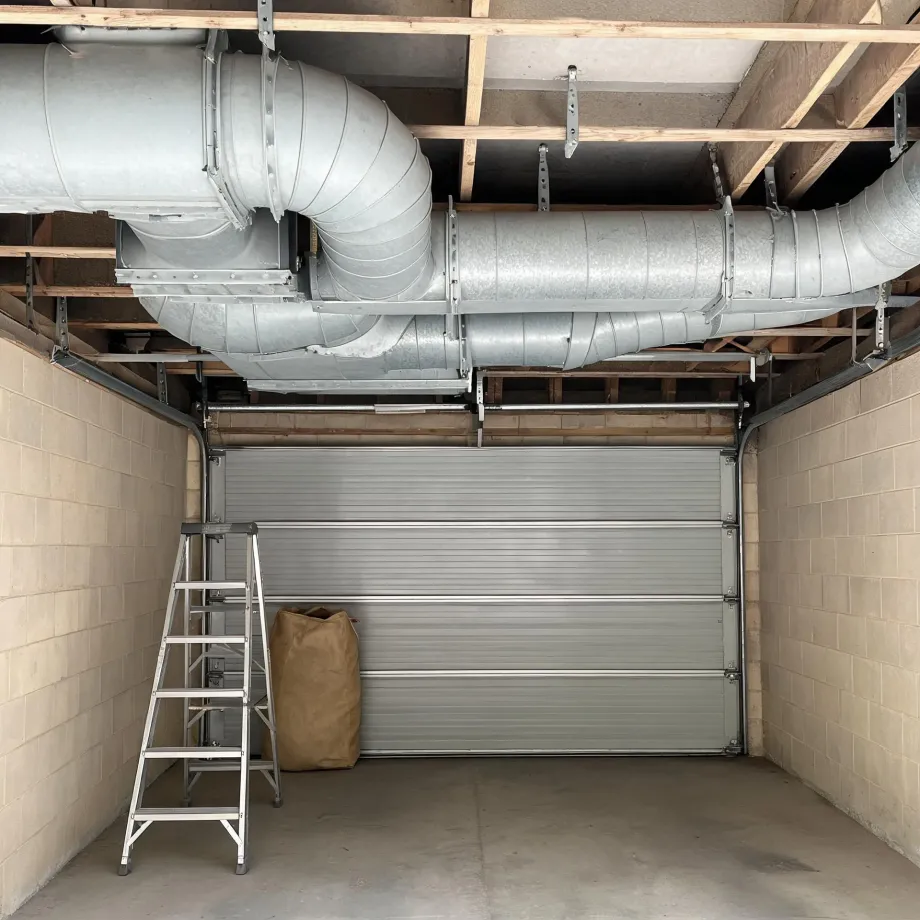
Existing ductwork and piping are what a contractor has to assess before any other part of a boiler installation in Lincoln County can be priced or planned. Half the homes in Lincoln County, Arkansas were built in 1984 or earlier (2020-2024 ACS 5-year). That puts a large share of the housing stock in a range where the original distribution systems were built around equipment no longer in production, and the gap between what the house has and what a new boiler requires is where the real scope of the job gets decided. A contractor who sizes the unit without first checking what the pipes and ductwork will accept is quoting for the easy part and leaving the harder part open.
What a Boiler Installation Puts in Your Home
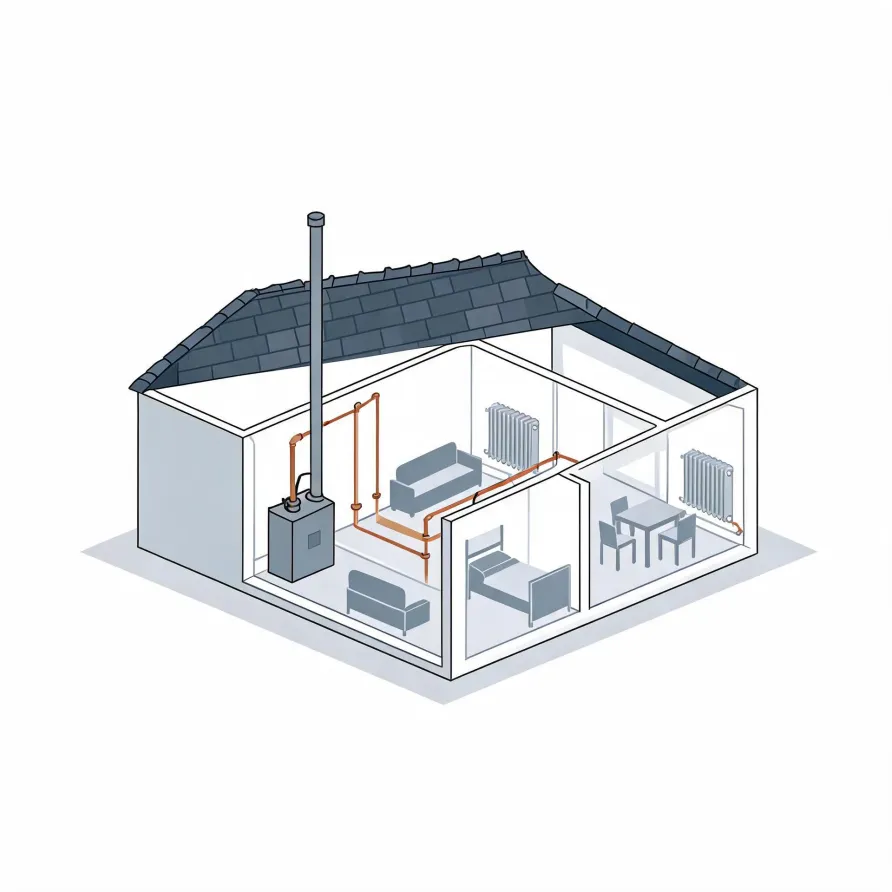
The boiler itself sits in a mechanical room, basement, or utility closet and is the unit that heats water for the whole system. Wall-mounted or floor-standing depending on the house, it connects to a flue or exhaust vent that runs to the outside. That flue is part of what a contractor routes and fits during the installation.
From the boiler, supply and return pipes run through the house to the heat emitters, which are either radiators, baseboard units, or radiant floor loops set into the subfloor. A circulator pump, mounted directly on the piping near the boiler, moves the heated water through those runs. An expansion tank sits on the same assembly and gives the water somewhere to go as it heats up and expands.
The drawing shows the general layout of a boiler system, and a licensed contractor determines which configuration and components apply to your specific home.
Find a contractor in Lincoln CountyLincoln County, Arkansas, by the numbers
49 severe weather events were recorded in Lincoln County, Arkansas between 2015 and 2024.
NOAA National Centers for Environmental Information, Storm Events Database, bulk CSV export, events 2015-01-01 through 2024-12-31.Half the homes in Lincoln County, Arkansas were built in 1984 or earlier (2020-2024 ACS 5-year).
U.S. Census Bureau, 2020-2024 American Community Survey 5-Year EstimatesLincoln County, Arkansas holds 4,390 housing units (2020-2024 ACS 5-year).
U.S. Census Bureau, 2020-2024 American Community Survey 5-Year EstimatesOwners occupy 76.1% of the occupied homes in Lincoln County, Arkansas (2020-2024 ACS 5-year).
U.S. Census Bureau, 2020-2024 American Community Survey 5-Year EstimatesBoiler Installation Rules for Lincoln County, Arkansas2 codes, standards, and licensing rules
Licensing and Legal Requirements in Lincoln County, Arkansas
An Arkansas HVACR licence is good across the state: no city or county may require its own licence to do HVACR work, though local permits and inspections still apply.
Arkansas requires an HVACR licence or registration: it is unlawful to do HVACR work without the appropriate one unless the chapter exempts you.
Severe Weather Events in Lincoln County
Weather in this part of Arkansas puts real demands on heating equipment, and those demands shape what a boiler needs to handle over its working life. How hard local conditions push a system is a local question, and the record below reflects what Lincoln County has actually seen.
49 severe weather events, 2015–2024. Source: NOAA National Centers for Environmental Information, Storm Events Database.