Tell us about the job
Takes about a minute. No obligation.
A contractor quoting a boiler installation in Fulton County has to establish the true heat load before anything else, because the burner and heat exchanger carry real cumulative stress across a long heating season. Homes in Fulton County, AR run heat about seven months a year, from October through April. A boiler that is undersized runs longer cycles to keep up; one that is oversized short-cycles and stresses the heat exchanger in a different way. Either error lands on components that have little idle time to absorb it. Proper load calculation and a clean install are the things a licensed contractor gets right at the start, before the first cold month arrives.
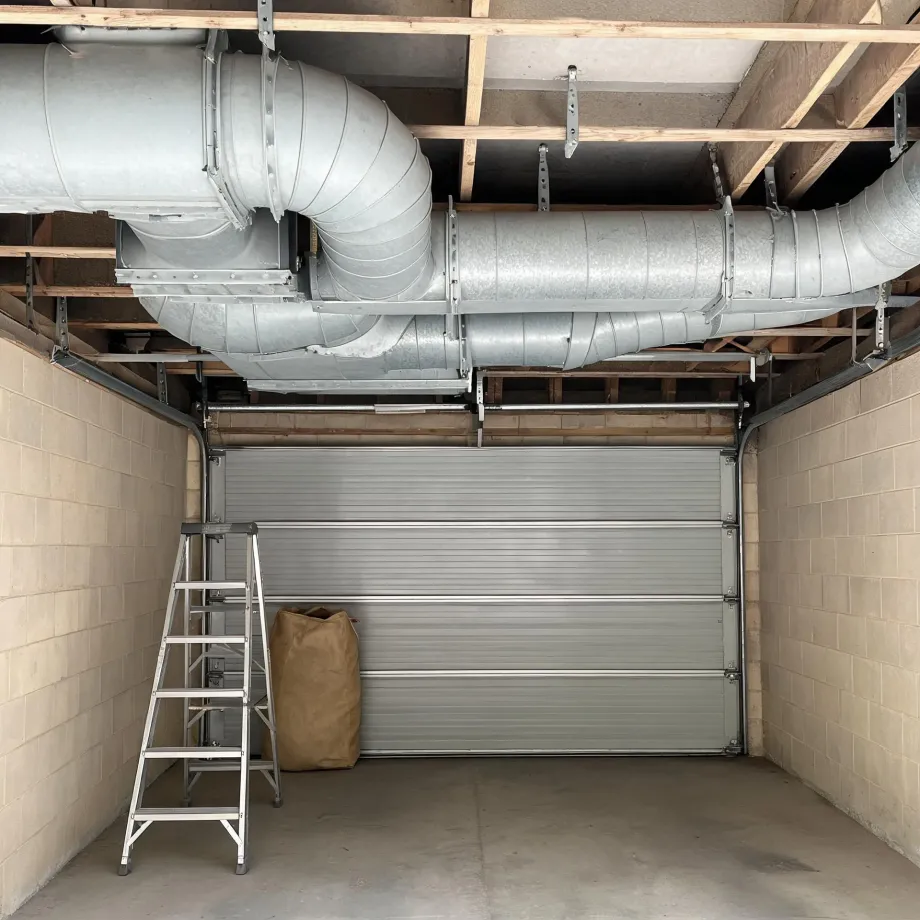
Ductwork laid down for one kind of heating system does not automatically serve another. Half the homes in Fulton County, Arkansas were built in 1986 or earlier (2020-2024 ACS 5-year). A boiler installation in stock like this means a contractor checks what the existing distribution can actually move before anything gets ordered or priced. If the piping, zoning, or baseboards were sized for equipment long since replaced, that gap is where the job expands. The boiler itself is straightforward to spec; what runs through the walls of the house is the part that changes the scope.
The Parts of a Boiler System and What an Installation Covers
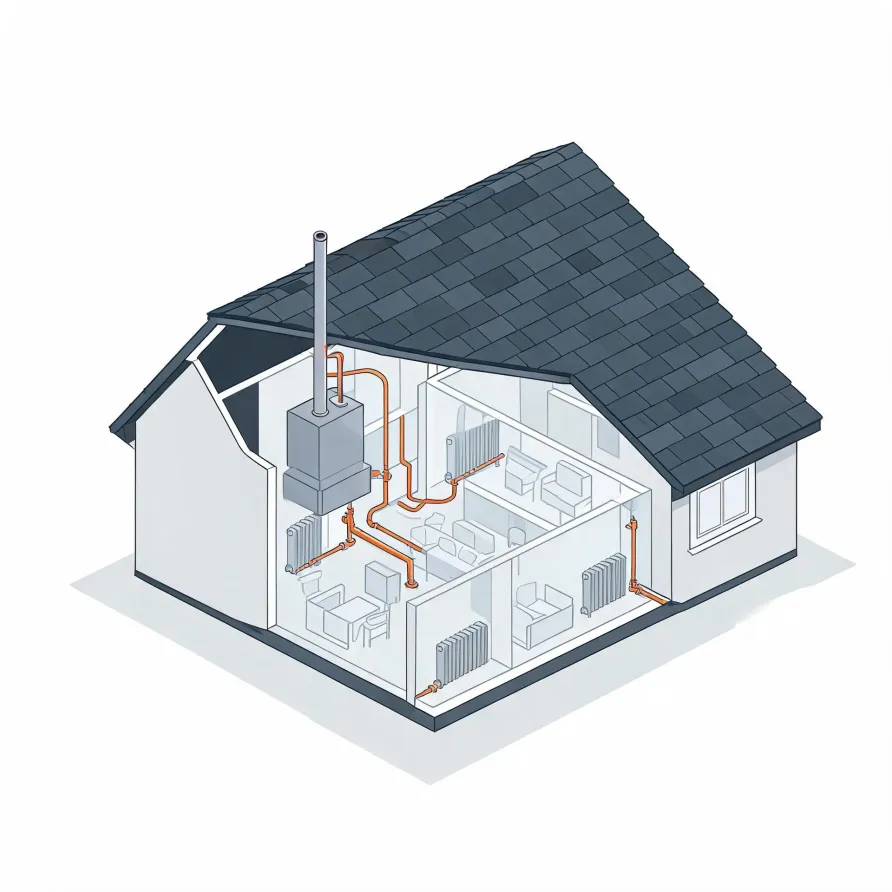
The boiler itself sits in a mechanical room, basement, or utility closet and is the unit that heats water for the whole system. Radiators or radiant floor loops are the pieces a homeowner notices most, positioned throughout the living spaces to release that heat into each room.
Connecting those pieces are supply and return pipes that run through walls, floors, and ceilings, carrying hot water out and cooler water back. An expansion tank, usually mounted near the boiler, absorbs pressure changes as the water heats and cools, and a circulator pump keeps water moving through the loop.
The drawing shows a typical boiler system layout, and a licensed contractor determines what applies to your specific house.
Find a contractor in Fulton CountyFulton County, Arkansas, by the numbers
63 severe weather events were recorded in Fulton County, Arkansas between 2015 and 2024.
NOAA National Centers for Environmental Information, Storm Events Database, bulk CSV export, events 2015-01-01 through 2024-12-31.Half the homes in Fulton County, Arkansas were built in 1986 or earlier (2020-2024 ACS 5-year).
U.S. Census Bureau, 2020-2024 American Community Survey 5-Year EstimatesFulton County, Arkansas holds 6,225 housing units (2020-2024 ACS 5-year).
U.S. Census Bureau, 2020-2024 American Community Survey 5-Year EstimatesOwners occupy 84.7% of the occupied homes in Fulton County, Arkansas (2020-2024 ACS 5-year).
U.S. Census Bureau, 2020-2024 American Community Survey 5-Year EstimatesBoiler Installation Rules for Fulton County, Arkansas2 codes, standards & regulations
Licensing and Legal Requirements in Fulton County, Arkansas
An Arkansas HVACR licence is good across the state: no city or county may require its own licence to do HVACR work, though local permits and inspections still apply.
Arkansas requires an HVACR licence or registration: it is unlawful to do HVACR work without the appropriate one unless the chapter exempts you.
Severe Weather Events in Fulton County
Boilers carry a heavier load when outdoor conditions swing hard, and how often that happens in Fulton County shapes what a system needs to handle over its life. That makes local weather history part of the case for sizing and installing the right equipment here.
63 severe weather events, 2015–2024. Source: NOAA National Centers for Environmental Information, Storm Events Database.