Tell us about the job
Takes about a minute. No obligation.
A contractor quoting a boiler installation in Randolph County has to size the unit around a sustained heating load, not an occasional one. Homes in Randolph County, AR run heat about seven months a year, from October through April. The burner fires, the heat exchanger expands and contracts, and the ignition system cycles through all of it, month after month, with little idle time between the last cold night of April and the first of October. A boiler that leaves the job undersized or with a poorly sealed flue will not get the breathing room a shorter season might provide. The contractor's load calculation here is the decision that everything else follows from.
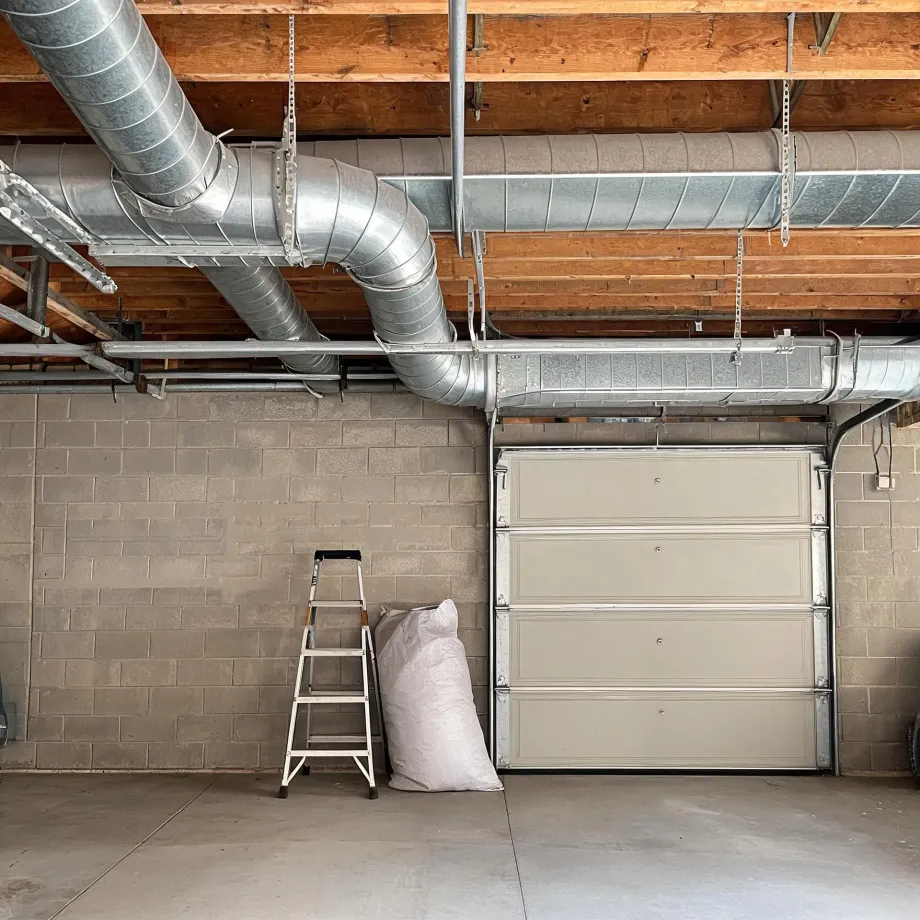
Ductwork laid out for equipment that no longer exists is what a contractor hits first in much of this county. Half the homes in Randolph County, Arkansas were built in 1979 or earlier (2020-2024 ACS 5-year). That gap between what the house was built around and what a boiler installation calls for today is where the job either stays simple or picks up scope. Distribution runs may need to be rerouted, resized, or abandoned in favor of a different delivery approach entirely. The electrical side gets checked the same way: not assumed. What the house already has is the first question, and the answer shapes the quote before a unit is ever ordered.
What a Boiler Installation Covers
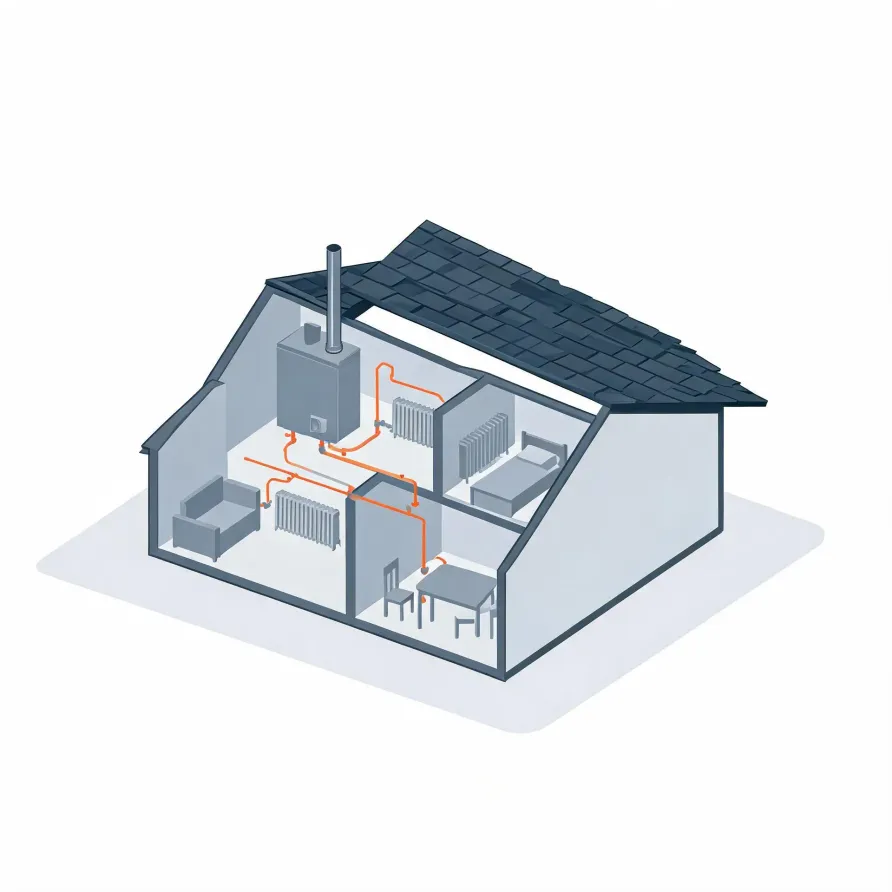
The boiler itself sits in a mechanical room, basement, or utility closet and is the heart of the system. A contractor mounts it to the floor or wall, connects it to a fuel supply, and ties it into the home's piping. This is the largest single piece of the installation.
Radiators, baseboard units, or radiant floor loops run through the living spaces and are the points where heat reaches the rooms. A circulator pump, an expansion tank, and shutoff valves sit close to the boiler and keep water moving and pressure stable throughout the system.
The drawing shows a typical layout, and a licensed contractor determines what applies to your specific house.
Find a contractor in Randolph CountyRandolph County, by the numbers
58 severe weather events were recorded in Randolph County, Arkansas between 2015 and 2024.
NOAA National Centers for Environmental Information, Storm Events Database, bulk CSV export, events 2015-01-01 through 2024-12-31.Half the homes in Randolph County, Arkansas were built in 1979 or earlier (2020-2024 ACS 5-year).
U.S. Census Bureau, 2020-2024 American Community Survey 5-Year EstimatesRandolph County, Arkansas holds 8,656 housing units (2020-2024 ACS 5-year).
U.S. Census Bureau, 2020-2024 American Community Survey 5-Year EstimatesOwners occupy 73.5% of the occupied homes in Randolph County, Arkansas (2020-2024 ACS 5-year).
U.S. Census Bureau, 2020-2024 American Community Survey 5-Year EstimatesCodes & Standards for Boiler Work in Randolph County, Arkansas2 sourced rules and standards
Licensing and Legal Requirements in Randolph County, Arkansas
An Arkansas HVACR licence is good across the state: no city or county may require its own licence to do HVACR work, though local permits and inspections still apply.
Arkansas requires an HVACR licence or registration: it is unlawful to do HVACR work without the appropriate one unless the chapter exempts you.
Severe Weather Events in Randolph County
Randolph County's weather puts real demands on heating equipment, and those demands vary by how hard any given year hits. A boiler sized and installed for local conditions holds up where a generic spec falls short.
58 severe weather events, 2015–2024. Source: NOAA National Centers for Environmental Information, Storm Events Database.