Tell us about the job
Takes about a minute. No obligation.
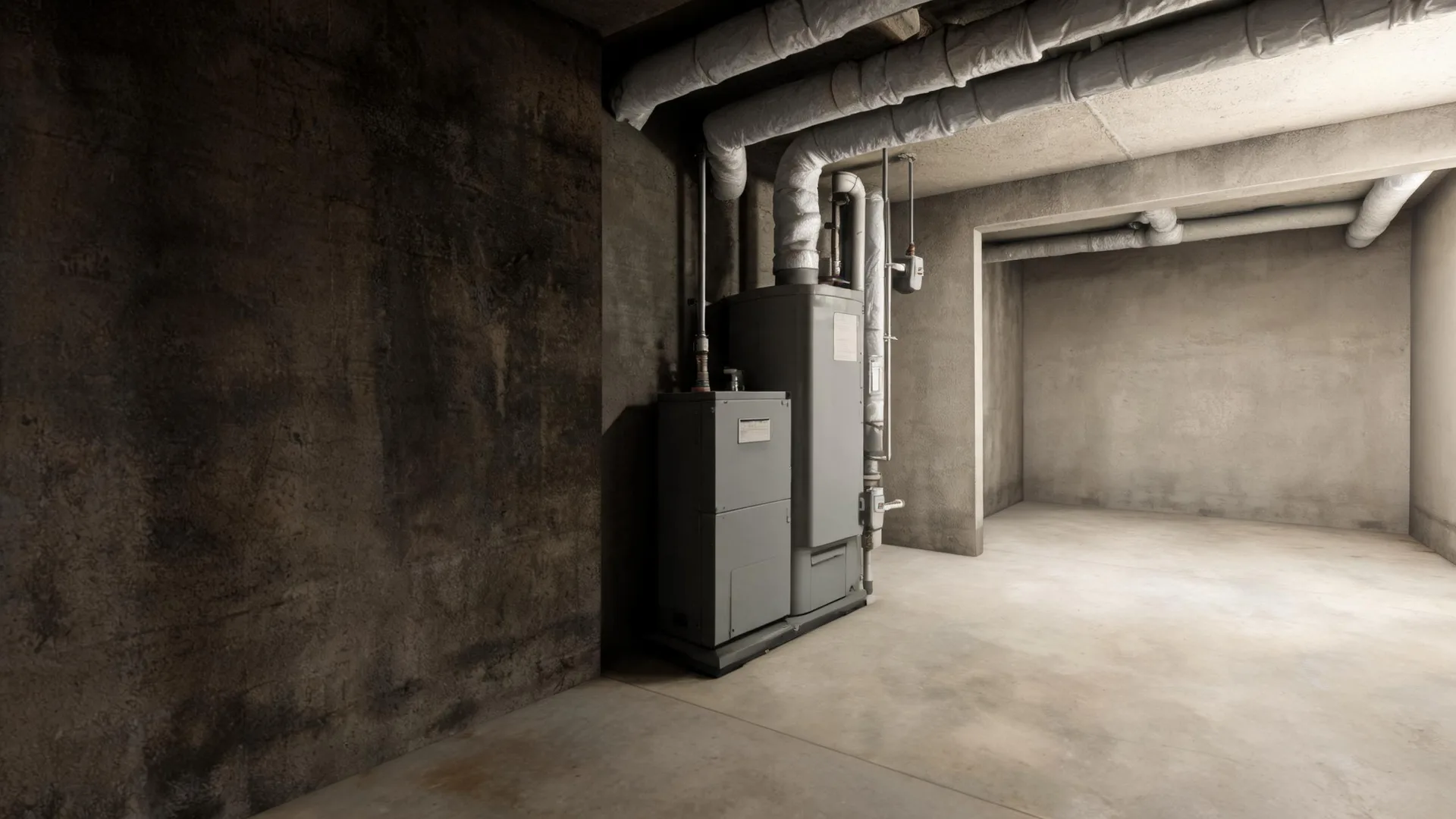
Sizing a boiler for this county starts with understanding what the heating load actually demands. Homes in Franklin County, AR run heat about seven months a year, from October through April. Burner cycles accumulate across those months, and the ignition system and heat exchanger carry the weight of every one of them. A unit that is undersized, or installed with sloppy combustion air setup, runs harder than it should to hold temperature, and that extra strain compounds across a long heating season into cracked exchangers and ignition failures that a correct install would not produce. A contractor quotes a replacement here by working out the full load first, not by matching the existing unit's nameplate.
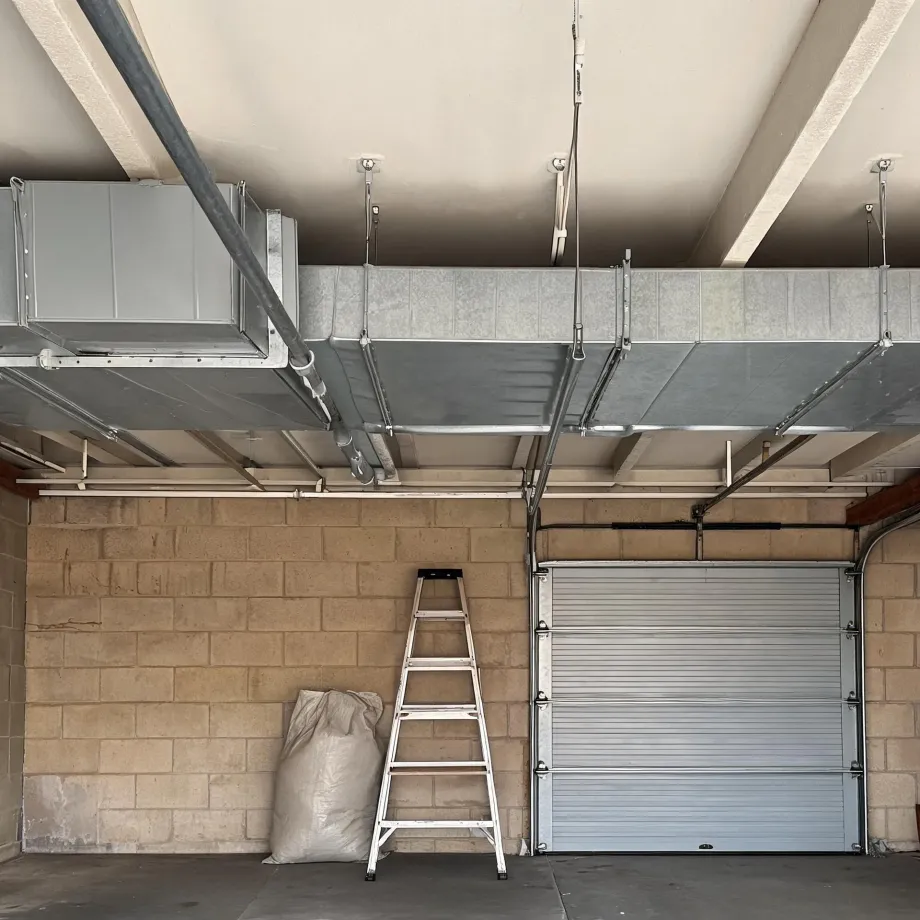
Ductwork sized and routed for whatever a house originally ran is what a contractor has to assess before a boiler installation can be quoted accurately. Half the homes in Franklin County, Arkansas were built in 1985 or earlier (2020-2024 ACS 5-year). That means a significant share of the housing here was built around heating configurations that have already been swapped out at least once, and the ductwork those houses carry reflects those earlier choices, not the current one. Whether it can serve a new boiler without modification is what drives the real scope of the job.
What a Boiler Installation Covers
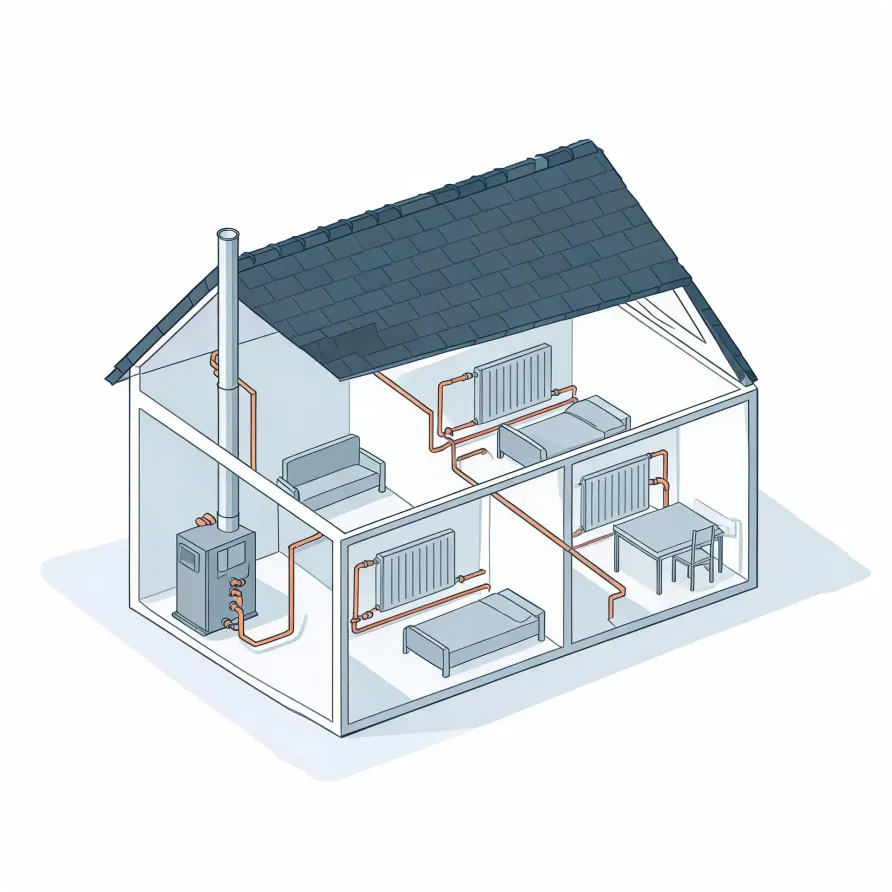
The boiler itself sits in a mechanical room, basement, or utility closet and is the unit a contractor replaces or sets new when doing an installation. It heats water and sends it out through the distribution system. The expansion tank mounts close by and keeps pressure stable as the water heats and cools.
From the boiler, supply and return pipes run through the house to the heat emitters, which are the radiators, baseboard units, or radiant floor loops a homeowner actually sees or feels underfoot. A circulator pump, mounted on the piping near the boiler, moves the heated water through that loop and back again.
The drawing shows the general layout of these components, and a licensed contractor determines what applies to this particular house.
Find a contractor in Franklin CountyFranklin County, Arkansas, by the numbers
160 severe weather events were recorded in Franklin County, Arkansas between 2015 and 2024.
NOAA National Centers for Environmental Information, Storm Events Database, bulk CSV export, events 2015-01-01 through 2024-12-31.Half the homes in Franklin County, Arkansas were built in 1985 or earlier (2020-2024 ACS 5-year).
U.S. Census Bureau, 2020-2024 American Community Survey 5-Year EstimatesFranklin County, Arkansas holds 7,757 housing units (2020-2024 ACS 5-year).
U.S. Census Bureau, 2020-2024 American Community Survey 5-Year EstimatesOwners occupy 78.0% of the occupied homes in Franklin County, Arkansas (2020-2024 ACS 5-year).
U.S. Census Bureau, 2020-2024 American Community Survey 5-Year EstimatesBoiler Installation Rules on the Books for Franklin County, Arkansas2 codes, standards, and statutes
What Franklin County, Arkansas Requires for HVAC Installation
An Arkansas HVACR licence is good across the state: no city or county may require its own licence to do HVACR work, though local permits and inspections still apply.
Arkansas requires an HVACR licence or registration: it is unlawful to do HVACR work without the appropriate one unless the chapter exempts you.
Severe Weather in Franklin County
Arkansas weather puts real demand on heating equipment, and Franklin County gets its share of conditions that cycle a boiler hard. How often that happens here shapes what a system needs to handle and how it should be sized and installed.
160 severe weather events, 2015–2024. Source: NOAA National Centers for Environmental Information, Storm Events Database.