Tell us about the job
Takes about a minute. No obligation.
Sizing a boiler for a Union County home starts with understanding what the burner and heat exchanger are actually asked to do each year. Homes in Union County, AR run heat about five months a year, from November through March. A boiler that is undersized for that load short-cycles more than a correctly specified one, and short-cycling puts repeated thermal stress on the heat exchanger. A contractor calculating the load before quoting accounts for the house envelope, not just the square footage, because those two numbers rarely match in older homes. Combustion sealing and flue configuration matter for the same reason: a small gap that causes no trouble in mild weather becomes a carbon monoxide path once the burner is running steadily for months.
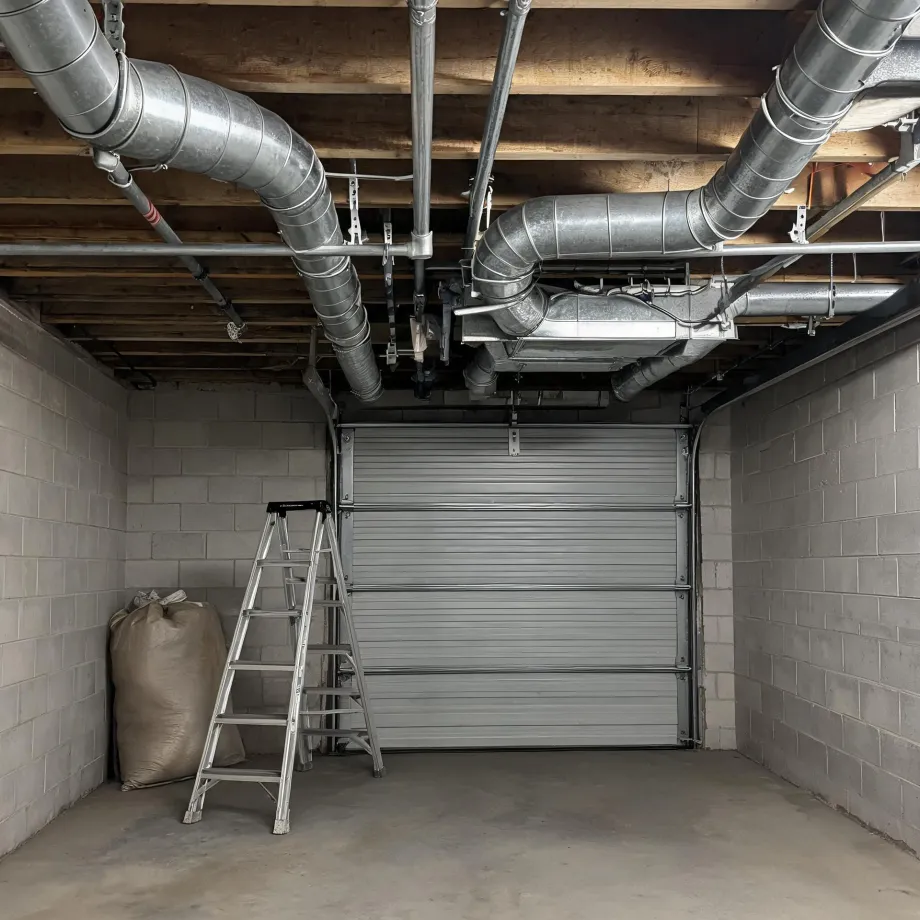
Ductwork laid out for an older heating system carries assumptions about flow, spacing, and load that a new boiler may not share. Half the homes in Union County, Arkansas were built in 1979 or earlier (2020-2024 ACS 5-year). A contractor sizing a boiler here has to read what the existing distribution system actually does before the new unit can be matched to it. Pipe runs and heat emitter layouts that made sense for the original equipment can push a new installation toward modifications the quote has to account for before anything is ordered.
What a Boiler Installation Puts in Your Home
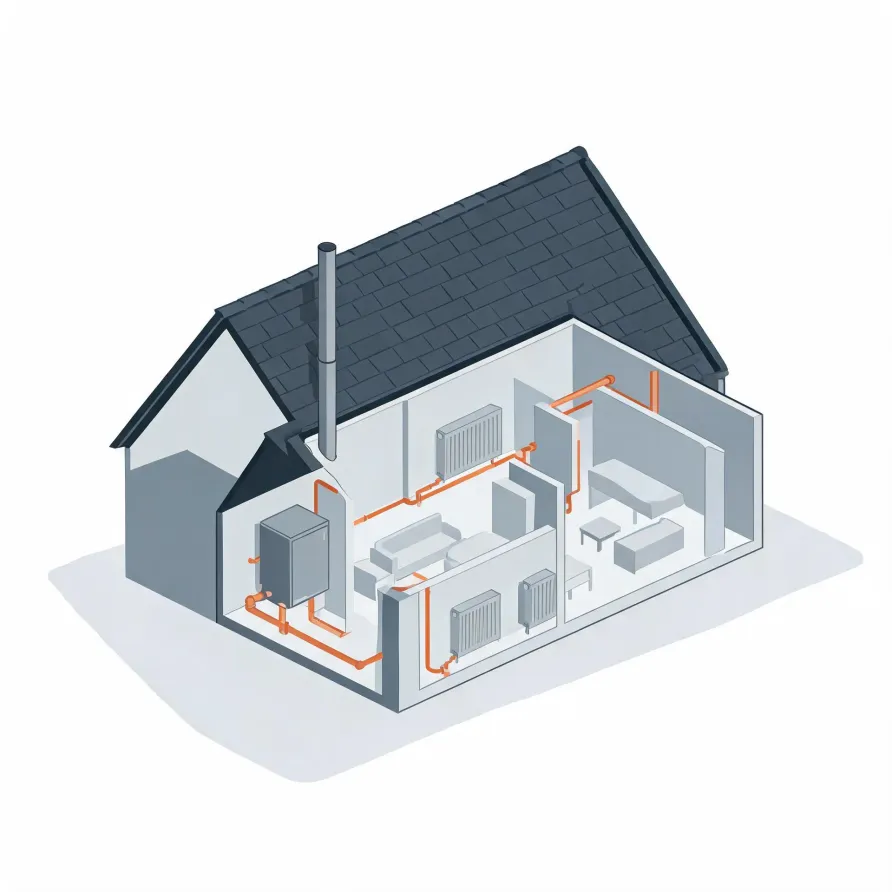
The boiler itself sits in a mechanical room, basement, or utility closet and is the unit that heats water for the whole system. Wall-mounted or floor-standing depending on the house, it is the largest single piece a contractor brings in. Radiators or radiant floor loops in each room are what the heated water actually reaches.
From the boiler, a network of copper or PEX supply and return pipes runs through walls, floors, and ceilings to carry water to each heat emitter and back again. An expansion tank, circulator pump, and pressure relief valve mount close to the boiler itself, each handling a specific job that keeps the system running at steady pressure.
The drawing alongside shows a typical boiler layout, and a licensed contractor determines exactly which components and configurations apply to your house.
Find a contractor in Union CountyUnion County, Arkansas, by the numbers
113 severe weather events were recorded in Union County, Arkansas between 2015 and 2024.
NOAA National Centers for Environmental Information, Storm Events Database, bulk CSV export, events 2015-01-01 through 2024-12-31.Half the homes in Union County, Arkansas were built in 1979 or earlier (2020-2024 ACS 5-year).
U.S. Census Bureau, 2020-2024 American Community Survey 5-Year EstimatesUnion County, Arkansas holds 18,649 housing units (2020-2024 ACS 5-year).
U.S. Census Bureau, 2020-2024 American Community Survey 5-Year EstimatesOwners occupy 72.7% of the occupied homes in Union County, Arkansas (2020-2024 ACS 5-year).
U.S. Census Bureau, 2020-2024 American Community Survey 5-Year EstimatesBoiler Installation Rules on the Books for Union County, Arkansas2 sourced standards and codes
Licensing and Legal Requirements in Union County, Arkansas
An Arkansas HVACR licence is good across the state: no city or county may require its own licence to do HVACR work, though local permits and inspections still apply.
Arkansas requires an HVACR licence or registration: it is unlawful to do HVACR work without the appropriate one unless the chapter exempts you.
Severe Weather Events in Union County
Weather puts load on heating equipment in ways that vary county to county. A boiler that fits the local climate holds up differently than one sized for somewhere else, and that difference shows up in how hard the system works and how long it lasts.
113 severe weather events, 2015–2024. Source: NOAA National Centers for Environmental Information, Storm Events Database.