Tell us about the job
Takes about a minute. No obligation.
Sizing a boiler for a Prairie County home means accounting for a heating demand that runs without interruption through the coldest months. Homes in Prairie County, AR run heat about five months a year, from November through March. A burner and heat exchanger that are undersized for that load will short-cycle or run at capacity far longer than the manufacturer's duty cycle assumes, and the stress concentrates on the ignition system and the heat exchanger seams. A contractor quoting a replacement here establishes the actual heat load before specifying equipment, because an error in that calculation does not stay hidden long when the system runs as steadily as it does in this county.
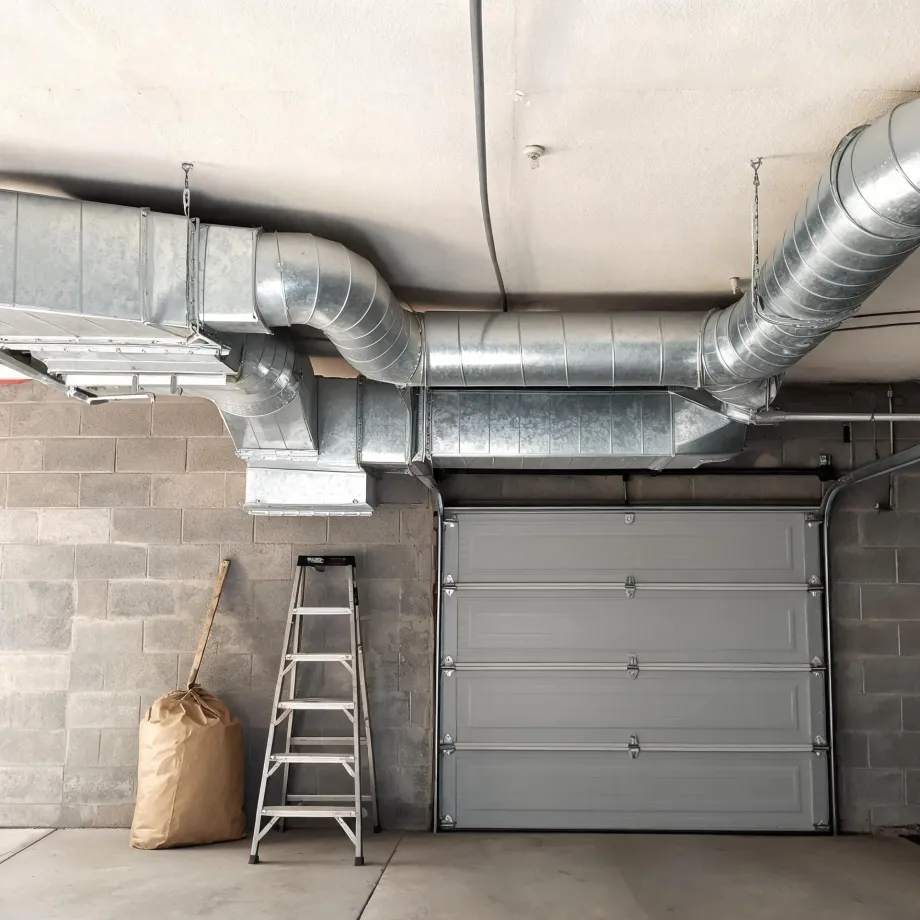
Ductwork laid in for one heating system rarely fits the next one without changes, and in Prairie County that gap is where most of a boiler installation's real decisions sit. Half the homes in Prairie County, Arkansas were built in 1979 or earlier (2020-2024 ACS 5-year). Stock of that age was built around equipment that is long gone, and the distribution runs left behind reflect it: pipe diameters, loop configurations, and zone layouts that made sense for what the house originally ran. A contractor quoting a new boiler here prices the existing distribution alongside the unit itself, because what is already in the walls determines whether a straight swap is possible or whether the loop needs to be reworked first.
The Parts of a Boiler System Being Installed
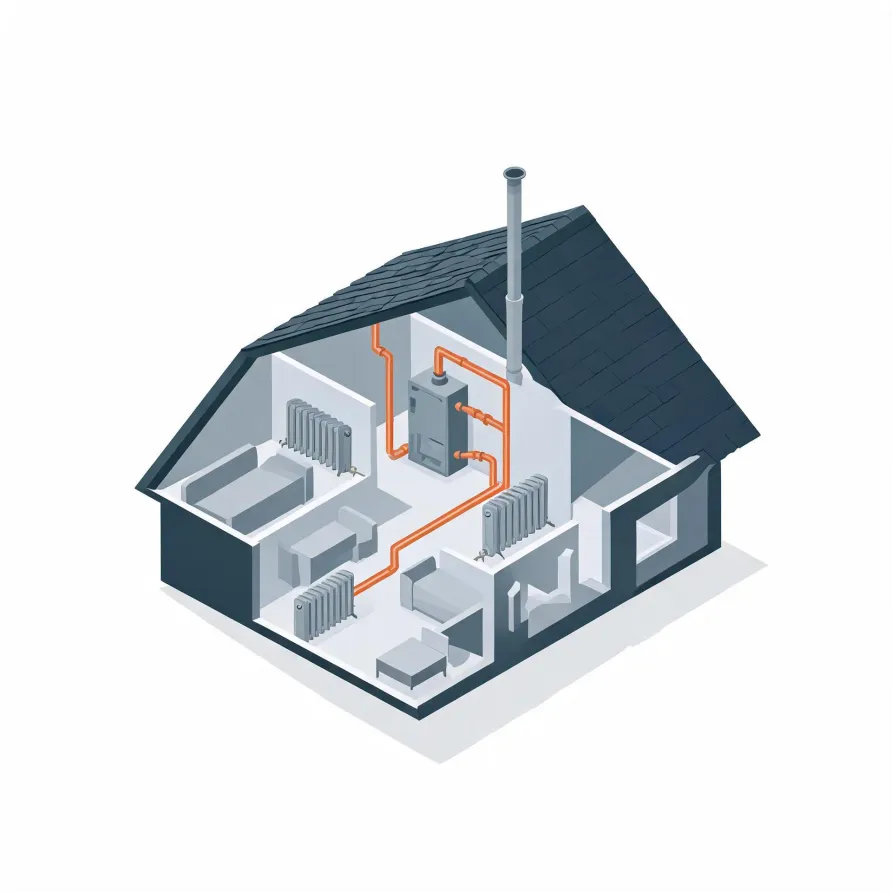
The boiler itself sits in a mechanical room, basement, or utility space and is the unit that heats water and sends it through the house. Attached directly to it are the expansion tank, which absorbs pressure changes in the water, and the circulator pump, which moves heated water through the pipes.
From the boiler, supply and return pipes run to the heat emitters throughout the house. Those emitters are radiators, baseboard units, or radiant floor tubing depending on what the home is set up for. A thermostat mounted on a wall ties the whole system together by telling the boiler when to fire.
The drawing shows a general layout of these components, and a licensed contractor determines exactly what applies to your home's configuration.
Find a contractor in Prairie CountyPrairie County, Arkansas, by the numbers
51 severe weather events were recorded in Prairie County, Arkansas between 2015 and 2024.
NOAA National Centers for Environmental Information, Storm Events Database, bulk CSV export, events 2015-01-01 through 2024-12-31.Half the homes in Prairie County, Arkansas were built in 1979 or earlier (2020-2024 ACS 5-year).
U.S. Census Bureau, 2020-2024 American Community Survey 5-Year EstimatesPrairie County, Arkansas holds 4,086 housing units (2020-2024 ACS 5-year).
U.S. Census Bureau, 2020-2024 American Community Survey 5-Year EstimatesOwners occupy 75.8% of the occupied homes in Prairie County, Arkansas (2020-2024 ACS 5-year).
U.S. Census Bureau, 2020-2024 American Community Survey 5-Year EstimatesBoiler Installation Rules on the Books for Prairie County, Arkansas2 sourced standards and codes
Licensing and Legal Requirements in Prairie County, Arkansas
An Arkansas HVACR licence is good across the state: no city or county may require its own licence to do HVACR work, though local permits and inspections still apply.
Arkansas requires an HVACR licence or registration: it is unlawful to do HVACR work without the appropriate one unless the chapter exempts you.
Severe Weather Events in Prairie County
Boiler systems work hardest when outside conditions push hardest against them. How often Prairie County sees severe weather shapes what a boiler here is asked to handle, which makes local climate history part of the installation conversation.
51 severe weather events, 2015–2024. Source: NOAA National Centers for Environmental Information, Storm Events Database.