

Ozark Boiler

Boiler carbon monoxide signs in Arkansas

After you send the request, you're done searching.

Step 1 of 3: Equipment

What are the signs my boiler is leaking carbon monoxide?

A boiler running all winter in an Arkansas home is usually sealed and vented with a flue, and most of the gas boilers still in service are old enough that a reader worried about this has good reason to check. Carbon monoxide has no smell on its own, so the warning has to come from somewhere other than your nose. You want to know what to actually look for before it becomes an emergency.

Soot, a yellow flame, and a headache that goes away when you leave the house

A gas boiler burning correctly shows a steady blue flame. If it leaks carbon monoxide, the flame often turns yellow or orange, and you may see soot stains around the burner or the flue connection. Water streaking on a nearby window or wall can mean the flue isn't drafting the exhaust out properly. The clearest sign is in how you feel: headaches, nausea, or drowsiness that show up when the boiler's running and ease off once you're outside or away from it for a while. A carbon monoxide detector near the boiler catches what you can't see or smell, and it should be the first thing you check if any of these signs show up. Don't wait on a diagnosis to shut the unit off.

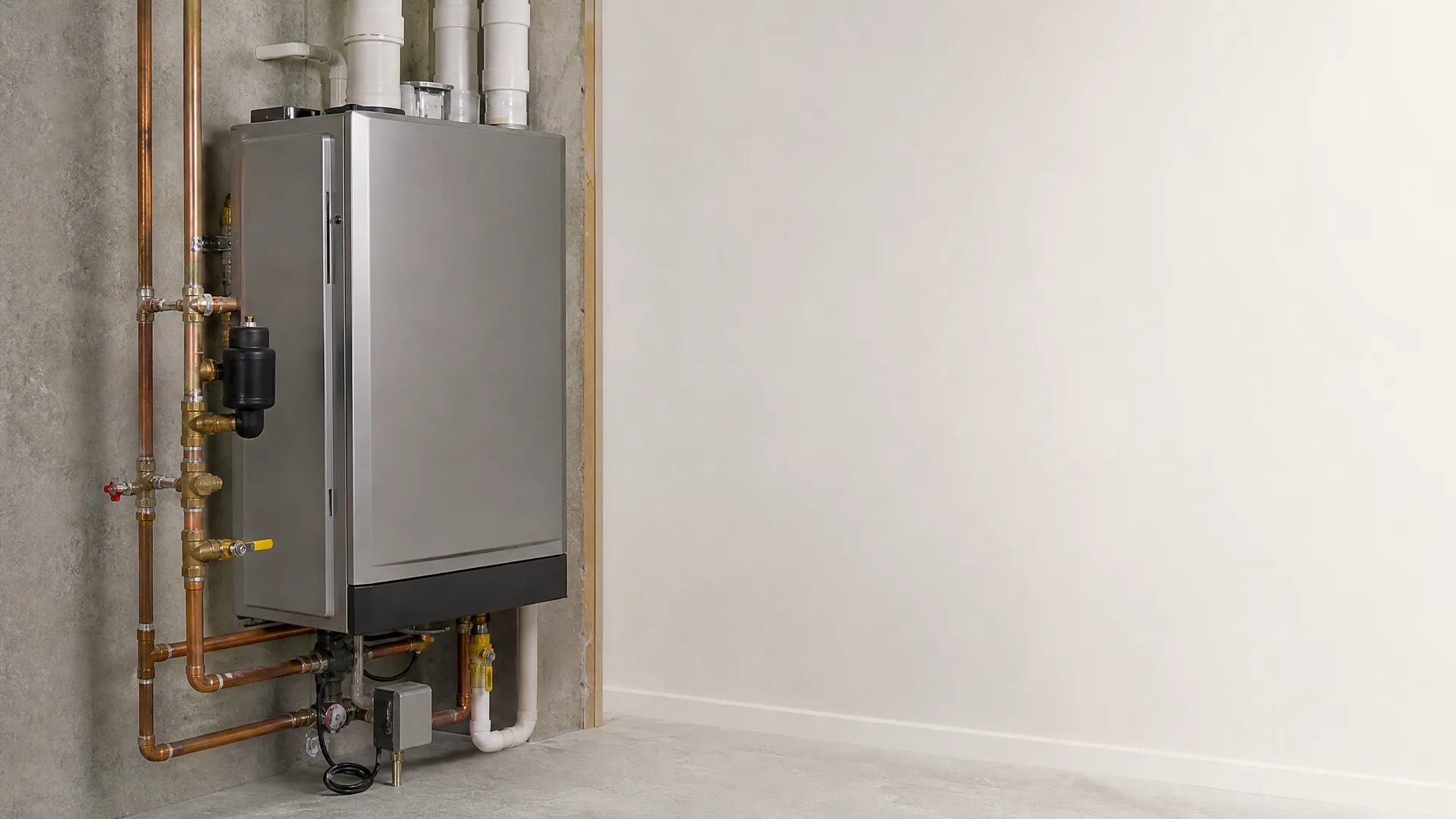
A wall-mounted grey boiler with copper pipework and white flue pipes installed against a concrete wall in an empty room with a plain pale wall to the right.

Where the gas actually burns

A boiler's burner sits sealed inside the cabinet, away from the living space, and the flue is supposed to carry every bit of exhaust up and out. Carbon monoxide shows up when that burn goes wrong or the flue can't move the exhaust the way it should. Soot stains around the cabinet door, a yellow flame where it should burn blue, or rust and moisture near the flue connection all point to exhaust going somewhere other than outside.

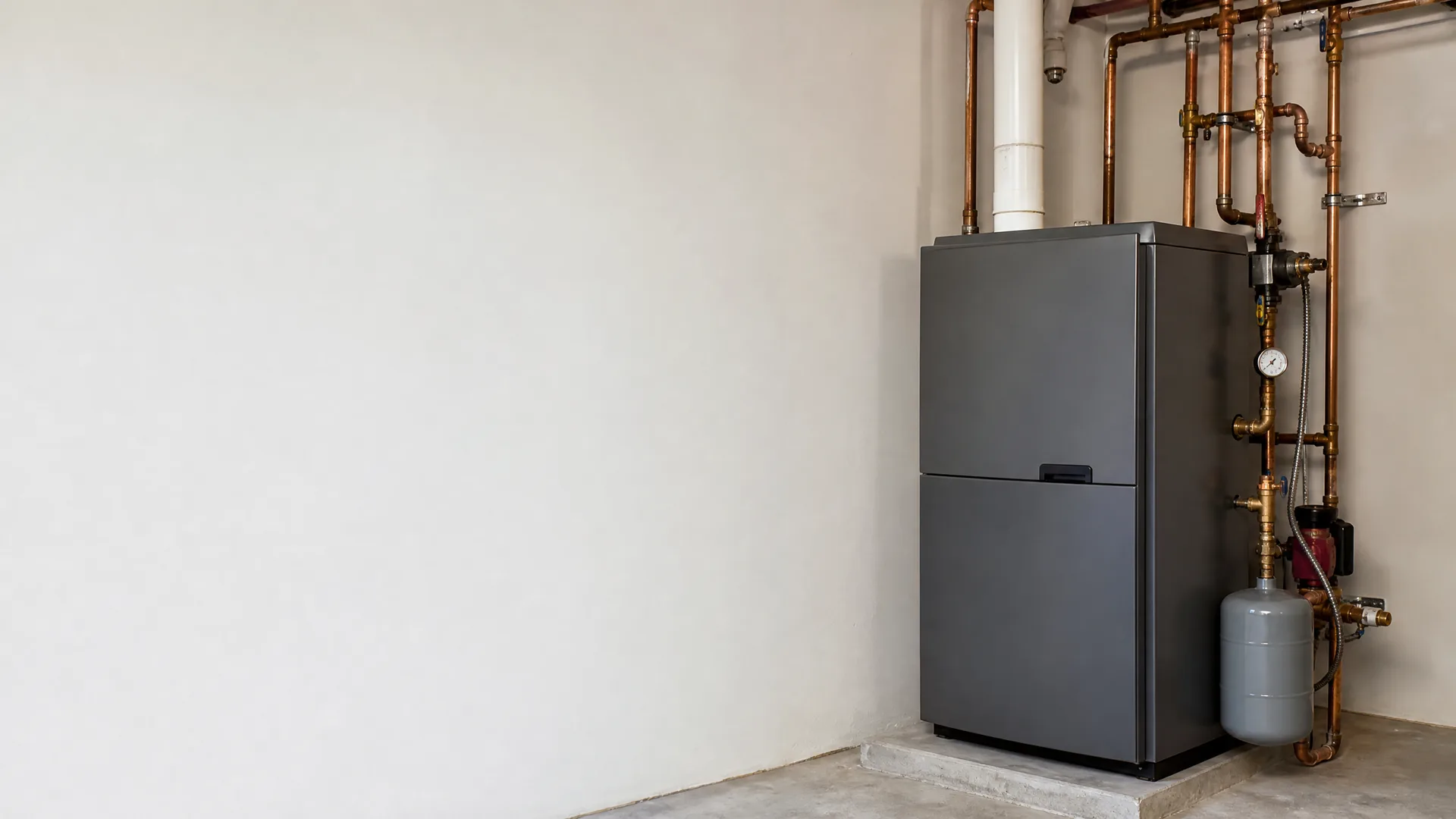
A dark grey boiler unit stands on a concrete pad against a plain light wall, connected to copper pipes, a pressure gauge, a pump and a grey expansion tank.

What a bad burn does to you

Carbon monoxide has no smell and no color, so the boiler itself rarely tells you anything is wrong. The people in the house do. Headaches that show up when the boiler's running and ease off when you leave the house, or that whole household feeling tired and foggy at the same time, are worth paying attention to. A carbon monoxide detector near the boiler catches what a nose and eyes can't.

Boiler Signs vs House Signs

Signs at the boiler

  • A flame that burns yellow or orange instead of a steady blue points to incomplete combustion, which is what produces carbon monoxide.
  • Soot or a brown-black stain around the burner door or the draft hood means exhaust is escaping instead of going up the flue.
  • Water or rust streaks on the flue pipe itself often mean the exhaust is condensing inside instead of venting out.
  • A boiler that shuts off on its own partway through a cycle can mean a safety switch is responding to a venting problem.
  • If the flue pipe feels loose where it meets the boiler or the wall, exhaust can leak out at that joint instead of leaving the house.

Signs in the house

  • A headache that shows up when the boiler is running and goes away once you're outside or the unit shuts off is worth paying attention to.
  • Soot marks on the wall or ceiling near where the flue pipe runs can mean exhaust is finding its way into the room.
  • A carbon monoxide alarm sounding anywhere near the boiler should be treated as real, not reset and ignored.
  • Condensation building up on windows near the boiler room more than it used to can point to a change in how the unit is venting.
  • Feeling fine away from home but sick or foggy-headed in the rooms closest to the boiler is a pattern that matters.
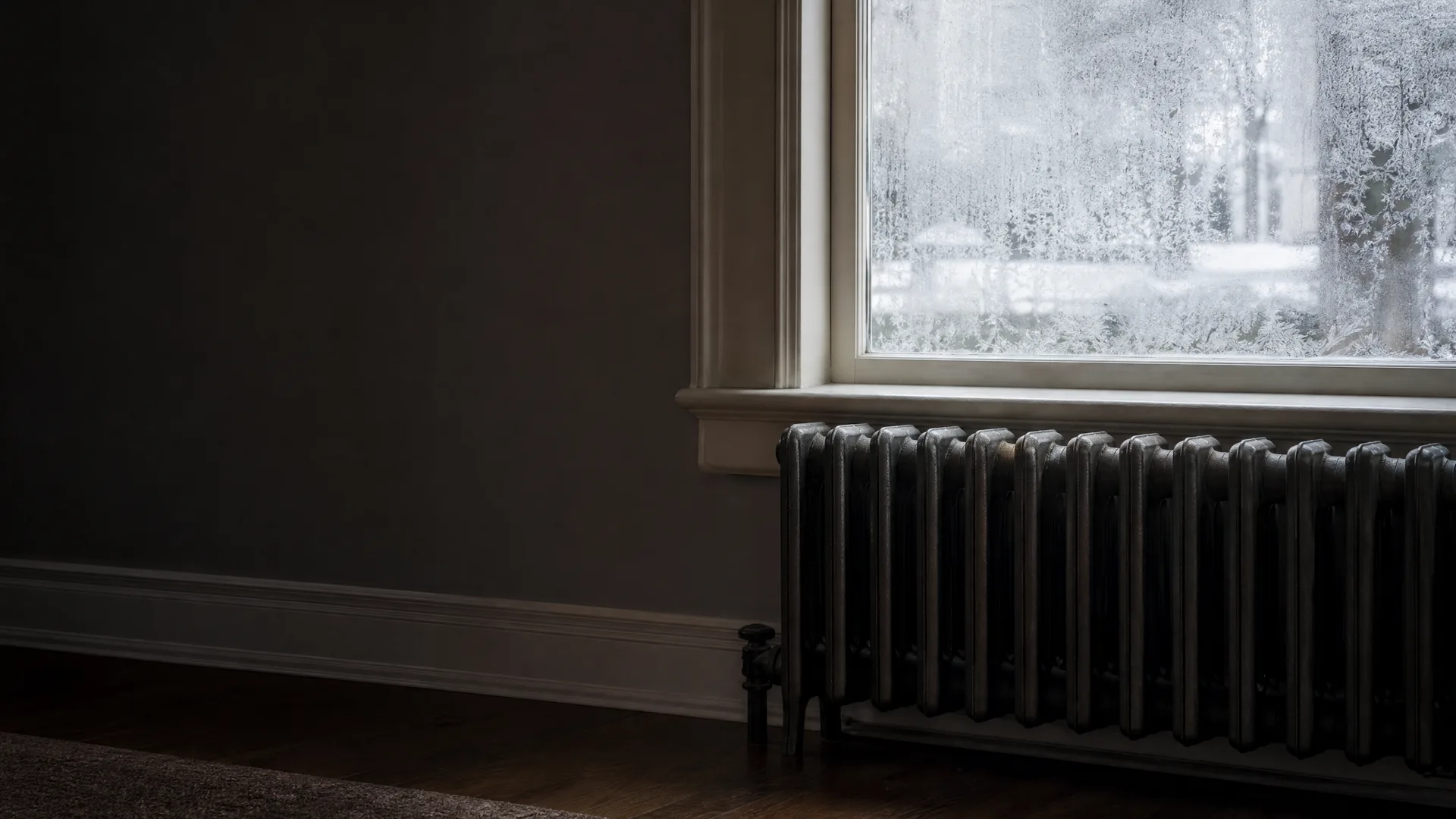
A cast iron column radiator with a valve stands beneath a window with a frosted pane showing snowy trees outside, in a dim room with dark walls and wood flooring.

Ice has crept up the inside of the window glass overnight, and the cast-iron radiator underneath is ticking away, still putting out heat. It's early, the house is quiet, and you notice your head is heavy in a way sleep didn't fix. You stood up too fast getting out of bed and the room tilted for a second. The air near the radiator smells faintly off, like something scorched, though nothing looks wrong. You open the window a crack even with the cold coming in, because something about the room feels thick. Down the hall, the dog is still asleep by the vent, not lifting its head the way it usually does.

Stop chasing a boiler pro

The pro who reaches out is licensed in Arkansas.

Sending the form costs nothing.

Signs that point to the boiler

A headache that shows up at home and fades once you've been outside for a while is worth paying attention to, especially if it happens to more than one person in the house. Nausea, dizziness, or feeling short of breath in the rooms near the boiler are the same way. Pets get sick too, sometimes before people notice anything. If the symptom tracks with time spent in the house and eases somewhere else, that pattern is telling you something the air in the house can't.


Signs that point elsewhere

A headache that's there when you wake up and gone within the hour, or one that matches a cold or the start of flu season, isn't the same thing. If nobody else in the house feels it, if it doesn't ease up when you step outside, or if it comes and goes with stress or sleep, carbon monoxide is less likely to be the cause. A carbon monoxide detector near the boiler and near bedrooms will tell you far more than guessing from symptoms alone, and it's worth having one either way.

A gray-haired man in a dark sweater sits on a light gray sofa in a living room, looking toward a sunlit window with trees outside.
A gray-haired man in a dark blue sweater sits on a light gray sofa in a sunlit living room, looking off to the side, with a potted plant, shelving unit, and large glass doors behind him.
A bearded man with graying hair in a dark green sweater sits on a sofa in a living room, looking off to the side, with a sliding glass door and a dim kitchen doorway behind him.
A gray-haired man in a dark knit sweater sits on a light gray sofa in a living room, looking toward a sunlit window, with houseplants, a lamp, and framed art in the background.

If your detector is silent

A carbon monoxide detector catches what you can't smell, but only if there's one installed and the battery is good. A lot of Arkansas homes with a boiler have one near the furnace closet or the basement stairs and nowhere else, and some don't have one at all. If yours hasn't gone off, that tells you the air hasn't crossed whatever level the detector is set to trip at. It doesn't tell you the flue is sealed or the burner is firing clean. Low, steady leaks can sit under that threshold for a long time, especially in a room that gets some fresh air from a door or window left open.

If the detector goes off

Treat it as real the first time, every time. Get everyone out, including pets, and don't go back in to open windows or check the boiler yourself. Call from outside, or from a neighbor's house, and let the fire department tell you when it's safe to go back in. A detector that's gone off can mean the boiler, but it can also mean a gas water heater, a stove, or a car left running in an attached garage, so don't assume the boiler is the source until someone's checked the whole house. Once it's safe, the boiler needs a proper inspection before you run it again.

A woman with shoulder-length brown hair wearing a beige knit cardigan sits in a gray upholstered armchair near a window, looking off to the side with a slight smile, with bookshelves blurred in the background.
A woman and a child wrapped together in a knitted gray blanket on a couch, with the child's head resting on her shoulder and a lit table lamp and houseplant in the background.
  1. Gas and air mix enters the burner before ignition starts

  2. A clean flame burns blue and fully uses the fuel

  3. Exhaust gas rises off the burner into the heat exchanger

  4. The flue pulls that exhaust up and out of the house

Winter nights average 32°F statewide

A 32°F night means your boiler is firing on and off most of the night to keep up, not just running once and holding steady. More cycles means more chances for a bad burn if the flue or burner isn't working right, which is why these nights are when carbon monoxide risk is highest.

NOAA nClimDiv 1991-2020 county normals weighted by homes

A yellow flame, soot around the burner door, or a headache that lifts once you leave the house are the signs that matter, and any one of them is reason enough to shut the boiler down and get it looked at before firing it again. Most gas boilers in Arkansas homes are old enough that this kind of check is overdue on its own, carbon monoxide or not. A local contractor who works on boilers all winter has likely seen what's wrong before the panel is off the cabinet, a cracked heat exchanger, a flue pulling air it shouldn't, a burner that's never been cleaned. You'll be matched with one contractor, licensed and working near you, not a handful of companies competing for the job, so you're not fielding calls all afternoon trying to sort out who to trust. You know what you saw or smelled. Getting someone qualified to confirm it and fix it is the only step left.

Kitchen corner with cream upper cabinets, oak lower cabinets, white marble-look countertop, beige tile backsplash, a ceramic vase of greenery, a wooden cutting board and bowl, and a black-framed window at right.
Interior corner of a room with a white-framed window and wide sill, beige walls with panel molding, a wooden cabinet holding a ceramic vase with a green leafy plant, and blurred shrubs and trees outside.
A wood-framed armchair with beige cushions and a woven lumbar pillow sits in a corner beside a large window overlooking green trees, with a tall ceramic vase holding leafy branches on the left and plaster walls and wood flooring.
Interior corner with a white-framed window above a sill, beige walls with baseboard molding, a greige shaker-style cabinet with brass knobs and a potted plant on top, light wood flooring and a woven jute rug.
A dark-framed six-pane window with white trim and sill set in gray horizontal lap siding, with hydrangea shrubs below and a white column and shingled roof section at left.

Hand off the boiler problem

Only one pro gets your request, so you hear from one company.

Find a licensed pro

You're not committing to anything by asking.