One form instead of hunting for a pro who does boiler tune-ups.
Most boilers run well with the water temperature set between 150 and 180 degrees on a cold Arkansas day, and lower than that on the mild ones that still make up a lot of the winter here. If your system has outdoor reset control, it should already be doing this adjusting on its own. If it doesn't, that's worth a look.
Since most homes in Arkansas heat with electricity, a boiler in your house is already a less common setup, and that matters when something needs attention. You want someone who actually works on boilers regularly, not a contractor who mostly does furnaces and takes boiler calls when they come in.
Finding that person on your own usually means searching through contractors who list "heating" as one of ten things they do, calling a few, explaining the make and age of your boiler each time, and waiting on quotes that are hard to compare because nobody looked at the same thing. It takes a few evenings most people don't have to spare.
Request service here and that part is handled. You're matched with one licensed contractor local to Arkansas, someone who works on boilers through the winter and knows what tends to go wrong with them, from a stuck zone valve to a circulator pump that's worn out. You explain your situation once, to the person who's actually going to look at it, instead of repeating yourself to a handful of companies while you sort through what they send back.
That contractor can look at your actual setup, tell you whether your temperature and your controls are doing what they should for a house here, and handle maintenance before a cold snap makes a small issue into a bigger one. The answer below covers what's generally true for a boiler in this climate. What's true for yours is worth having someone confirm.
What temperature should I set my boiler to in winter?
Most of Arkansas heats with electricity, but if your house runs on a boiler, you've probably noticed the dial doesn't have a clear answer printed on it. Cold snaps here can drop hard for a few days, then ease back up into the 50s, and a setting that made sense in January might be wasted heat by February. You want a number that works without you thinking about it every week.
Set it around 160 to 170 degrees for most winter days
A boiler heats water and sends it through pipes to radiators or baseboard units, and the hotter that water is, the faster each room gives off heat. On the coldest days, 180 degrees gets rooms up to temperature quickly. Arkansas winters spend plenty of time in the 40s and 50s too, and on those days 160 is usually enough to keep the house comfortable without the boiler cycling on and off more than it needs to. Running it hotter than the day calls for doesn't heat the house faster in any way that matters, it just means the boiler works harder than it has to. If yours has an outdoor reset curve, that adjustment happens on its own.
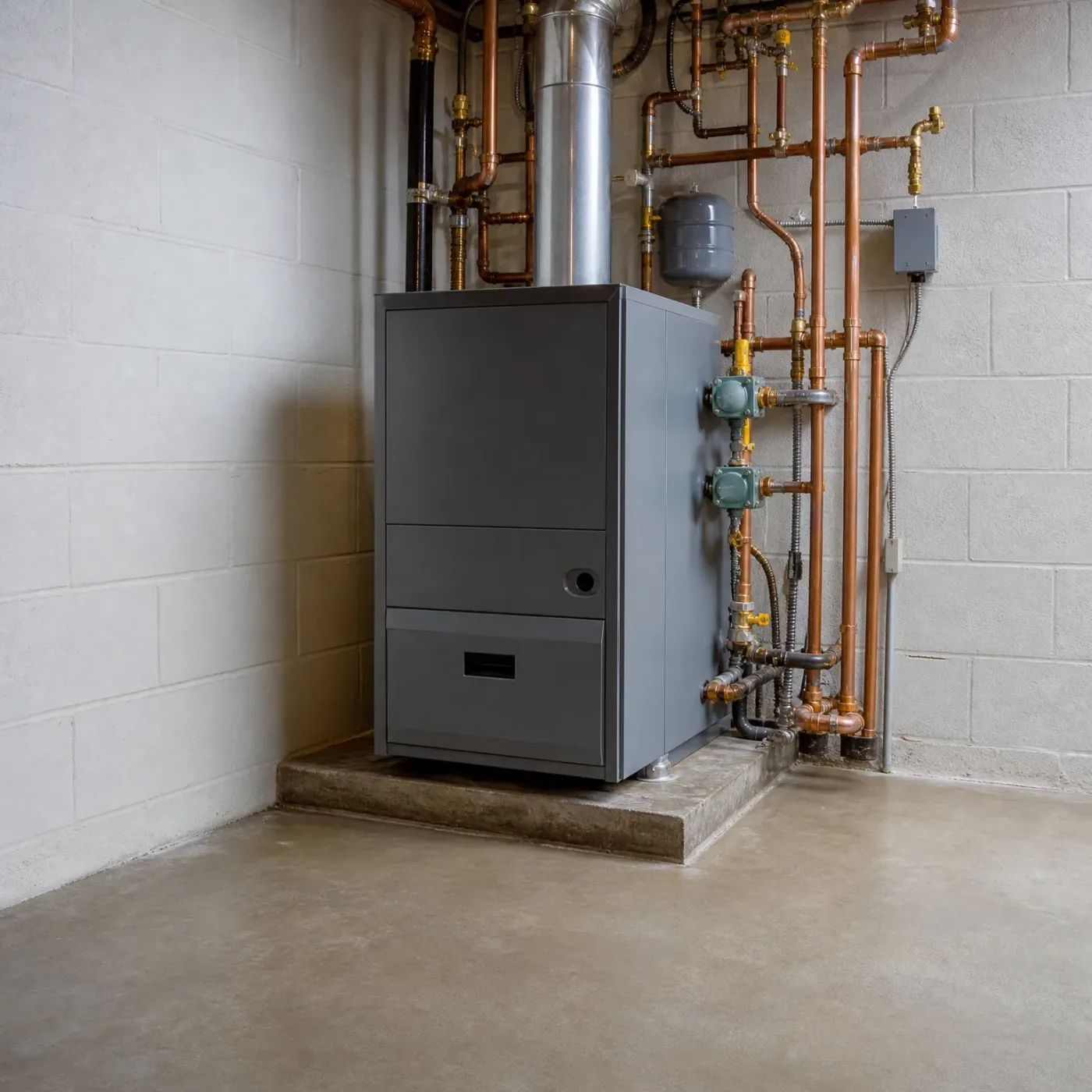
Set right, running well
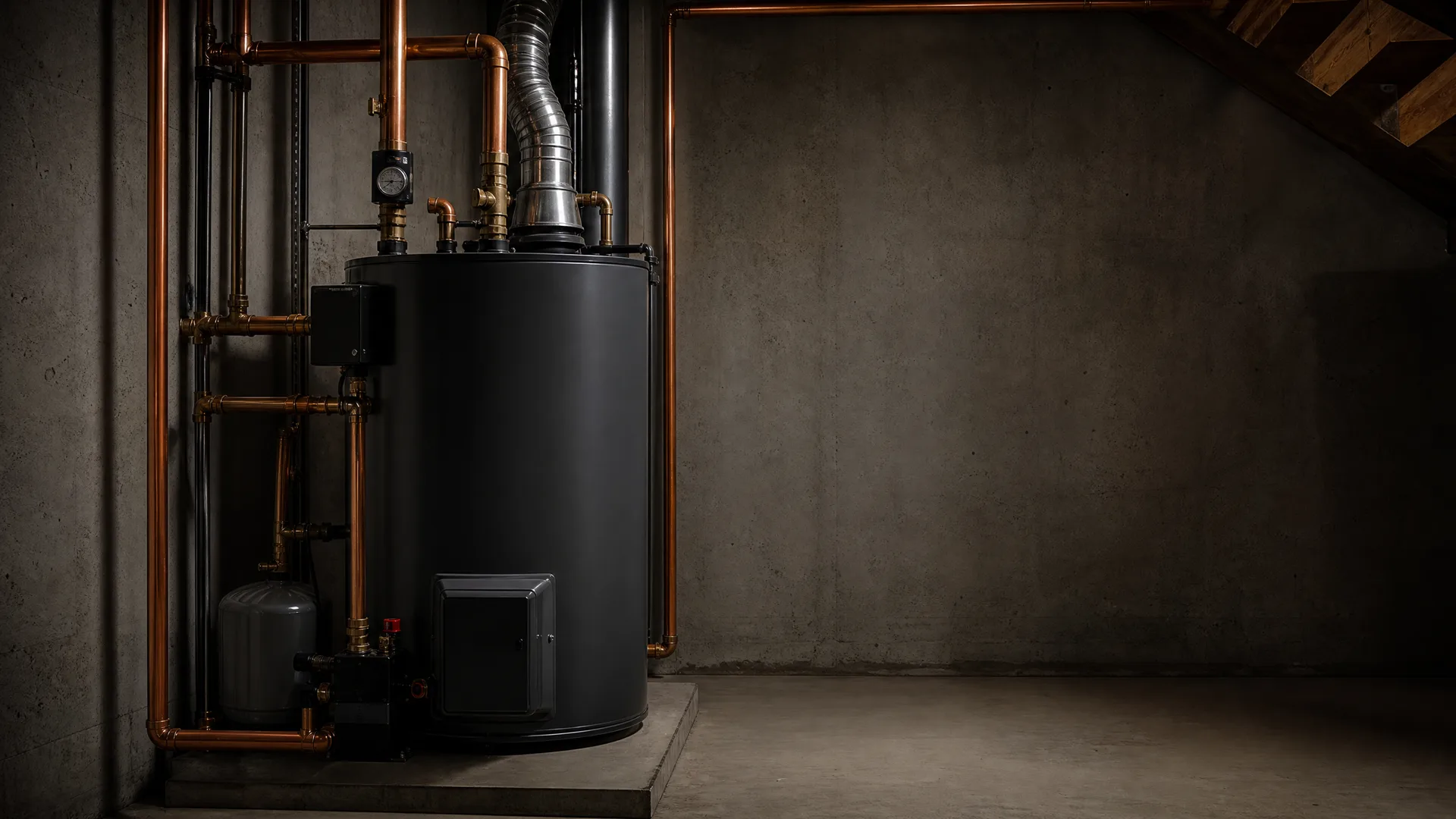
This is what a boiler looks like when the temperature is doing its job. The pipes stay dry, the fittings are clean, and the expansion tank is holding steady pressure instead of fighting it. A unit kept at the right setting for the weather outside doesn't have to strain to get your house warm.
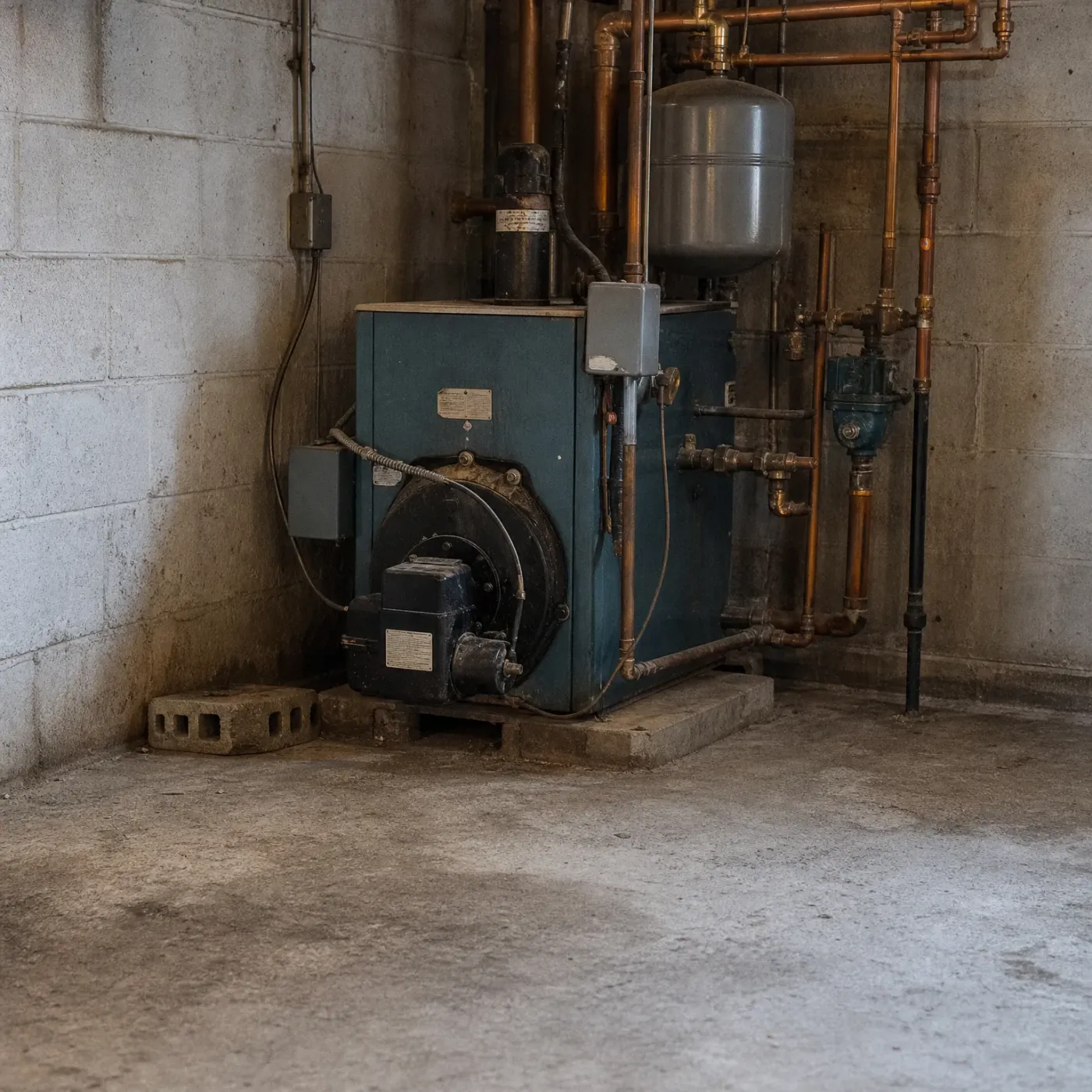
Set wrong, working harder than it should
An old boiler running too hot for too many mild days shows it over time. Joints weep. Fittings corrode faster than they should. A contractor who services boilers all winter in Arkansas can look at a unit like this and tell you what the temperature's been doing to it long before anything fails outright.
Is your boiler set too high for what the house needs?
Walk past the boiler and feel the pipes near the top. If they're too hot to rest your hand on for more than a second during a mild stretch, the setting is likely higher than the day calls for. You might notice the burner cycling on and off more than it used to, or a faint mineral smell near the relief valve after it's run a while. Some households just see it on the bill, a number that climbed without a cold snap to explain it. Left alone through a full winter, that extra heat works the boiler harder than it needs to, and it can wear at the seals and fittings faster than a setting matched to the weather outside.
1
The thermostat calls for heat and signals the boiler.
2
The burner fires and heats water in the heat exchanger.
3
A circulator pump pushes hot water out through the pipes.
4
Water releases heat into the rooms through radiators or baseboards.
Finding out whether your boiler is set right for an Arkansas winter usually means calling around, explaining the pipes and the pressure and the dial to one company after another, then doing it again for the next quote. A boiler that's been running a few degrees too high for years, or too low to really heat the rooms, isn't something you work out by reading a dial. It takes someone who's been inside boilers like yours through enough Arkansas winters to know what a setting that's off actually does to the heat exchanger and the expansion tank over time, and what it takes to bring it back to where it should be. That's a different conversation than the one you'd have explaining your system from scratch to whoever picks up the phone. A local contractor who works on these systems every season can look at yours directly, with the cold snaps and mild stretches here already part of how they think about it, instead of you having to lay all that out yourself.
Why outdoor reset makes sense here
An Arkansas winter spends more days in the 40s and 50s than it does near freezing. A boiler that holds one high water temperature all season is built for the coldest day, not the usual one. Outdoor reset control adjusts the water temperature as the outside temperature changes, so the boiler runs cooler on a 50 degree morning and only climbs toward 180 when a cold snap actually calls for it. That matters because a boiler running at a lower water temperature loses less heat through the pipes and the jacket, and it cycles less, which is easier on the burner and the heat exchanger over time.
What the water temperature does to the metal
Boiler water carries dissolved minerals, and how hot it runs changes what those minerals do inside the system. Water held higher than it needs to be speeds up scale forming on the heat exchanger surfaces, and scale makes the boiler work harder to move the same amount of heat. Running closer to the temperature the day actually calls for keeps that buildup slower. It also keeps the expansion tank and the pipe fittings under steadier pressure instead of pushing them through wider swings every time the burner fires and shuts off again.
Before you get your boiler maintenanceAfter you get your boiler maintenance
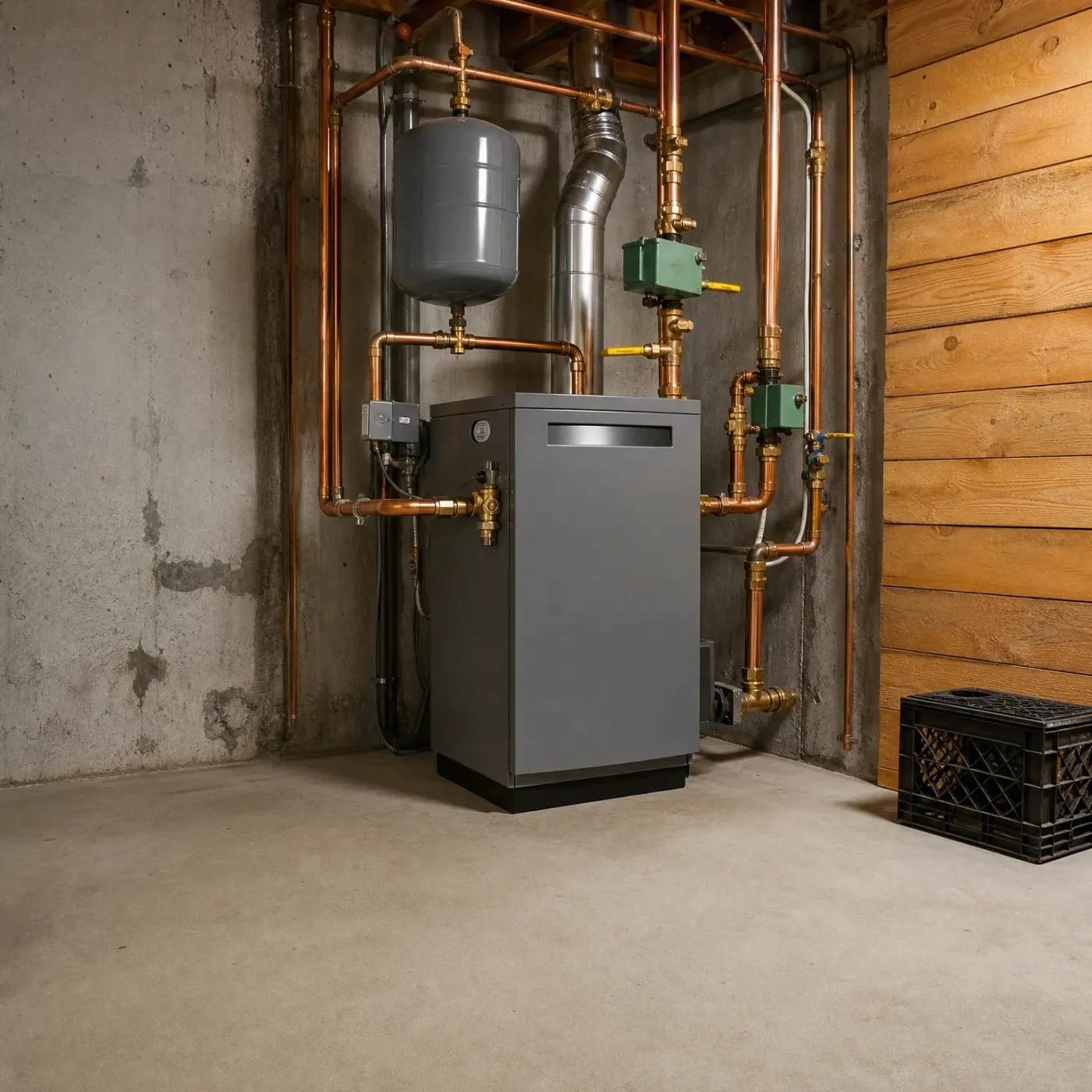
Running clean
This is a system matched to its load. The copper and brass stay dry, the expansion tank holds steady pressure, and the near-boiler piping shows no streaking or mineral crust. A boiler doing this little work this consistently tends to go years between service calls.
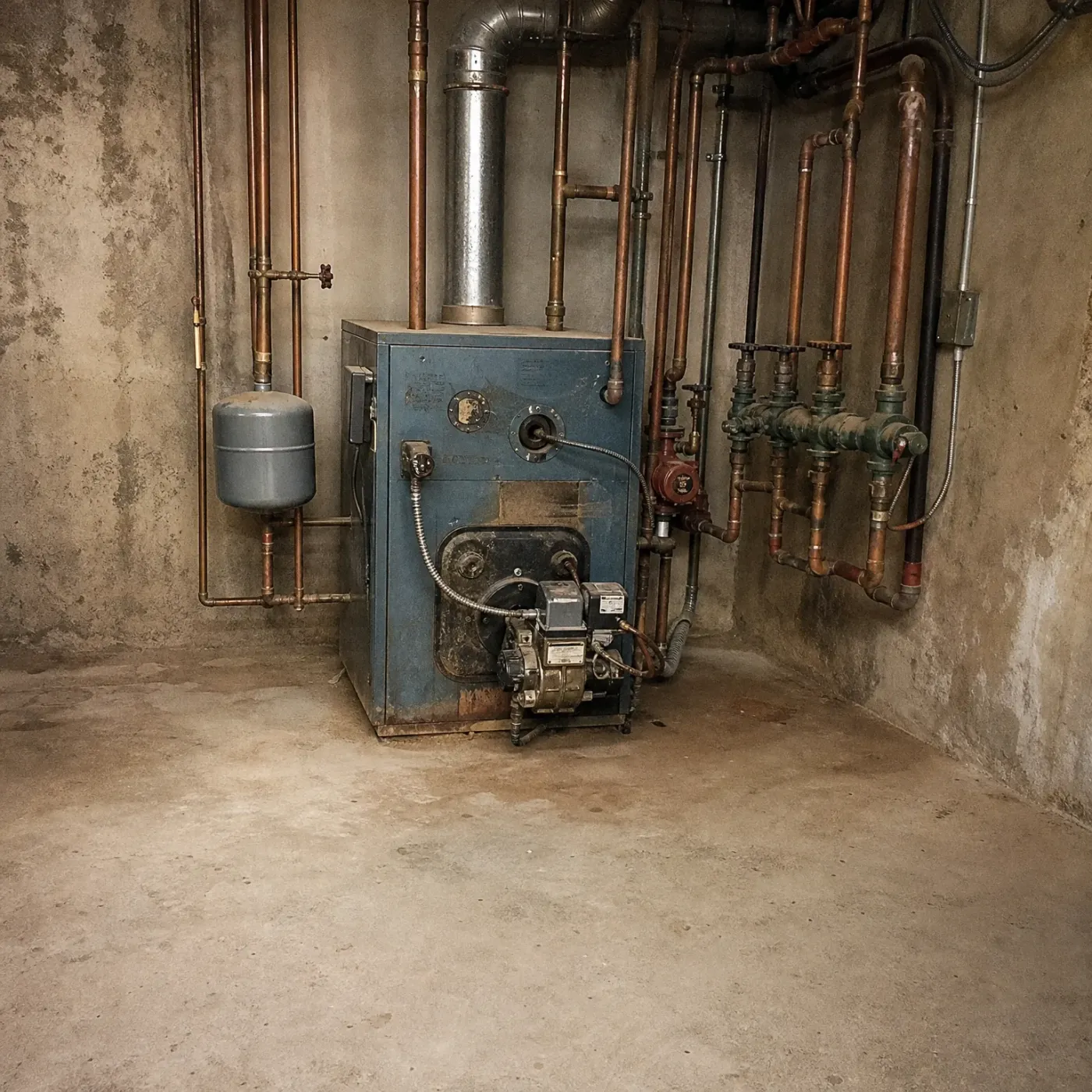
Working against itself
This is a boiler set too high for what the day needs. The flue runs harder than it should, the expansion tank cycles instead of holding steady, and joints along the block wall are the first place a slow leak shows. A contractor who services boilers every winter in your area knows which fitting to check first.
Winter nights average 32°F statewide
32°F is the average overnight low across a whole Arkansas winter, not just the cold snaps, which means your boiler spends most nights working against a chill rather than a hard freeze. A setting that only makes sense on the worst night of January is doing more than most nights actually need.
NOAA nClimDiv 1991-2020 county normals weighted by homes
The right setting is the one that matches the day, not the coldest night of the year, and a boiler running at that setting shows it in dry pipes, steady pressure, and a quiet burner that doesn't short cycle. If yours is running hotter than it needs to, that's worth a look before it turns into a repair. A local contractor who services boilers all winter has seen what an Arkansas system looks like after a few years of running too hot, and knows what to check first on yours. You'd be working with one contractor, not fielding calls from several, and that contractor is licensed to do the work and familiar with the kind of boiler setup common in houses around here. That's someone who can tell you, standing at your unit, whether 150 is right for your house or whether it should be higher or lower, and why.
Skip calling around
Only one pro gets your request, so you hear from one company.